

11 Ways to Use an Investment Portfolio Analyzer in 2025

11 Ways to Use an Investment Portfolio Analyzer in 2025
Introduction
You can use an Investment Portfolio Analyzer to turn raw positions into decisions: measuring risk and return, diagnosing diversification, optimizing asset allocation, and planning rebalancing and taxes for 2025. This practical guide shows you exactly how to make an analyzer work for you—step by step, with concrete examples, checklists, and ready-to-use templates.
What a Portfolio Analyzer Actually Does
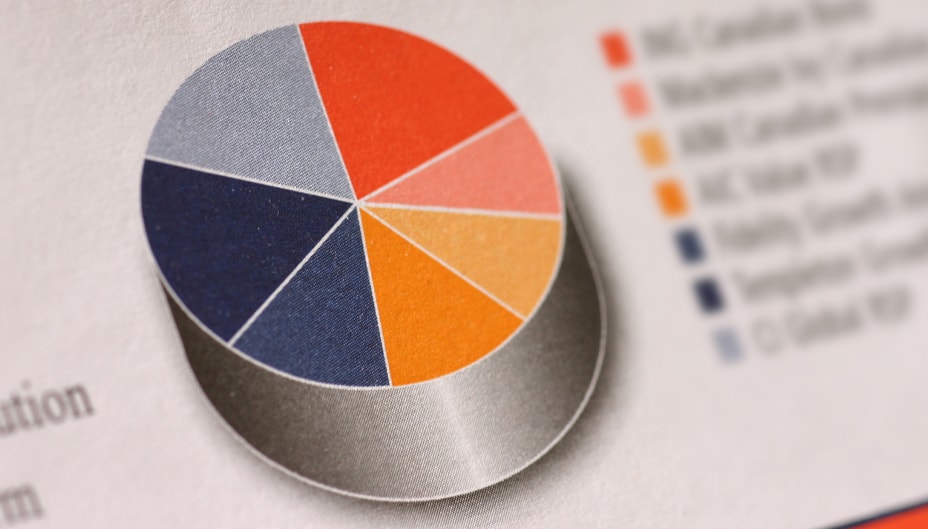
At its core, an Investment Portfolio Analyzer ingests holdings (tickers, shares, prices, cash), links to market data, and computes performance (time-weighted and money-weighted returns), risk (volatility, drawdown, Value at Risk), exposures (beta, sector, region, factor), and constraints (liquidity, concentration, tax lot details). It then helps you simulate “what-ifs,” compare portfolios or model strategies, and formalize rules for rebalancing and tax management.
Feature Map at a Glance
Capability | What You Learn | Typical Metric | Source |
|---|---|---|---|
Performance | How your portfolio grew net of cash flows | Time-Weighted Return (TWR), Money-Weighted Return (IRR) | CFA Institute, Global Investment Performance Standards (GIPS), 2025 |
Risk | How much your portfolio can vary or fall | Volatility, Max Drawdown, VaR/CVaR | MSCI RiskMetrics Methodology, 2025 |
Factor & Beta | Why your returns behave the way they do | Beta, Alpha, Tracking Error, Factor Loadings | Morningstar Methodology Guide, 2025 |
Allocation | Where risk and capital are concentrated | Asset/sector/country weights; risk contribution | BlackRock Portfolio Construction Insights, 2025 |
Rebalancing | When and how to reset to target | Threshold bands, drift %, turnover | Vanguard Research on Rebalancing, 2025 |
Tax | After-tax optimization opportunities | Tax-loss harvest flags; lot selection rules | Brokerage Cost Basis Guides, 2025 |
Measuring Performance & Risk the Right Way
Why it matters: If you cannot measure performance and risk consistently, you cannot compare strategies, hold managers accountable, or calibrate your risk budget in 2025. Your analyzer should default to time-weighted return (TWR) for comparing strategies and money-weighted return (IRR) for judging personal outcomes when cash flows are lumpy.

Performance in Practice (Illustration)
Example: Suppose your portfolio starts at 100, rises to 110, then you add 20 (cash inflow), and finish at 130 by year-end 2025.
- TWR: Focuses on period returns independent of your cash flows. If period returns were +10% then +5%, TWR ≈ (1.10 × 1.05 − 1) = 15.5%.
- IRR: Solves for the discount rate that sets the present value of cash flows to zero—capturing your personal sequence of returns.
Risk pillars your analyzer should compute: volatility (annualized standard deviation), max drawdown (peak-to-trough fall), Value at Risk (VaR) and Expected Shortfall/Conditional VaR (CVaR) for tail risk, plus tracking error vs. your chosen benchmark in 2025.
Metric | Formula (simplified) | Use | Source (2025) |
|---|---|---|---|
Volatility | StdDev(daily/weekly/monthly returns) × √periods | Baseline uncertainty of returns | CFA Program Curriculum, 2025 |
Sharpe Ratio | (Portfolio Return − Risk-Free) ÷ Volatility | Risk-adjusted efficiency | CFA Program Curriculum, 2025 |
Sortino Ratio | (Portfolio Return − Target) ÷ Downside Deviation | Penalizes downside only | CFA Program Curriculum, 2025 |
Max Drawdown | Min(rolling peak-to-trough return) | Depth of worst fall | MSCI Risk Guide, 2025 |
VaR (Parametric) | μ − zp × σ | Loss threshold at confidence p | MSCI RiskMetrics, 2025 |
Tracking Error | StdDev(Portfolio − Benchmark returns) | Active risk vs. benchmark | Morningstar Index Methodology, 2025 |
Action checklist for 2025:
- Use TWR for strategy comparisons; IRR for your personal wealth outcome.
- Benchmark to a replicable index reflecting your investable universe, then monitor tracking error.
- Log drawdowns and add notes about catalysts; stress test with scenario analysis and Monte Carlo.
Allocation, Rebalancing & Execution
Why it matters: In 2025, most long-run performance differences come from consistent asset allocation, disciplined rebalancing, and minimizing leakage (taxes, fees, slippage). Your analyzer should quantify risk contributions (how much each sleeve drives total volatility), surface concentration risks, and propose rebalancing trades that respect your constraints (cash flows, minimum lot sizes, tax lots, and trading windows).
Method | Best For | Pros / Cons | Source (2025) |
|---|---|---|---|
Calendar (e.g., quarterly) | Simple, low-touch portfolios | Predictable / may rebalance too early or too late | Vanguard & BlackRock research briefs, 2025 |
Threshold bands (e.g., ±20% of target weight) | Cost-aware, drift-sensitive investors | Targets meaningful drift / requires monitoring | CFA Institute Research Digest, 2025 |
Risk-parity bands (volatility or VaR-based) | Risk budget discipline | Controls risk at source / model assumptions sensitive | MSCI Risk Insights, 2025 |
Cash-flow rebalancing | Regular contributions/withdrawals | Reduces turnover and taxes / timing-dependent | Brokerage implementation guides, 2025 |
Execution tips: Prefer cash-flow rebalancing first, then use bands to trigger trades. Turn on tax-aware lot selection (e.g., HIFO for harvest, FIFO for lots you plan to hold longest). Ask your analyzer to estimate after-tax impact before you confirm trades.
11 Ways to Use an Investment Portfolio Analyzer (Step-by-Step)
1. Build a Clean Holdings Dataset
Import tickers, shares, cost basis, and cash from your broker or spreadsheet. Map each holding to asset class, sector, region, and currency. Validate prices and corporate action history. Save as your 2025 “gold file.”
- Include benchmarks and cash proxies for comparisons.
- Tag constraints (e.g., “no single position > 10%,” “min cash 2%”).
2. Diagnose Diversification & Concentration
Run exposure reports: top positions, sector weights, country weights, style factors (value, quality, momentum, size), duration for bonds, and liquidity screens. Flag if any sleeve exceeds your policy or risk budget.
3. Quantify Risk with Drawdowns, VaR & Stress Tests
Compute rolling volatility, max drawdown, VaR/CVaR. Add scenario tests (e.g., rate shocks, equity sell-offs, FX moves) and Monte Carlo runs to visualize ranges of outcomes for 2025–onward.
4. Calibrate a Realistic Return Assumption
Set a forward return for each asset sleeve using long-run capital market building blocks (yields, growth, margins), then combine using target weights. The analyzer aggregates to a strategic return and confidence bands.
5. Measure True Performance: TWR vs IRR
Use TWR to compare strategies or managers fairly; use IRR to judge your personal outcome, especially with irregular cash flows. Your analyzer should report both for 2025 so you see the difference.
6. Benchmark and Track Active Risk
Pick a benchmark you could actually own. Track alpha and tracking error. If active risk drifts beyond your policy (e.g., tracking error rises), either trim exposures or widen bands with explicit approval.
7. Set Rebalancing Rules You’ll Follow
Create threshold bands and calendar checks. Automate a pre-trade check that shows turnover, fees, and tax impacts before you confirm trades. Use cash flows to rebalance whenever possible.
8. Make It Tax-Aware
Turn on lot-level analytics. In 2025, your analyzer should simulate tax-loss harvesting with wash-sale windows, evaluate asset location (taxable vs. tax-advantaged accounts), and compare lot selection (FIFO, LIFO, HIFO, specific ID).
9. Optimize with Constraints, Not Dreams
Run mean-variance or risk-parity optimizations with realistic assumptions, turnover caps, minimum/maximum weights, and transaction cost penalties. Export a trade list with the smallest changes that achieve the biggest risk reduction.
10. Monitor & Alert on What Matters
Subscribe to alerts for drift, drawdown breaches, volatility spikes, and tracking error bands. Have the analyzer create a weekly 2025 dashboard: performance vs. benchmark, current risks, and to-do items.
11. Document Your Policy & Decisions
Attach your Investment Policy Statement, risk budget, and rebalancing rules to the analyzer so each trade aligns with policy. Document exceptions and their rationale. That’s how you learn and improve.
Pitfalls to Avoid in 2025
- Overfitting backtests: Keep degrees of freedom low; use out-of-sample validation.
- Misusing IRR: Don’t compare IRR across strategies with different cash-flow patterns; use TWR for that.
- Ignoring costs & taxes: Always simulate frictions and after-tax returns.
- Chasing alpha without risk control: Track tracking error and drawdowns.
Insider Tips You Won’t See in Marketing Brochures
- Risk is additive only in models: Use marginal risk contribution to see which sleeve truly drives portfolio volatility.
- Benchmarks are design choices: A blended benchmark aligned with your policy reduces false “alpha.”
- Small, frequent nudges beat big, costly resets: Cash-flow rebalancing plus bands often dominates fixed-calendar resets.
Worked Examples (Illustrative Numbers)
Sharpe ratio: If your 2025 portfolio returned 8.0%, the risk-free rate is 2.0%, and volatility is 12.0%, Sharpe = (0.08 − 0.02) / 0.12 = 0.50.
Max drawdown: Starting at 100, peak at 120, trough at 96; drawdown = (96 ÷ 120 − 1) = −20%.
Tracking error: If monthly active returns against your benchmark have a standard deviation of 1.8% (annualized ≈ 1.8 × √12 ≈ 6.2%), that’s your active risk in 2025.
These examples are illustrative only; they are not predictions or guarantees.
FAQ — People Also Ask
What is an Investment Portfolio Analyzer?
It’s a software tool that consolidates holdings and market data to compute performance, risk, exposures, and suggested trades so you can manage your portfolio systematically in 2025.
Is time-weighted or money-weighted return better?
Use time-weighted return to compare strategies or managers; use money-weighted return (IRR) to judge your personal outcome when cash flows are significant in 2025.
What risk metrics should I monitor?
Volatility, max drawdown, VaR/CVaR, and tracking error versus your benchmark. Add factor exposures to understand why risk changes.
How often should I rebalance in 2025?
Combine threshold bands with calendar reviews. Prefer cash-flow rebalancing to reduce turnover and taxes.
Can I use an analyzer for tax-loss harvesting?
Yes. A good analyzer flags loss lots, proposes substitutes, and schedules re-entry while respecting wash-sale rules in 2025.
What’s the difference between alpha and beta?
Beta is exposure to market or factor movements; alpha is return unexplained by those exposures after accounting for risk in 2025.
Glossary
- Time-Weighted Return (TWR): Performance excluding the effect of external cash flows.
- IRR (Money-Weighted Return): Return accounting for timing and size of cash flows.
- Volatility: Standard deviation of returns, annualized.
- Value at Risk (VaR): Loss threshold at a set confidence level.
- Expected Shortfall (CVaR): Average loss beyond VaR.
- Tracking Error: Standard deviation of excess returns over a benchmark.
- Risk Contribution: Each asset’s share of total portfolio risk.
- Factor Exposure: Sensitivity to systematic drivers like value, momentum, quality, size.
Looking Ahead: 2026 Outlook
Your Investment Portfolio Analyzer becomes even more valuable in 2026 when you use it to translate uncertainty into scenario-specific playbooks. Rather than predicting a single path, configure three to four well-defined regimes and pre-commit portfolio responses. The goal is not clairvoyance—it’s preparedness with discipline.

Build Scenario Playbooks for 2026
- Baseline: Moderate growth, stable inflation, and range-bound policy rates. Use the analyzer’s expected-return blocks to validate that your strategic mix still meets long-horizon goals. Monitor risk contribution so no single sleeve dominates portfolio volatility.
- Upside: Productivity accelerates and earnings breadth improves. Tell the analyzer to test incremental tilts toward quality, profitability, and small-to-mid caps while capping tracking error to policy limits.
- Downside: Growth stalls or shocks hit risk assets. Pre-stage a drawdown response: widen bands for safer assets, raise liquidity buffers, and re-run CVaR and stress tests with tighter loss tolerances.
- Rates/FX Shock: Interest-rate or currency swings. Use duration buckets, inflation sensitivity, and FX-hedge ratios; instruct the analyzer to report marginal risk contribution by these exposures monthly.
What to Watch in 2026 (Analyzer Dashboard Signals)
- Volatility regime: Track realized vs. implied volatility and whether your realized vol exceeds policy bands.
- Drawdown depth and recovery speed: If recovery lags thresholds, trigger a scenario review and rebalancing check.
- Factor dispersion: Use the analyzer’s factor map to see if returns are increasingly driven by a few styles; avoid overconcentration.
- Credit conditions: Watch spread levels and roll-down; instruct alerts when your credit sleeve’s expected shortfall breaches limits.
- Liquidity: Set weekly checks on cash runway vs. upcoming obligations; keep a standing cash-flow rebalance plan.
Portfolio Actions You Can Pre-Commit
- Thresholds with intent: Keep target bands but attach action notes (e.g., add on dislocations, reduce when risk contribution > x%).
- Tax-aware hygiene: Schedule harvest reviews around allowable windows; have the analyzer simulate after-tax impacts before trade approval.
- Turnover control: Enforce a maximum annual turnover and require optimizer justifications for higher activity.
- Benchmark discipline: Revalidate that your blended benchmark still reflects your investable universe; recalibrate tracking error guardrails.
- Stress-test cadence: Run quarterly regime tests plus ad-hoc tests after big market moves; archive each test and its decision log.
Key KPIs to Track Monthly
- Performance: TWR and IRR year-to-date vs. benchmark and policy return.
- Risk: Realized volatility, max drawdown, VaR/CVaR, and tracking error to confirm alignment with your risk budget.
- Exposures: Factor tilts, sector/country weights, and marginal risk contribution by sleeve.
- Friction: Turnover, implementation shortfall, and after-tax drag.
- Liquidity: Cash as % of assets and projected runway vs. upcoming needs.
Final Thoughts for 2025 (and Your First Moves for 2026)
An Investment Portfolio Analyzer is a decision system. In 2025, get the plumbing right—data, benchmarks, risk measures, and rebalancing rules. For 2026, elevate your playbook: codify scenarios, attach clear actions to thresholds, and let the analyzer enforce discipline with alerts, pre-trade checks, and documented decisions. Preparedness beats prediction—especially when your tools make each response faster, smaller, and smarter.