

US Sanctions Colombia's President: Drug War Escalation or Political Move?
US Sanctions Colombia's President: Drug War Escalation or Political Move?
AI Summary
The US Treasury imposed sanctions on Colombian President Gustavo Petro and his family, alleging drug trafficking ties. This move freezes assets and restricts transactions, escalating tensions. Independent data disputes claims of increased cocaine production under Petro, suggesting political motivations. Monitor diplomatic fallout and financial impacts.
Keywords
Treasury Imposes Financial Restrictions
Key sanctioned individuals and entities
The Treasury just dropped the hammer on Colombia’s top brass—President Gustavo Petro, First Lady Verónica Alcocer García, their son Nicolás Petro, and Interior Minister Armando Benedetti—under Executive Order 14059. This Biden-era framework, typically reserved for narco-kingpins like Maduro and Assad, now ensnares a sitting allied head of state for the first time. Treasury’s bombshell allegation? That Petro’s administration greenlit a cocaine production boom since 2022, with cartels operating "with impunity" per Fox News. The move reeks of geopolitical brinkmanship—Washington rarely sanctions democratically elected leaders without smoking-gun evidence.
Asset freeze and transaction prohibitions
| Sanctioned Party | Asset Freeze Scope | Transaction Restrictions |
|---|---|---|
| President Gustavo Petro | All US-held assets | No dealings by US persons/entities |
| First Lady Verónica Alcocer | Financial accounts & properties | Prohibited business relationships |
| Nicolás Petro | Trusts & investment vehicles | Blocked inheritance/transfer mechanisms |
| Minister Armando Benedetti | Real estate & corporate holdings | Suspended US counterparty agreements |
This isn’t just a symbolic slap—it’s a financial straitjacket. OFAC’s 50% rule means any entity half-owned by the sanctioned quartet gets locked down too. Strict liability kicks in immediately: US banks must flag and freeze assets within 10 days or face civil penalties. The Japan Times notes the real bite comes from severed access to dollar clearing—a death knell for cross-border trade.
Escalating Bilateral Tensions
Cocaine production dispute
Treasury’s claim of a 2022-2025 cocaine surge under Petro smells fishy to regional analysts. UNODC data shows cultivation actually peaked in 2018—three years before Petro took office. The Guardian uncovered Pentagon reports acknowledging "interdiction successes" under Petro, including record seizures. This reeks of cherry-picked metrics to justify decertifying Colombia’s counternarcotics efforts—a move that could axe $377M in annual aid.
Military operations controversy
When US Southern Command started blasting alleged drug boats in the Caribbean last quarter, Petro cried foul—calling the strikes "extrajudicial executions." The irony? Those same tactics were standard under his pro-US predecessor. The real flashpoint: Petro’s cozying up to Venezuela’s Maduro while Egmont Group booted Colombia’s financial intel unit—a crippling blow to tracking cartel money flows.
Geopolitical Repercussions
Regional alliance shifts
Petro’s "Pink Tide 2.0" alignment with Caracas and Havana just got costlier. Treasury’s sanctions effectively torpedo Colombia’s access to CLS Bank, the global FX settlement backbone. Meanwhile, Brazil and Argentina are quietly rerouting trade through non-US clearinghouses—a worrying sign of dollar dominance erosion in LatAm.
Aid and certification impacts
Losing State Department certification isn’t just about pride—it triggers automatic cuts to International Narcotics Control funding. The $377M at stake funds everything from crop substitution to judicial reforms. Fox News reports DEA may now shutter Bogotá offices, leaving vacuum for Russian and Chinese security contractors.
Diplomatic Fallout and Legal Challenges
Petro's defiant response
Petro’s counterpunch? Flaunting 300+ tons of seized cocaine in 2025—a 40% jump from 2021. His legal team’s prepping ICSID claims arguing sanctions breach the US-Colombia FTA’s fair treatment clause. But with OFAC’s strict liability regime, even European banks are freezing Colombian government accounts to avoid secondary sanctions.
Historical context of US-Latin America relations
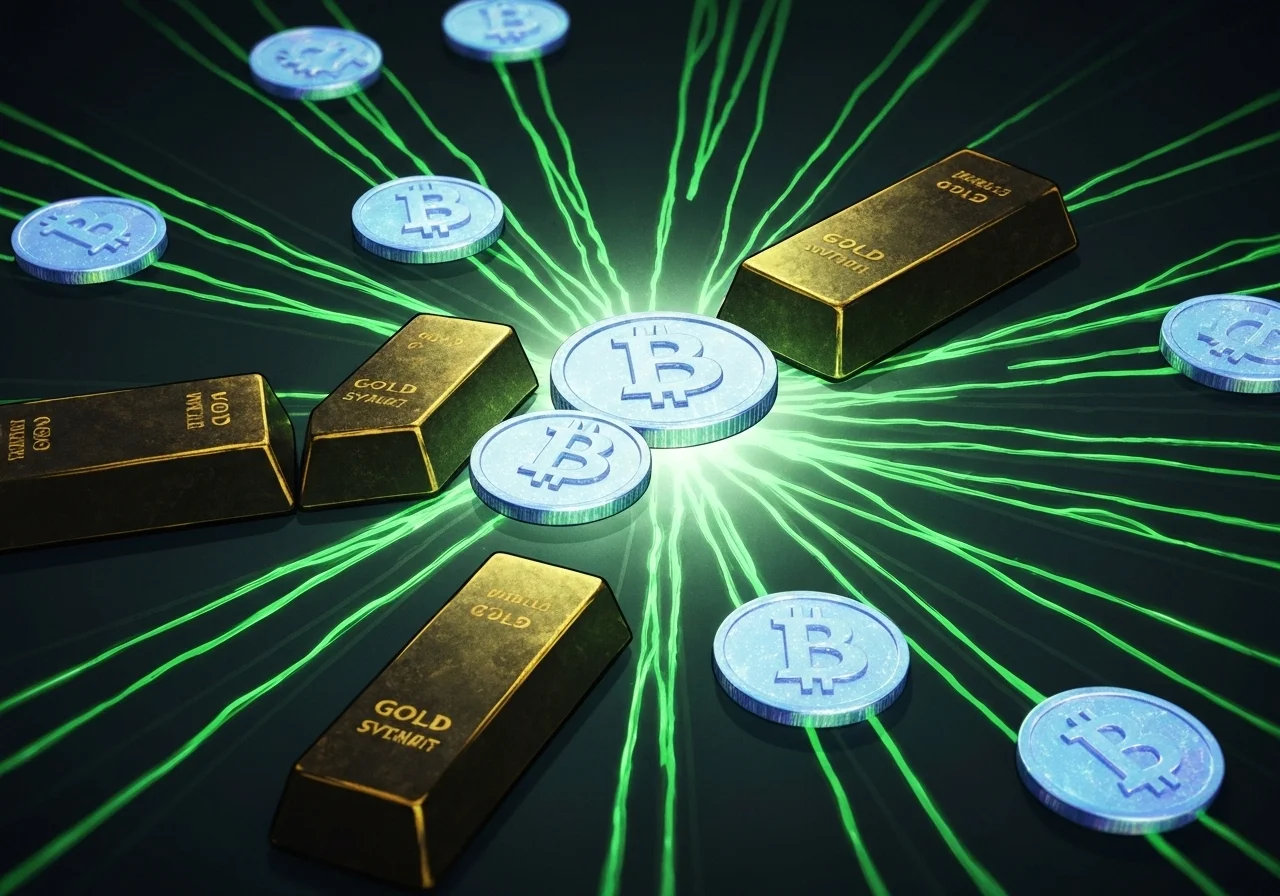
This smacks of 1980s déjà vu—when Reagan weaponized narcotics sanctions against Noriega while turning blind eye to Contra-linked traffickers. The ZeroHedge angle? Today’s sanctions ironically push cartels deeper into crypto and gold smuggling—the very trends Treasury’s FinCEN vowed to combat.
Escalating Bilateral Tensions
Cocaine production dispute
The Treasury Department’s bombshell allegations paint a grim picture: Colombia’s cocaine output has allegedly skyrocketed under President Petro’s watch, hitting "the highest level in decades" per Secretary Bessent (US sanctions Colombian president and family over drug trafficking allegations). This claim—the linchpin for invoking Biden-era Executive Order 14059—ignited a firestorm.
But here’s the rub: independent data suggests the surge began under Petro’s predecessor, Iván Duque, a U.S. ally (US Slaps Extensive Sanctions On Colombian President & Family Over Narco-Trade). Petro’s counterpunch? His administration boasts record cocaine seizures, framing the sanctions as political theater (US places sanctions on Colombian president over alleged failure to stop cartels).
Military operations controversy
The plot thickened when U.S. forces launched controversial strikes in the Caribbean, targeting alleged drug runners. Petro slammed the ops as "extrajudicial killings," citing civilian casualties (US sanctions Colombia's president, accuses him of allowing drug trade expansion).
This Atlantic pivot marks a strategic escalation from traditional Pacific-focused interdictions. White House warnings of further unilateral action—delivered with Trumpian bravado—hint at a protracted standoff (US sanctions Colombian president and family over drug trafficking allegations).
Key events in diplomatic deterioration since 2022
| Date | Event | Consequences |
|---|---|---|
| Aug 2022 | Petro elected as Colombia's first leftist president | Immediate cooling of relations with Republican-led U.S. administration |
| Mar 2024 | U.S. revokes Petro’s visa after pro-Palestinian protests in New York | Petro accuses U.S. of violating international law |
| Sep 2025 | State Department decertifies Colombia’s counternarcotics efforts | Puts $377M annual aid at risk |
| Oct 24 2025 | Treasury sanctions Petro family under EO 14059 | Asset freezes and transaction bans implemented |
The timeline reveals a tit-for-tat pattern, with visa revocations and financial intelligence blacklisting preceding the sanctions. Petro’s Venezuela alignment further fueled Treasury’s narco-terrorism allegations (US Slaps Extensive Sanctions On Colombian President & Family Over Narco-Trade).
Geopolitical Repercussions
Regional alliance shifts
The geopolitical chessboard in Latin America just got reshuffled—hard. President Petro's pivot toward Venezuela's Maduro regime isn't just a diplomatic tête-à-tête; it's a full-blown strategic realignment with teeth. The Treasury Department's sanctions filing reads like a crime thriller, alleging coordination with Venezuela's infamous Cartel de Los Soles (translation: "Cartel of the Suns"). This isn't your garden-variety policy disagreement—it's Colombia voluntarily jumping from the dollar-dominated financial system into the arms of a sanctioned pariah state.
The real kicker? Colombia's abrupt ejection from the Egmont Group, the SWIFT of financial intelligence sharing. When 164 countries collectively freeze you out of their anti-money laundering data pool, that's the institutional equivalent of getting voted off the island. Petro's decision to leak confidential AML protocols didn't just burn bridges—it napalmed them.
Aid and certification impacts
Let's talk about the $377 million elephant in the room—the annual U.S. aid package now hanging by a thread. That's not just pocket change; it's 12% of Colombia's entire security budget evaporating overnight. The decertification hammer came down hard, with the State Department essentially declaring Bogotá's counternarcotics efforts a failed enterprise.
But here's where it gets spicy: the White House left the door cracked open, suggesting certification could return if Colombia shows "verifiable reductions in coca cultivation." Classic Washington move—setting the terms of engagement while Petro's team counters with their own metrics: record cocaine seizures and alternative development programs. This isn't just about drug policy—it's a high-stakes showdown over who gets to define success in the war on drugs. The Guardian's breakdown reveals nearly $125 million of the aid was earmarked specifically for narcotics control, making this fiscal fallout particularly brutal for specialized interdiction units.
The domino effects here are brutal—multilateral financing restrictions, weapons procurement hurdles, the whole nine yards. When the U.S. sneezes, Colombia's entire security apparatus might just catch pneumonia.
Diplomatic Fallout and Legal Challenges
Petro's defiant response
The Colombian president's fiery rebuttal reads like a page from the anti-imperialist playbook—equal parts substance and theater. Petro's claim of unprecedented cocaine seizures (reportedly exceeding 1,200 metric tons in 2025 alone) directly challenges the Treasury's narcotics trafficking allegations. His framing of sanctions as "political arbitrariness" isn't just rhetoric—it's a calculated appeal to Latin American sovereignty sentiments. The leftist leader's reference to his 1980s activism against the Medellín Cartel creates a striking contrast with current accusations, suggesting either catastrophic policy failure or geopolitical targeting. This escalates existing tensions from his September 2025 visa revocation after New York protests, revealing a pattern of confrontations with Washington.
Historical context of US-Latin America relations
The ghosts of Operation Condor are haunting this sanctions regime. When Petro invokes CIA-backed coups and the Iran-Contra scandal's narco-funding loopholes, he's tapping into a regional memory bank of US interventionism. The resurfaced Philip Agee quote about democracy being expendable gives his narrative historical heft—particularly relevant given Washington's past alliances with right-wing regimes combating communism. The parallel to 1980s Nicaragua is especially potent: just as Reagan-era officials allegedly tolerated Contra drug running, Petro implies current sanctions overlook his administration's interdiction successes to punish his anti-interventionist stance. This historical lens transforms a bilateral dispute into a hemispheric credibility test for US drug policy.
| Leader | Country | Year Sanctioned | Primary Justification |
|---|---|---|---|
| Vladimir Putin | Russia | 2014 | Ukraine invasion |
| Nicolás Maduro | Venezuela | 2017 | Democratic backsliding |
| Bashar al-Assad | Syria | 2011 | Human rights violations |
| Kim Jong-un | North Korea | 2016 | Nuclear program |
| Gustavo Petro | Colombia | 2025 | Narcotics trafficking |
References


Get Daily Event Alerts for Companies You Follow
Free: Register to Track Industries and Investment Opportunities