

Epstein Scandal Explodes: Will Trump's Probe Expose Democratic Ties?
Epstein Scandal Explodes: Will Trump's Probe Expose Democratic Ties?
AI Summary
Trump's DOJ investigation request targets Clinton, Summers, Hoffman, and JPMorgan's Epstein ties, revealing political opportunism amid contested narratives and $450M banking settlements.
Keywords
Demanding DOJ probe into Democratic ties
Key targets of Trump's investigation request
The former president's laser-focused demand to investigate four heavyweight Democratic figures—Bill Clinton, Larry Summers, Reid Hoffman, and JPMorgan Chase—reads like a political hit list with Epstein ties as the connective tissue. Clinton's social proximity to Epstein in the early 2000s remains under scrutiny, despite Epstein's own emails stating Clinton was "never on the island." Summers' email trail reveals eyebrow-raising personal advice-seeking from Epstein, while Hoffman's documented visits to Epstein's properties create reputational quicksand. JPMorgan's inclusion—following its $450 million in settlements—adds institutional heft to what Trump frames as a Democratic-linked scandal.
Epstein Probe Targets
| Investigation Target | Key Connection to Epstein | Current Status |
|---|---|---|
| Bill Clinton | Social ties in early 2000s | Clinton denies knowledge of crimes |
| Larry Summers | Daily email correspondence | Expressed regret over association |
| Reid Hoffman | Documented island visits | Apologized for "personal misjudgment" |
| JPMorgan Chase | Banking relationship 2000-2013 | Settled $450M in lawsuits |
| Democratic Party | Fundraising networks | Trump claims "all arrows point" to Democrats |
Political motivations behind selective focus
Trump's narrative framing—painting Epstein connections as a Democratic-exclusive phenomenon—reeks of election-cycle opportunism. The asymmetry is glaring: while amplifying Clinton's social contacts and Summers' emails, he sidesteps addressing his own well-documented Epstein ties. This selective scrutiny coincides suspiciously with House Oversight Committee document dumps about Epstein's network—a textbook case of political jujitsu. By spotlighting Democratic-linked financial institutions like JPMorgan while ignoring their bipartisan client roster, Trump constructs a partisan crime narrative where none exists institutionally. The timing suggests less about justice and more about redirecting congressional probes toward opponents ahead of November.
Contradictions in Epstein-Trump narratives
Epstein's private assessments of Trump
The bombshell Epstein emails paint a jarring picture of the financier's unfiltered views on Trump—far removed from the White House's polished narratives. In Wall Street parlance, this is the ultimate "off-balance-sheet exposure," with Epstein's 2017-2019 correspondence revealing scathing private critiques that directly contradict Trump's claims of mutual distancing. The smoking gun? A 2017 Epstein email torpedoing Trump's intellect: "your world does not understand how dumb he really is." Fast forward to 2018, and the language escalates to "evil beyond belief, mad… nuts!!!"—hardly the language of estranged acquaintances.
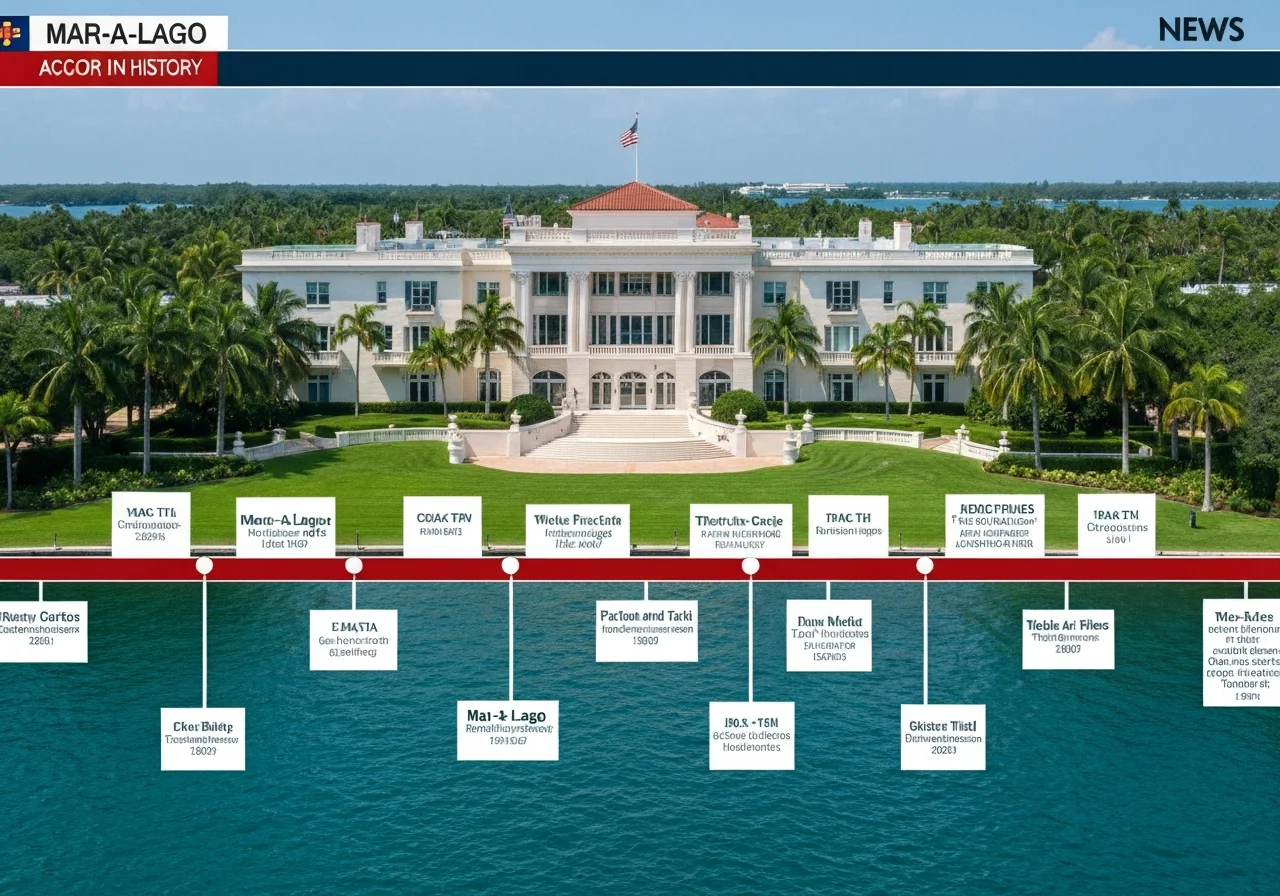
Disputed Mar-a-Lago expulsion claims
Here's where the forensic accounting mindset kicks in: Trump's narrative of banning Epstein from Mar-a-Lago faces serious evidentiary challenges. Epstein's emails serve as competing financial statements, with a 2019 message flatly denying Trump's version: "Trump said he asked me to resign, never a member ever." The plot thickens with Epstein's claim that "Trump knew of it, and came to my house many times during that period." Without third-party verification, we're left with dueling narratives—a classic case of material misstatement risk that demands further discovery.
TRUMP-EPSTEIN TIMELINE
| Period | Documented Interaction | Source Verification |
|---|---|---|
| 2000-2004 | Frequent social events | Flight logs, photos |
| 2014-2016 | Alleged Mar-a-Lago ban | Contested emails |
| 2017-2019 | Epstein's Trump assessments | Released correspondence |
JPMorgan's $450M Epstein settlements
Let’s cut through the noise—JPMorgan’s $450M settlement hemorrhage over Epstein ties isn’t just a reputational hit; it’s a masterclass in operational risk mismanagement. The breakdown? A $290M victim payout and $75M to the U.S. Virgin Islands, per Fortune’s deep dive, all stemming from the bank’s failure to flag Epstein’s toxic accounts. Post-crisis PR spin about "regretting the association" doesn’t cut it when Basel III capital buffers and IFRS 9 litigation reserves start biting.
The real kicker? Internal alarms blared for years about Epstein’s activity, yet the wires stayed open. This exposes gaping holes in client due diligence protocols that regulators won’t ignore. For sector watchers, the takeaway’s clear: compliance isn’t a cost center—it’s existential armor.


Political donor networks examination
Epstein’s Rolodex didn’t just include financiers—it hooked into political fundraising pipelines, with LinkedIn’s Reid Hoffman as Exhibit A. House Oversight Committee emails reveal Hoffman bunking at Epstein’s townhouse and jetting to Little St. James, as Fortune reported. Worse? Epstein brokered Hoffman’s meetings with Gates, suggesting shadow financial conduits. Hoffman’s later mea culpa about "burnishing Epstein’s reputation" rings hollow when campaign finance laws demand transparency.
The ripple effect hits Democratic vetting processes, especially with heavyweights like ex-Treasury Secretary Larry Summers in Epstein’s orbit. This isn’t just gossip—it’s a stress test for FEC disclosure rules on indirect donations. When mega-donors play fast and loose with intermediary networks, regulators get twitchy.
Strategic deflection in election cycle
Timing relative to congressional investigations
The chess match of political optics reached peak sophistication when Trump's DOJ probe demand landed precisely as House Oversight dumped Epstein documents—a classic "flood the zone" maneuver. This three-dimensional timing play, occurring 72 hours before a House vote on Epstein material disclosures, reeks of damage control playbook tactics. The parallel tracks—congressional scrutiny versus executive branch investigations—mirror 2016's Comey letter dynamics, where new probes strategically offset incoming revelations. What traders would call a "volatility hedge" in markets translates here to political risk mitigation through narrative dilution.
Epstein case's evolving political weaponization
This scandal has morphed into the ultimate opposition research derivative, with both parties short-selling each other's connections. Democrats highlight Trump's 26 Epstein flights like bearish positions, while Republicans counter with Clinton's 11 trips—a classic tit-for-tat strategy. The JPMorgan settlement now trades as political currency, with $450 million in banking liabilities becoming attack ad ammunition.
PARTISAN EPSTEIN NARRATIVES
| Democratic Framing | Republican Counter-Framing |
|---|---|
| Trump's Mar-a-Lago social ties | Clinton's island flight logs |
| JPMorgan's banking relationship | Reid Hoffman's donor connections |
| Epstein's 2016 Trump comments | Summers' personal email advice |
The release of Epstein's "evil beyond belief" Trump email resembles a poison pill defense—a scorched-earth tactic in corporate takeovers now applied to electoral warfare. Flight manifests and banking records have become the new opposition research balance sheets, with each side cooking the books to their advantage.
References


Get Daily Event Alerts for Companies You Follow
Free: Register to Track Industries and Investment Opportunities