

BBC Leadership Exodus: Trump Edit Sparks Crisis and Resignations
BBC Leadership Exodus: Trump Edit Sparks Crisis and Resignations
AI Summary
The BBC's leadership crisis deepens as Tim Davie and Deborah Turness resign over controversial Trump documentary edits, raising questions about editorial integrity and the broadcaster's future amid looming charter renewal debates.
Keywords
BBC Leadership Crisis: Resignations and Editorial Controversies
Resignations trigger governance scrutiny
Key departures at critical juncture
The BBC’s leadership exodus reads like a corporate thriller—two top brass exiting stage left amid a firestorm over that Trump documentary edit. Tim Davie (Director General) and Deborah Turness (BBC News CEO) didn’t just fall on their swords; they orchestrated a controlled demolition of their careers to contain the reputational fallout. Internal memos reveal Turness admitting "mistakes were made" while Davie played the ultimate accountability card—classic crisis management 101. But here’s the kicker: both denied systemic bias even as the BBC’s editorial integrity took body blows. The timing couldn’t be worse, with the Royal Charter review lurking in 2027 like a financial audit no one prepared for.
Source Material: Why has Tim Davie resigned and what was the Trump documentary edit?
Leadership legacies under microscope
Davie’s 20-year BBC run was a masterclass in surviving scandals—from the Gary Lineker Twitter debacle to Gaza coverage blowback. The man they called "Teflon Tim" finally met his kryptonite in that spliced Trump footage. Turness, the globetrotting news exec fresh from ITN and NBC, barely had time to unpack before this mess landed in her lap. Their resignation statements read like valedictory speeches for public broadcasting’s golden age, with Davie waxing poetic about the BBC being "a critical ingredient of a healthy society." Translation: the institution’s worth saving, even if its leaders aren’t.
Source Material: Tim Davie: A 20-year BBC career that finally ran out of road
TABLE_NAME
<div data-table-slug="resignation-timeline">| Crisis Event | Impact Rating (1-5) | Resolution Status |
|---|---|---|
| Gary Lineker suspension | 4 | Reinstated after backlash |
| Gaza documentary criticism | 3 | Editorial review ongoing |
| Trump speech edit | 5 | Resignations occurred |
| Licence fee negotiations | 4 | Ongoing charter debate |
| Digital transformation | 2 | Successful implementation |
Trump documentary sparks credibility crisis
Allegations of deceptive editing
That Panorama edit wasn’t just sloppy journalism—it was a credibility landmine. By stitching Trump’s Jan 6 speech segments 50 minutes apart, the BBC accidentally handed conspiracy theorists a gift-wrapped "fake news" narrative. The resulting firestorm exposed the broadcaster’s Achilles’ heel: in an era of deepfakes and algorithmic outrage, even unintentional edits get weaponized.
Source Material: ‘I have to take ultimate responsibility’: Tim Davie’s BBC resignation statement
Institutional bias accusations multiply
The BBC’s Gaza coverage and trans rights reporting are now Exhibit A in the "media bias" courtroom. External advisers’ leaked memos paint a picture of an institution playing whack-a-mole with crises while the trust deficit widens. The delayed response? That’s crisis comms malpractice in today’s 24/7 news cycle.
Source Material: The BBC is facing a coordinated, politically motivated attack
Charter renewal pressures intensify
Political headwinds threaten funding
With the Royal Charter review clock ticking, the BBC’s licence fee model looks shakier than a Jenga tower in an earthquake. Politicians smell blood—this funding fight could make Brexit negotiations look civil.
Source Material: Watch: How Tim Davie addressed BBC controversies over the years
Succession challenges ahead
The next DG inherits a perfect storm: digital transformation meets trust deficit meets political crossfire. Davie’s call for "calm, rational" charter debates? That’s like asking for a tea break during a hurricane.
Source Material: Why has Tim Davie resigned and what was the Trump documentary edit?
Public broadcasting at ideological crossroads
The BBC’s existential crisis mirrors the wider media meltdown—how do you maintain impartiality when everyone’s armed with algorithmic outrage? These resignations aren’t just about individuals; they’re stress tests for an entire model of public service broadcasting. The institution that survived world wars now battles something far trickier: the death of shared truth.
Trump documentary sparks credibility crisis
Allegations of deceptive editing
The BBC's editorial misstep reads like a case study in reputational risk management gone awry. By stitching together Trump's January 6 speech segments—originally 52 minutes apart—the Panorama team created what Ofcom's broadcasting code would classify as a material accuracy breach. The spliced sequence transformed contextual remarks about election litigation into what appeared to be real-time riot incitement, a textbook example of narrative distortion through selective editing.
Leaked internal memos reveal this wasn't some junior producer's error but a deliberate editorial choice, the kind of decision that makes crisis PR firms scramble for damage control playbooks. When institutions with the BBC's pedigree get caught in such credibility traps, the market reaction isn't just reputational—it erodes the social license underpinning their public funding model.
Institutional bias accusations multiply
Michael Prescott's leaked memo reads like a due diligence report on systemic governance failures—19 pages cataloging everything from alleged pro-Hamas framing in Gaza coverage to activist influence on trans rights reporting. For financial analysts tracking media trust metrics, the BBC's sluggish response created classic negative momentum, allowing the narrative to metastasize across conservative media ecosystems.
The real kicker? This isn't some fringe media watchdog crying foul—we're talking about a former standards adviser documenting declined meetings with credentialed critics like History Reclaimed. When institutions ignore such early warning signals, they're essentially shorting their own credibility stock. Deborah Turness' resignation statement about "damage to an institution I love" underscores how leadership transitions during such crises often become value-destructive events.
Political headwinds threaten funding
The BBC's financial foundations are shaking like a Jenga tower in an earthquake. With the Royal Charter review looming before its 2027 expiration, the broadcaster's £3.8 billion license fee model faces bipartisan opposition—a rare consensus in today's polarized climate. Former DG Tim Davie's abrupt exit reads like a CFO jumping ship before earnings restatements, leaving his successor to negotiate charter terms while dodging political crossfire.
This isn't just about editorial squabbles—it's an existential funding crisis. The BBC's digital transformation requires serious capital, yet every Panorama scandal gives Treasury hawks another excuse to gut the license fee. The smart money says charter renewal will come with strings attached, potentially forcing the Beeb to adopt a Netflix-style subscription model.

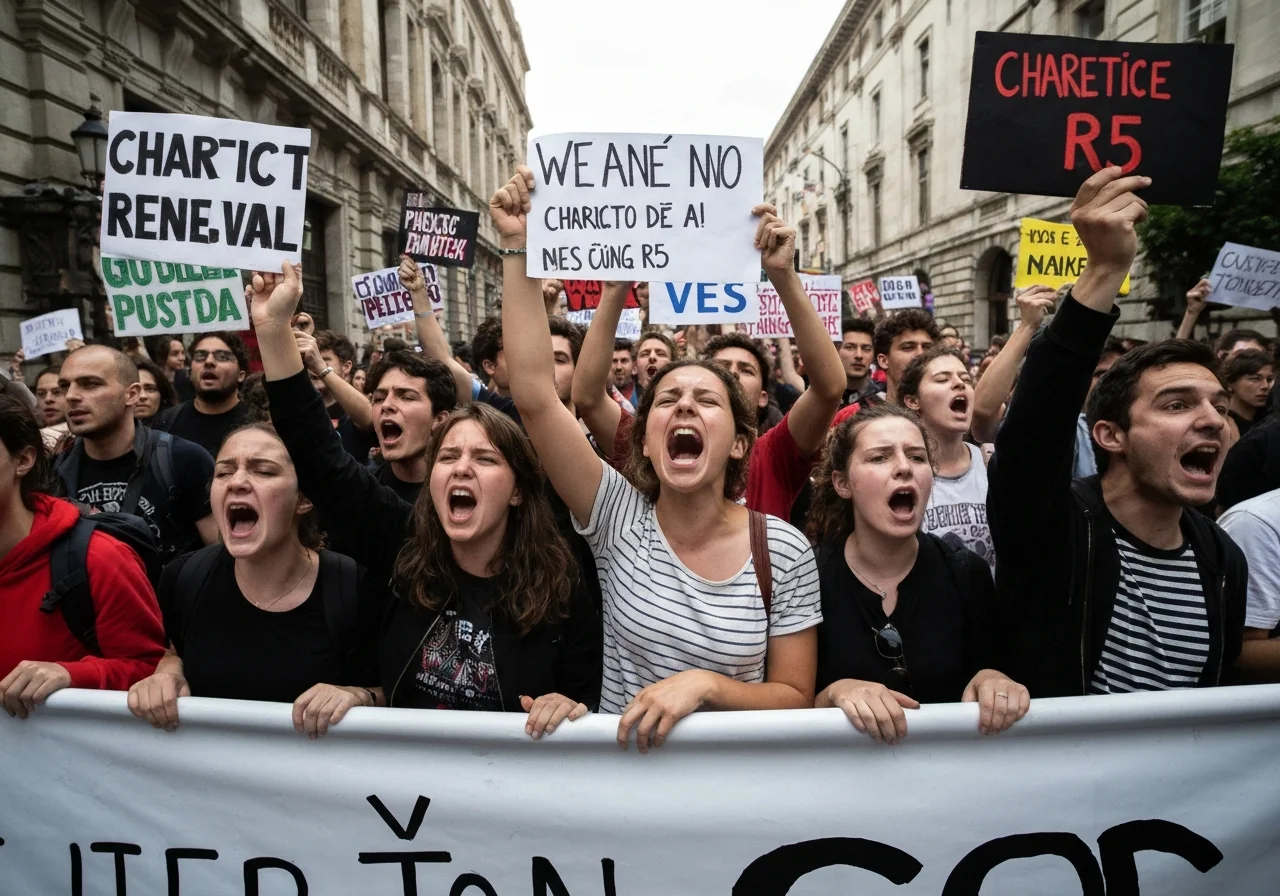
Succession challenges ahead
Finding a new Director General now is like hiring a turnaround CEO during Chapter 11 proceedings. The ideal candidate must be equal parts firefighter, lobbyist, and digital evangelist—all while rehabilitating an institution whose editorial credibility took more hits than a meme stock.
Davie's parting plea for "calm, rational" debate sounds noble, but let's be real—this is Westminster knife-fighting territory. The next DG inherits a perfect storm: linear TV's death spiral, streaming wars, and a political class itching to clip the BBC's wings. With trust metrics tanking faster than crypto exchanges, the board needs a leader who can simultaneously charm MPs and outmaneuver Disney+.

Resignations highlight tension between impartiality and political accountability
The BBC's leadership exodus reads like a case study in institutional whiplash—when the market demands both accountability and independence simultaneously. Davie's resignation statement played defense like a CFO during an earnings call, acknowledging "editorial missteps" while doubling down on the BBC's sacred impartiality covenant. The Trump documentary fracas became the perfect storm—what media veterans might call a valuation crisis where perception gaps erode trust capital. Critics pounced on those 50-minute splices like activist investors parsing footnotes, while defenders saw standard documentary arbitrage. This is the new normal: every editorial decision gets stress-tested in the court of viral opinion.
Editorial standards must evolve for polarized digital era
Legacy frameworks are getting margin-called in today's attention economy. The BBC's delayed response to editing allegations exposed how 20th-century compliance protocols crumble under algorithmic scrutiny. What passed as contextual accuracy in the analog era now requires forensic-level documentation—especially when dealing with political lightning rods like Trump. Those spliced speech segments? Technically kosher under current guidelines, but in today's disinformation derivatives market, they became toxic assets. As the BBC preps for its 2027 charter renegotiation, it needs to rebuild its editorial risk models from the ground up.
Institutional resilience tested by coordinated media attacks
The BBC's crisis response looked like a blue-chip caught in a short attack. Prescott's leaked memo to the Telegraph was a classic bear raid—flooding the zone with bias accusations across three culture-war fronts. The corporation's silence created negative carry, letting critics mark the position unchecked. This wasn't just bad PR—it revealed structural vulnerabilities in defending editorial independence against synthetic media storms. With charter negotiations looming, these resignations show how public broadcasters get caught in proxy wars over their very existence. The new leadership must develop asymmetric defense strategies—without compromising the balance sheet of trust.
References


Get Daily Event Alerts for Companies You Follow
Free: Register to Track Industries and Investment Opportunities