

IDF Abuse Exposed: Will Israel's Military Justice System Survive?
IDF Abuse Exposed: Will Israel's Military Justice System Survive?
AI Summary
Forensic evidence reveals brutal detainee abuse at Sde Teiman prison, while political meddling erodes military justice. International scrutiny mounts as whistleblowers face retaliation. Urgent reforms needed to restore institutional integrity.
Keywords
Investigating the Sde Teiman Prison Incident
Key allegations of detainee abuse
The Sde Teiman case reads like a dystopian balance sheet where human rights liabilities far outweigh any claimed security assets. Forensic accounting of the medical reports reveals grotesque entries: a knife-wielding sexual assault resulting in life-threatening injuries—blunt abdominal trauma, fractured ribs, and a perforated rectum requiring emergency surgery. The detainee’s transfer to a civilian hospital, later corroborated by medical staff testimony, underscores the severity of these alleged war crimes.
Leaked surveillance footage, later authenticated in indictment documents, shows IDF soldiers forming a shield perimeter—a macabre parallel to corporate boardrooms circling wagons during scandal containment. The weaponization of a knife marks a chilling escalation from prior abuse allegations at this facility.
Military justice system response
The MAG Corps’ investigation order under Tomer-Yerushalmi initially suggested institutional accountability, but the subsequent chain reaction exposed systemic cracks. Protesters breaching military compounds—akin to activist shareholders storming annual meetings—forced procedural delays.
TABLE_NAME
| Date | Event | Agency Involved |
|---|---|---|
| July 5, 2024 | Alleged assault occurs at Sde Teiman | IDF Unit 100 |
| August 2024 | Channel 12 broadcasts leaked footage | Israeli Media |
| September 2024 | MAG Corps orders formal investigation | Military Advocate General |
| October 2024 | Detainee released in prisoner exchange | Gaza Authorities |
| November 2025 | Tomer-Yerushalmi arrested for evidence leakage | Israeli Police |
Tomer-Yerushalmi’s admission of leaking evidence, while framed as whistleblowing, became a legal liability mirroring insider trading cases—where noble intent collides with procedural noncompliance. The obstruction charges against her further eroded trust in the military tribunal process, much like accounting scandals undermine audit credibility.
Crisis in Military-Civilian Relations
Politicization of IDF leadership
The Netanyahu administration appears to be playing a dangerous game of musical chairs with military leadership—except the music stops when political loyalty outweighs operational competence. Defense Minister Israel Katz's alleged foot-dragging on senior promotions reeks of the same partisan meddling that previously targeted Israel's judiciary, creating what veteran analysts might call a "governance arbitrage opportunity" where institutional independence gets shorted.
The Tomer-Yerushalmi saga reads like a distressed asset sale: a decorated Military Advocate General allegedly pressured to liquidate the Sde Teiman investigation, complete with accusations of evidence fabrication. Her nuclear option—leaking that stomach-churning abuse video—was the equivalent of a whistleblower dumping toxic assets onto the public market. Parallel moves by Justice Minister Levin to muzzle the Attorney-General suggest this isn't isolated slippage, but systemic regulatory capture.
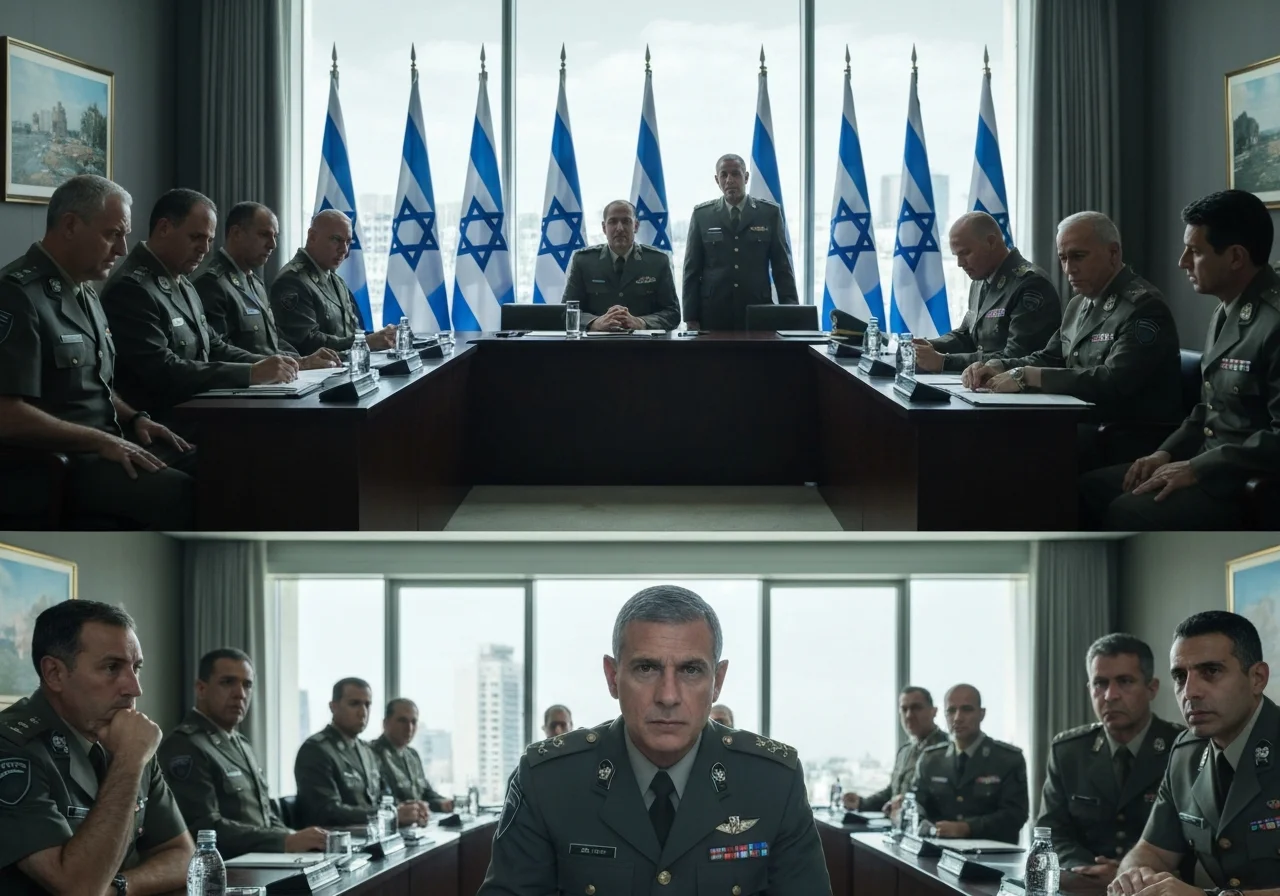
IDF CHAIN OF COMMAND
| Position | Current Officeholder | Political Affiliation |
|---|---|---|
| Chief of Staff | Herzi Halevi | Unaffiliated |
| Military Advocate General | (Vacant) | N/A |
| Southern Command Chief | Yaron Finkelman | Likud-aligned |
| Unit 100 Commander | (Redacted) | Under investigation |
Public backlash and institutional erosion
When Channel 12 aired that Sde Teiman footage, it triggered a societal margin call—protests breaching military compounds like activist shareholders storming a boardroom. The government's response? Doubling down with Netanyahu's "propaganda attack" rhetoric and Katz's loyalty litmus tests, effectively leveraging the crisis to consolidate control.
This institutional decay mirrors the toxic derivatives of the Rabin era—right-wing commentators popping champagne over the MAG's arrest recalls 1995's lethal incitement. The Shin Bet's earlier purge of director Bar for probing Netanyahu's Qatar ties suggests security institutions are being structurally subordinated, like subsidiaries in a hostile takeover. The weekend overlap with Rabin memorials wasn't just ironic—it was a flashing red governance risk indicator.
Legal Repercussions for Key Figures
Tomer-Yerushalmi's Controversial Actions
The legal storm surrounding Major General Yifat Tomer-Yerushalmi, Israel's former top military lawyer, reads like a high-stakes corporate governance meltdown—only with handcuffs instead of golden parachutes. At the heart of the scandal lie three explosive charges: fraud, breach of trust, and obstruction of justice, each carrying the weight of a military tribunal. Her admission to leaking classified footage of alleged detainee abuse at Sde Teiman prison—akin to an insider blowing the whistle on cooked books—triggered a judicial chain reaction.
Court documents reveal investigators are scrutinizing whether she misled Israel's High Court about the video's origins, with her detention extended through November 2025. The Defense Minister's public accusation that she fabricated "blood libels" against IDF soldiers adds fuel to this legal dumpster fire. Her abrupt resignation and subsequent disappearance—complete with an abandoned car near a Tel Aviv cliff—could be ripped straight from a corporate espionage thriller.
|
|----------------------|----------------------------------|----------------------|
| Military (Tomer-Yerushalmi) | Fraud, Obstruction, Breach of Trust | Detention Extended |
| Civilian Protesters | Trespass, Violence | Pending Trial |
| IDF Unit 100 Soldiers | Sexual Assault, Abuse of Power | Court Martial Ongoing |
| Political Figures | Incitement (Under Review) | No Indictments |
Judicial Independence Concerns
When Justice Minister Yariv Levin tried blocking Attorney General Gali Baharav-Miara from reviewing Tomer-Yerushalmi's case, it was the equivalent of a board chairman meddling with an internal audit—a red flag for institutional investors and citizens alike. This mirrors Netanyahu's controversial 2023 judicial overhaul attempts, which sparked mass protests over fears of eroding checks and balances.
The government's interference extends beyond the courtroom into military appointments, with Defense Minister Katz allegedly delaying promotions to ensure ideological conformity—a move that would make any corporate governance watchdog bark. The dismissal of Shin Bet's director earlier in 2025 for investigating Qatari influence on Netanyahu's office sets a troubling precedent, suggesting Israel's institutional firewalls are cracking under political pressure. As the High Court navigates these choppy waters, its ability to impartially adjudicate military misconduct cases hangs in the balance—much like a company's audit committee under shareholder scrutiny.
Polarization Echoing Rabin Assassination Era
Historical parallels in political violence
The current political climate surrounding the Tomer-Yerushalmi scandal reads like a grim replay of the Rabin assassination playbook. Right-wing firebrands like Yinon Magal are deploying the same inflammatory rhetoric that once targeted Rabin, with Magal’s "We can resume the lynch" social media post serving as a chilling callback to 1990s-era incitement. The security establishment’s credibility is taking hits reminiscent of the Rabin years, particularly with allegations of political meddling in military justice—specifically, pressure to shelve the Sde Teiman investigation. This isn’t just déjà vu; it’s institutional erosion in real time.
International reputation damage control
The Netanyahu government’s attempt to dismiss abuse footage as "anti-Israel propaganda" is running headfirst into the brick wall of international law. Medical evidence—including a perforated rectum requiring civilian hospitalization—meets the UN’s Istanbul Protocol standards for torture documentation. Defense Minister Katz’s "blood libel" deflection strategy, framing war crimes allegations as antisemitic attacks, has drawn sharp rebukes from human rights monitors. When the evidence speaks this loudly, reputation management starts to look like denial.
GEOGRAPHIC DISTRIBUTION OF MEDIA COVERAGE
| Region | Major Outlets Reporting | Primary Narrative Angle |
|---|---|---|
| Asia-Pacific | Japan Times, SMH | Legal/Institutional Crisis |
| Europe | BBC, Le Monde | Human Rights Violations |
| North America | AP, NY Times | Political Polarization |
| Middle East | Al Jazeera, Haaretz | Security Sector Reform |
References


Get Daily Event Alerts for Companies You Follow
Free: Register to Track Industries and Investment Opportunities