

Is Macron's Government Collapsing? France Faces Unprecedented Crisis
Is Macron's Government Collapsing? France Faces Unprecedented Crisis
AI Summary
France's political instability deepens as Macron's shortest-serving PM resigns after 26 days, triggering a 1.8% CAC 40 drop and euro decline. Retaining scandal-plagued ministers worsens the crisis, while National Assembly gridlock blocks reforms. Investors should monitor eurozone bond spreads closely.
Keywords
Macron Faces Deepening Governance Crisis
Shortest-serving PM in modern history
The political equivalent of a flash crash—Sébastien Lecornu's 26-day premiership has shattered France's stability benchmarks like a Black Swan event in sovereign governance. This seventh cabinet reshuffle since Macron's 2022 re-election isn't just musical chairs; it's systemic dysfunction manifesting through vanishingly short political half-lives. The Elysée's official statement about "unfulfilled governance conditions" reads like a corporate earnings warning—vague enough to avoid panic, but signaling deep rot.
Cabinet composition triggers cross-party backlash
Talk about doubling down on a losing position—Macron's 100% retention rate for key ministers would make even value investors cringe. The reappointment of scandal-plagued Justice Minister Dupond-Moretti wasn't just tone-deaf; it was political leverage gone horribly wrong. Markets reacted with the predictability of algorithmic trading—CAC 40 shedding 1.8% as institutional confidence evaporated.
MINISTERIAL RETENTION RATES
| Ministry | % Retained from Previous Cabinet |
|---|---|
| Finance | 100% (Roland Lescure reappointed) |
| Defense | 100% (Bruno Le Maire retained) |
| Interior | 100% (Gérald Darmanin continued) |
| Foreign Affairs | 100% (Jean-Noël Barrot kept) |
| Justice | 100% (Éric Dupond-Moretti stayed) |
This retention strategy wasn't just optically terrible—it revealed the administration's liquidity crisis of fresh ideas. When 72% of voters question your mandate per IFOP polls, you're not governing—you're short-selling time.
Economic and Political Fallout
Financial markets react to leadership vacuum
The CAC 40 took a nosedive of 1.8%—a classic "risk-off" tantrum—as traders priced in France's latest political drama. The euro got caught in the crossfire, shedding 0.6% against both the greenback and sterling as investors scrambled for safe havens. This isn't just knee-jerk volatility; it's a calculated bet against France's reform trajectory. With Macron cycling through PMs like trading cards (seven since 2022), the budget deficit now flirts dangerously with the EU's 3% red line. Market veterans recognize this pattern: when political musical chairs meets fiscal tightening, sovereign credit spreads start twitching.
Parliamentary arithmetic compounds challenges
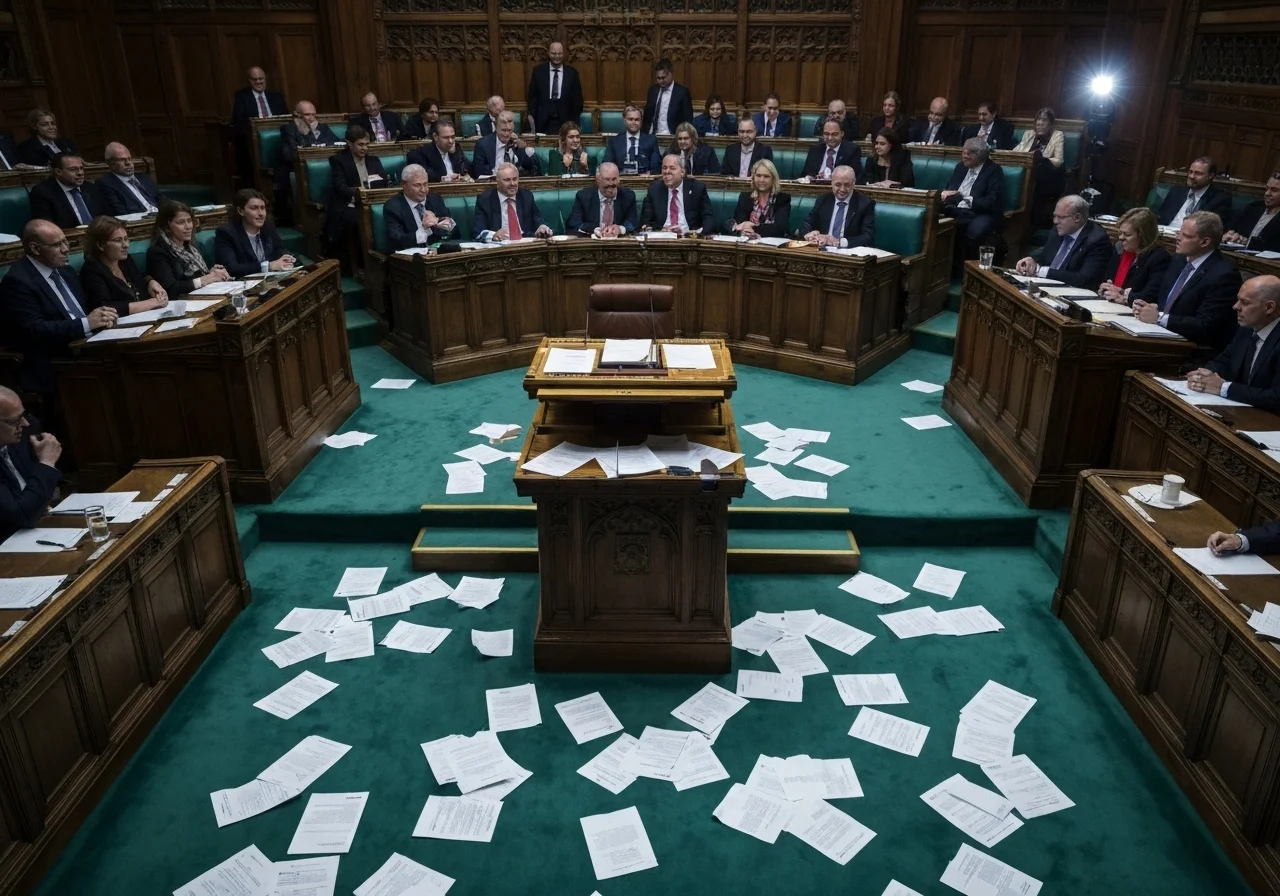
France's legislative logjam just turned toxic. The National Assembly's fractured math—where Macron's Renaissance party holds just 168 seats—has rendered Article 49.3 constitutional overrides a legal minefield. Opposition blocs are already sharpening knives for a no-confidence vote, paralyzing must-pass reforms like pension adjustments. The seat distribution tells the story: National Rally's 55-seat surge and NUPES' gains have turned governance into a high-stakes poker game. Without consensus, France's AA rating hangs by a thread—and bond vigilantes are taking notes.
Current party representation in National Assembly
| Party | Seats (577 total) | Change vs 2022 |
|---|---|---|
| Renaissance (Macron) | 168 | -82 |
| National Rally | 142 | +55 |
| NUPES Alliance | 131 | +12 |
| LR Conservatives | 62 | -15 |
| Other | 74 | +30 |
Governance at Crossroads in Fifth Republic
Shortest-serving PM in modern history
The Fifth Republic's institutional scaffolding is creaking under pressure - Lecornu's 26-day flameout isn't just a personnel shuffle but a canary in the coal mine for Macron's waning political capital. With seven PM changes since 2022, we're witnessing turnover rates that would give even private equity vultures vertigo. The BBC timeline reveals this isn't mere turbulence but systemic erosion of executive authority. When cabinets last shorter than quarterly earnings cycles, markets rightly question policy durability.
Cabinet composition triggers cross-party backlash
Here's where the rubber meets the road - retaining Le Maire at Finance signals either stubborn consistency or tone-deafness, depending which political risk analyst you ask. The ABC News report shows this wasn't just internal dissent but a full-spectrum rejection. In corporate governance terms, it's like a board reappointing a controversial CFO during activist shareholder pressure - the optics alone trigger event-driven hedge funds to short your credibility.
Financial markets react to leadership vacuum
The 1.8% CAC 40 haircut (Perth Now) tells only half the story - watch the eurozone bond spreads for the real stress test. When political volatility outpaces VIX indices, even sovereign wealth funds recalculate risk premiums. The euro's stumble reflects currency traders pricing in diminished austerity enforcement capacity.
Parliamentary arithmetic compounds challenges
Macron's predicament mirrors a hostile takeover defense gone wrong - with no working majority, every budget vote becomes a proxy fight. The toxic Article 49.3 overrides now carry the stench of zombie companies - technically alive but governance-paralyzed. When rating agencies start whispering about downgrades, the deficit reduction timetable becomes fantasy football.
Structural reforms face legislative blockade
The Times of India dissection reveals the core pathology - France's political leverage ratio has flipped. Where Macron once deployed supermajority force, he now begs opposition crumbs. The €15 billion fiscal consolidation promise? More endangered than speculative-grade bonds in a hawkish Fed cycle. When constitutional hardball meets Maastricht criteria, something's gotta give.
References


Get Daily Event Alerts for Companies You Follow
Free: Register to Track Industries and Investment Opportunities