

John Bolton Indictment Exposes DOJ's Selective Prosecution
John Bolton Indictment Exposes DOJ's Selective Prosecution
AI Summary
The federal indictment of John Bolton highlights 18 criminal counts for mishandling classified documents, drawing comparisons to Trump's case and raising concerns about political bias in DOJ prosecutions. Historical data shows systemic document control failures, yet enforcement remains inconsistent. Legal experts warn of eroded trust in national security protocols.
Keywords
Analyzing the criminal charges
Nature of the 18-count indictment
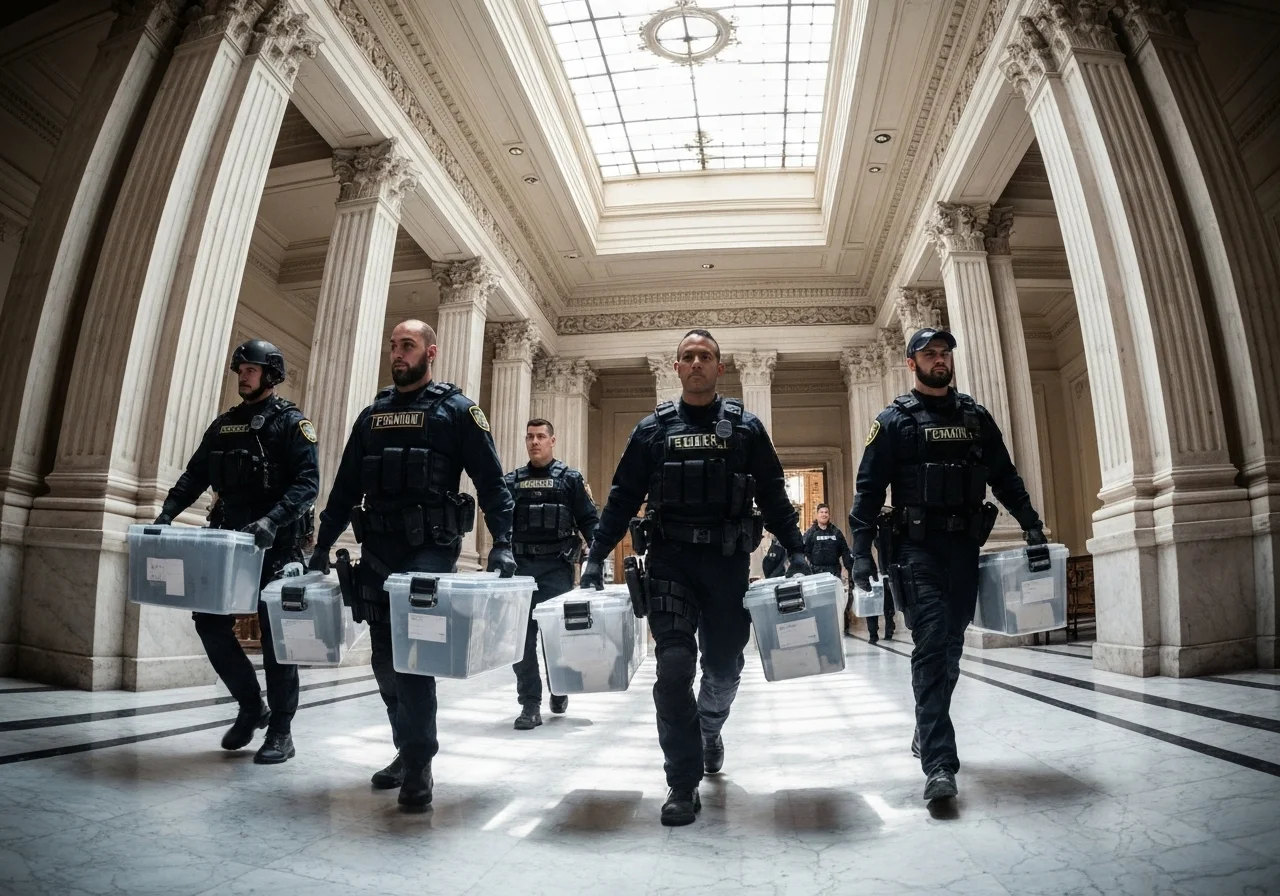
The federal indictment against John Bolton reads like a compliance officer's worst nightmare—18 criminal counts of playing fast and loose with classified national defense intel. Court docs reveal the former national security adviser allegedly emailed diary-style notes packed with sensitive material to family members, triggering an FBI raid that turned up documents still bearing classification markings.
Legal eagles are zeroing in on violations of 18 U.S. Code § 793(e)—the same statute that trips up Wall Street firms mishandling material nonpublic information. Unlike traditional espionage cases, this prosecution hinges on sloppy document hygiene rather than foreign collusion. The FBI's search warrants specifically targeted electronic comms and paper trails from Bolton's 2018-2019 tenure, suggesting a pattern worthy of an SEC enforcement action.
Comparison with similar document cases
This case sits at the intersection of legal precedent and political theater—think Enron meets Watergate. The Vox analysis spotlights how document mishandling spans administrations like a recurring compliance failure, from Reagan-era slip-ups to Trump's Mar-a-Lago document debacle.
| Metric | Bolton Case (2025) | Trump Case (2023) | Reagan-Era Precedents |
|---|---|---|---|
| Charges Filed | 18 counts | 37 counts | Rare prosecutions |
| Investigation Trigger | Internal DOJ referral | National Archives request | Ad hoc reviews |
| Prosecution Timing | 6 years after tenure | 2 years after tenure | Typically deferred |
| Political Context | Active Trump-Bolton feud | Post-presidency dispute | Low visibility |
| Outcome | Pending trial | Acquitted on appeal | Administrative resolutions |
The National Archives data reveals systemic document control failures—akin to finding material weaknesses in corporate financial reporting—yet prosecutions remain as rare as a clean SOX audit. Bolton's case stands out for its career prosecutor-led grand jury presentation, contrasting sharply with the political circus surrounding Trump's indictment.
The subsequent chain reaction manifests in troubling questions about selective enforcement—when document violations are as common as accounting irregularities, why does this particular case warrant the full prosecutorial treatment? Fundamentally, this dynamic underscores the precarious balance between national security protocols and political vendettas.
Political context of prosecution
Timeline of Bolton-Trump tensions
The Bolton-Trump saga reads like a Wall Street short squeeze gone wrong—what began as a strategic alliance in 2018 when the hawkish UN ambassador joined Trump's inner circle quickly unraveled into public warfare. Their initial alignment on "America First" policies masked fundamental fissures that erupted over North Korea negotiations and Venezuela strategy, culminating in Bolton's unceremonious 2019 firing via Twitter. The real knockout punch came with Bolton's 2020 memoir "The Room Where It Happened," which became Exhibit A in Trump's first impeachment by exposing classified discussions—triggering a DOJ investigation that lay dormant until its 2025 revival.
Justice Department procedural concerns
This case has legal eagles squawking about due process—on one wing, we've got a career prosecutor presenting evidence through proper channels, while political appointees allegedly turbocharged the timeline. The three-month sprint from raid to indictment would make even high-frequency traders blink, especially when stacked against typical classified docs cases that drag for years. SCMP reports suggest Trump personally strong-armed AG Bondi to target critics, swapping out prosecutors like underperforming fund managers. Yet Bolton's alleged email trail of classified notes gives this more teeth than your average political hit job.
Broader implications for governance
Precedent in classified documents enforcement
The Bolton indictment pulls back the curtain on what National Archives records confirm—a decades-long pattern of classified materials mismanagement across administrations. This historical context transforms what might appear as routine enforcement into a textbook case of selective prosecution. The 18-count indictment targeting Bolton's "diary-like" notes contrasts sharply with the FBI's August 2025 raid uncovering marked documents, exposing the Justice Department's inconsistent playbook.
Fundamentally, this enforcement lottery creates perverse incentives—national security officials now face Schrödinger's documents: simultaneously classified and unclassified until the DOJ decides to look. The subsequent chain reaction manifests in eroded trust in document protocols, with career prosecutors caught between national security mandates and political optics.
Weaponization risk in document cases
| Defendant | Charges Filed | Timing Relative to Elections | Career Prosecutor Involvement |
|---|---|---|---|
| John Bolton | 18 counts | 11 months pre-midterms | Yes |
| James Comey | 6 counts | 15 months pre-presidential | No |
| Letitia James | 4 counts | 9 months pre-midterms | No |
The Bolton case reads like a masterclass in legal asymmetrical warfare—career prosecutors lend credibility while the pre-midterm timing fuels retaliation narratives. This dual-track approach creates a chilling effect that could freeze routine document handling into paralysis.
Notably, the Justice Department's alleged pressure campaigns against Trump critics suggest document charges may become the new political WMDs—weapons of mass deterrence. The institutional corrosion here is palpable, transforming national security protocols into potential instruments of partisan warfare rather than safeguards of state secrets.
Justice System Under Political Pressure
Selective prosecution debate
Let’s cut through the noise—Bolton’s indictment isn’t just about classified docs; it’s a litmus test for prosecutorial fairness. Unlike the circus around Comey and James, Bolton’s case hinges on hard evidence: emails containing "diary-like" classified notes sent to family, per The Logoff’s deep dive. The DOJ’s playbook here is intriguing: a career prosecutor leading the charge (a credibility win) versus Trump’s documented pressure to fast-track charges (a red flag).
Historical context throws gasoline on this fire. National Archives data reveals every administration since Reagan flubbed document handling—yet prosecutions are rarer than a bipartisan bill. Bolton’s divergence from Trump’s case (where ignored retrieval requests preceded indictment) fuels suspicions of political score-settling, especially after the FBI’s August 2025 raid during peak Trump-Bolton tensions.
Erosion of DOJ independence norms
The DOJ’s guardrails are crumbling faster than a Jenga tower in a windstorm. Post-2021 reforms have turned case approvals into a political playground, with appointees—not career staff—now holding the gavel. The Bolton indictment fits Trump’s playbook: ousting prosecutors who didn’t hammer his critics hard enough, as SCMP reports.
DOJ Oversight Changes
| Reform Measure | Pre-2021 Protocol | Post-2021 Change |
|---|---|---|
| Case Approval Authority | Deputy AG/Career Staff | Political Appointees |
| Grand Jury Oversight | Independent Magistrates | Executive Branch Liaisons |
| Charging Timeline | 6-18 Month Review | 90-Day Expedited Process |
These shifts mirror Trump’s vow to "fight fire with fire." Legal eagles warn CBS News this could spook officials from keeping records—torching transparency in the process.
References


Get Daily Event Alerts for Companies You Follow
Free: Register to Track Industries and Investment Opportunities