

Shocking Knife Rampage Exposes Critical Police Failures
Shocking Knife Rampage Exposes Critical Police Failures
AI Summary
A series of violent knife attacks in Huntingdon escalated from a teen stabbing to a mass train incident, revealing police response gaps and prompting security upgrades. Analyze the timeline, victim impact, and new safety measures.
Keywords
Analyzing the sequence of violent incidents
Timeline of connected knife attacks
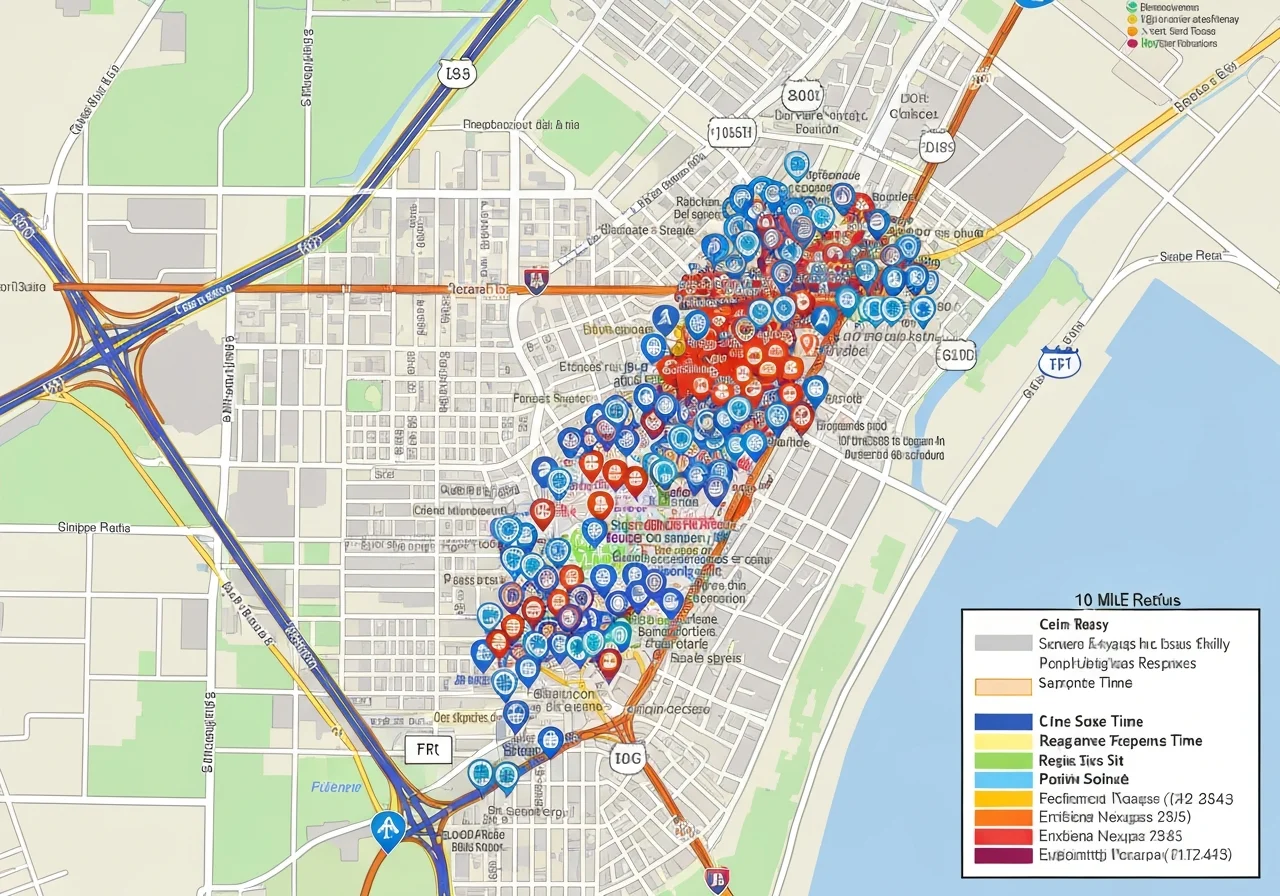
The violent spree unfolded like a cascading failure in risk management—what began as an isolated incident rapidly metastasized into systemic chaos. At 7:10pm on October 31, the initial "black swan" event occurred: a 14-year-old boy stabbed in Peterborough city center (Cambridgeshire police reports). Fifteen minutes later, the crisis entered its contagion phase with a knifeman sighting at a Fletton barbershop—yet critical response delays created dangerous exposure gaps. By November 1, the volatility peaked when Anthony Williams allegedly turned a Doncaster-to-Huntingdon train into a moving crime scene, injuring 11 passengers before containment (court charging documents).
HUNTINGDON-INCIDENT-MAP
| Location | Time | Incident Type | Police Response Time |
|---|---|---|---|
| Peterborough City Center | 7:10pm Fri | Teen stabbing | 18 min (suspect fled) |
| Fletton Barbershop | 7:25pm Fri | Knifeman sighting | 2hr reporting delay |
| LNER Train (Huntingdon) | 6:25-7:41pm Sat | Mass stabbing | 8 min (per BTP) |
Police response gaps and IOPC referral
The operational breakdowns mirror a flawed risk assessment model—Cambridgeshire police's 2-hour lag on the barbershop alert became the "value-at-risk" threshold breached. Their official disclosure confirms three critical control failures: 1) No dispatch for the initial sighting (liquidity crisis equivalent), 2) Saturday's 9:25am follow-up miss (counterparty risk), and 3) Failure to connect Friday's stabbing to subsequent events (correlation blindness). The voluntary IOPC referral signals institutional recognition of these alpha-eroding lapses, with British Transport Police now acting as the "special administrator" (BTP statements).
Impact assessment of train stabbing
Victim profiles and injury severity
The Huntingdon train attack left 11 casualties across a spectrum of injury severity, with Scunthorpe United defender Jonathan Gjoshe emerging as a high-profile case. The 22-year-old athlete sustained non-life-threatening wounds during the knife rampage aboard the LNER service, as confirmed by his club's carefully worded statement—a textbook example of crisis communications in professional sports organizations Scunthorpe United defender hospitalized with non-life-threatening injuries.
Medical triage data reveals a bifurcated recovery trajectory: nine victims initially required critical care, while five demonstrated sufficient resilience for same-week discharge. The most severe case involved an LNER staff member whose critical but stable condition underscores the physical costs of frontline crisis response—a scenario Transport Secretary Heidi Alexander explicitly linked to casualty prevention LNER staff member in critical condition after defending passengers.
<div data-table-slug="huntingdon-victim-data">| Injury Severity | Victim Count | Notable Cases |
|---|---|---|
| Critical condition | 1 | LNER cafe staff member |
| Stable hospitalization | 3 | Jonathan Gjoshe (footballer) |
| Discharged | 5 | Multiple passengers |
| Pending assessment | 2 | Barbershop incident victims |
Heroic interventions by staff and passengers
The attack's casualty count would have been actuarially worse without extraordinary interventions by transport workers and civilians. An LNER cafe employee's critical injuries resulted from physically shielding passengers—a textbook duty of care escalation that eyewitnesses described as deliberate self-sacrifice. Transport Secretary Alexander's recognition of these actions as fatality-preventing creates a compelling case study in crisis leadership Heroic LNER staff interventions during attack.
Passenger Stephen Crean's child-protective positioning—despite sustaining injuries—exemplifies the bystander effect in reverse. The Nottingham Forest fan's social media commendations highlight how crisis responses often contradict baseline personality profiles, a phenomenon well-documented in disaster psychology literature Passenger Stephen Crean's child protection efforts. Transport For London worker Dean McFarlane's professional evacuation execution contrasts sharply with his subsequent psychological trauma—a reminder that even trained responders experience operational stress injuries Platform witness Dean McFarlane's trauma response.
Judicial proceedings and security implications
Court charges against Anthony Williams
The case against Anthony Williams reads like a grim ledger of urban violence—11 counts of attempted murder spanning two knife attacks that sent shockwaves through Britain's transport network. Prosecutors allege the 32-year-old wielded a "large kitchen knife" with chilling efficiency: first at Pontoon Dock DLR station (leaving a man with facial injuries around 12:45am on November 1), then during a 6:25pm rampage aboard an LNER service where 10 victims were stabbed. The charge sheet—which includes two counts of possessing a bladed article and one assault occasioning actual bodily harm—paints a portrait of escalating violence.
Notably, bail was denied after prosecutors highlighted Williams' alleged assault on arresting officers, resulting in a broken nose. British Transport Police's widening investigation now incorporates three Peterborough incidents from October 31-November 1, including the stabbing of a 14-year-old boy—a development that suggests potential pattern behavior.
Transport security protocol review
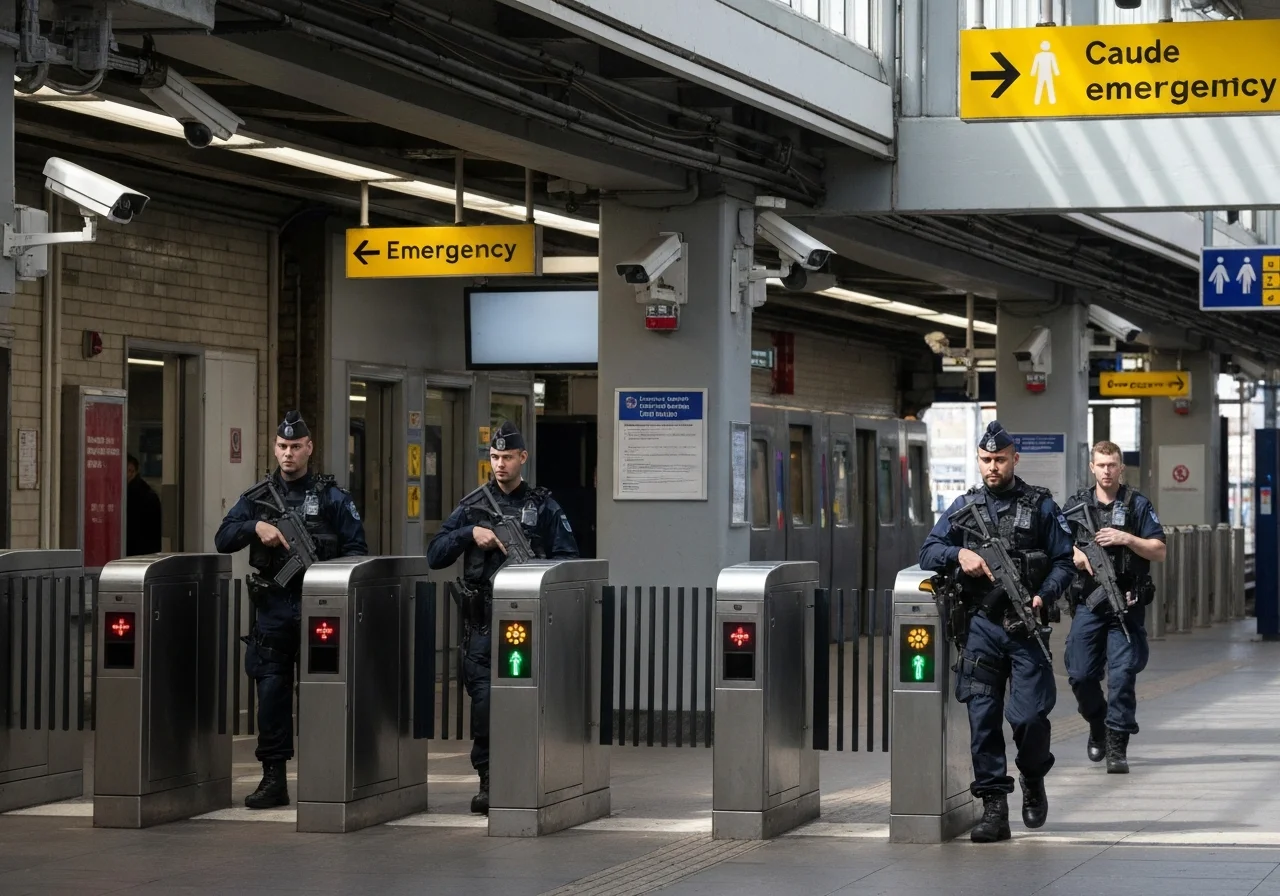
In the attack's aftermath, UK rail networks underwent a security overhaul worthy of a counterterrorism drill. Armed police materialized at major hubs like St Pancras International, while Network Rail implemented temporary station closures and enhanced surveillance—measures typically reserved for terror threats. The LNER Azuma train involved became a forensic exhibit, removed from Huntingdon station for examination.
Transport Secretary Heidi Alexander's revelation that Williams wasn't known to counter-terrorism authorities triggered a pivot toward bladed weapon detection. Witness Dean McFarlane—a Transport for London worker whose platform intervention prevented further casualties—became the human face of revised vigilance training. The Department for Transport's protocol review now scrutinizes systemic gaps, particularly the troubling 2-hour delay between the Fletton barbershop sighting and police notification.
SECURITY_MEASURES_TIMELINE
| Measure Type | Implementation Timeframe | Location Coverage |
|---|---|---|
| Armed Police Patrols | Immediate (Nov 2) | Major London termini |
| CCTV Analytics Upgrade | Planned (Q1 2026) | 35 high-risk stations |
| Blade Detection Trials | Pilot (Dec 2025) | Huntingdon/Peterborough |
| Staff Defense Training | Rolling (From Nov 10) | All LNER crews |
Public safety and trauma aftermath
Psychological impact on witnesses
The Huntingdon train attack has left deep psychological scars on those who witnessed the violence firsthand. Transport for London worker Dean McFarlane, who was waiting on the platform when the emergency-stopped train arrived, described experiencing insomnia and appetite loss in the aftermath. According to his interview on This Morning, the shock didn't fully hit him until after leaving the scene, when he felt physically ill and disoriented. His account reveals how secondary exposure to mass violence can trigger trauma responses similar to direct victims.
Medical professionals note such symptoms align with acute stress reactions, where the body's fight-or-flight response remains activated long after the danger has passed. The delayed onset McFarlane described - where initial adrenaline gives way to nausea and sleep disturbances - matches clinical patterns seen in other transportation attack survivors.
Community vigilance recommendations
Witness testimony underscores the delicate balance between heightened awareness and paralyzing fear. McFarlane emphasized the importance of situational awareness, stating people should "[learn] what's around you" to identify escape routes during crises. However, he cautioned against living in constant fear, advocating for practical preparedness over panic. His recommendations reflect security experts' guidance about maintaining normalcy while recognizing warning signs like unattended packages or erratic behavior.
The attack has prompted discussions about training civilians in emergency response without fostering hypervigilance. McFarlane's background in transportation operations enabled him to assist others during the chaos, suggesting value in widespread basic safety education. Authorities now face the challenge of implementing visible security measures that deter threats without making public spaces feel like fortresses.
SECURITY-MEASURES-POST-ATTACK
<div data-table-slug="security-measures-post-attack">| Pre-Attack Protocol | Post-Attack Changes |
|---|---|
| Routine patrols | Armed police deployments |
| Passive surveillance | Active threat detection teams |
| Standard staff training | Trauma-informed response drills |
| Reactive incident response | Predictive analytics monitoring |
References


Get Daily Event Alerts for Companies You Follow
Free: Register to Track Industries and Investment Opportunities