

Gaza Ceasefire Deal: Unpacking the High-Stakes Hostage Exchange
Gaza Ceasefire Deal: Unpacking the High-Stakes Hostage Exchange
AI Summary
The landmark Gaza agreement features an unprecedented 20:2000 hostage-prisoner swap and phased IDF withdrawal, while exposing governance disputes and aid bottlenecks. Strategic analysis reveals how this deal reshapes Middle East power dynamics.
Keywords
Phase One Agreement Details
Hostage-Prisoner Exchange Mechanism
The Gaza peace deal's opening gambit features a lopsided 1:100 hostage-prisoner swap—20 living Israelis for 2,000 Palestinians—that would make even the 2011 Shalit deal (1:1,027) look restrained by comparison. Hamas officials confirm the terms, but the devil's in the details: verifying identities of 250 lifers convicted of violent offenses through Egyptian mediators, all while racing against a 72-hour clock post-Israeli cabinet approval. This high-stakes transaction mirrors distressed asset swaps, where verification bottlenecks can derail entire agreements.
TABLE_NAME
| Category | Hamas Commitment | Israeli Obligation |
|---|---|---|
| Living Hostages | 20 released within 72 hrs | 2,000 prisoners freed |
| Deceased Hostages | Bodies returned later | N/A |
| Prisoner Composition | N/A | 250 life sentences + 1,750 |
| Mediation Channels | Egypt/Qatar verification | IDF security checks |
Israeli Military Withdrawal Timeline
The IDF's 24-hour withdrawal pledge—its first full disengagement since the 2005 Gaza pullout—reads like a leveraged buyout with undefined exit terms. That vague "agreed upon line" leaves security analysts sweating, recalling how the 2014 ceasefire collapsed amid similar ambiguity. Perth Now's military sources note the operational tightrope: dismantling forward positions while maintaining counterterrorism ops, especially around Gaza City's still-"extremely dangerous" periphery. This partial pullback risks creating the same security vacuum that doomed Lebanon's 2000 withdrawal, turning tactical repositioning into strategic vulnerability.
Stakeholder Responses
Political Leadership Statements
The Gaza peace deal reveals a textbook case of diplomatic framing divergence. President Trump's Truth Social declaration reads like a M&A press release—heavy on superlatives ("everlasting peace") but light on operational details, while Netanyahu's "moral victory" spin mirrors corporate earnings calls emphasizing strategic wins. The subsequent chain reaction manifests in Hamas's conditional acceptance, exposing the deal's structural vulnerabilities like a high-yield bond with hidden covenants.
UK Prime Minister Keir Starmer's humanitarian framing—calling it a "moment of profound relief"—functions as the ESG component, balancing the transactional optics. The BBC analysis rightly flags unresolved governance issues—the political equivalent of off-balance-sheet liabilities.
Civil Society Reactions
Grassroots responses mirror post-merger employee sentiment—euphoria versus survivor's guilt. Tel Aviv's Hostages Square became the deal's trading floor, with families like Hatan Angrest's celebrating with champagne toasts akin to IPO day (Our children would not have returned home without him).
Gaza's cautious optimism reflects distressed asset investors—Abdul Majeed abd Rabbo's Reuters-quoted remark ("All of the world is happy") masks deep haircuts from 67,000 deaths. The Guardian's documentation of celebratory gunfire versus trauma illustrates the emotional bid-ask spread.

Unresolved Implementation Challenges
Post-Conflict Governance Disputes
The postwar governance framework remains the most contentious sticking point in the ceasefire agreement. Trump's 20-point peace plan envisions a technocratic Palestinian committee as an interim solution—essentially a financial holding pattern before transferring control to the Palestinian Authority (PA). This structure deliberately sidelines Hamas, a non-starter for the group that insists on retaining governance influence. The resulting impasse resembles a hostile takeover battle, with neither side willing to cede control.
Israeli coalition dynamics further muddy the waters. Netanyahu's ultranationalist partners, like Finance Minister Smotrich, push for resettling Gaza—a position at odds with both the US plan and Hamas's demands. The Prime Minister's waffling on PA involvement adds another layer of uncertainty, creating a governance vacuum that could derail reconstruction efforts.
Humanitarian Aid Access Barriers
The ceasefire's aid provisions face severe logistical headwinds. Gaza requires 500-600 daily aid trucks to address its malnutrition crisis, but infrastructure bottlenecks cap throughput at just 200 trucks. Three critical choke points threaten delivery:
- Debris Clearance: Unexploded ordnance and rubble block 60% of roads
- Fuel Shortages: Only 15% of required fuel is available for critical infrastructure
- Staffing Gaps: 70% of UNRWA personnel are displaced or deceased
While UN Secretary-General Guterres pledges increased aid, the lack of detailed security plans for workers—142 of whom have been killed since 2023—poses existential risks to distribution networks. The situation mirrors a distressed asset scenario: even with capital inflows, structural barriers prevent effective deployment.
Geopolitical Ramifications of the Deal
Mediator Roles Comparison
| Mediator Country | Key Contributions | Strategic Interests |
|---|---|---|
| United States | Brokered initial framework through Trump/Kushner diplomacy; secured Israeli concessions | Regional stability, countering Iranian influence |
| Egypt | Hosted negotiations in Sharm El Sheikh; intelligence coordination with Israel | Border security, preventing refugee crises |
| Qatar | Financial leverage over Hamas; backchannel communications | Maintaining regional relevance amid Gulf tensions |
| Turkey | Political cover for Hamas leadership; humanitarian coordination | Projecting Sunni leadership role |
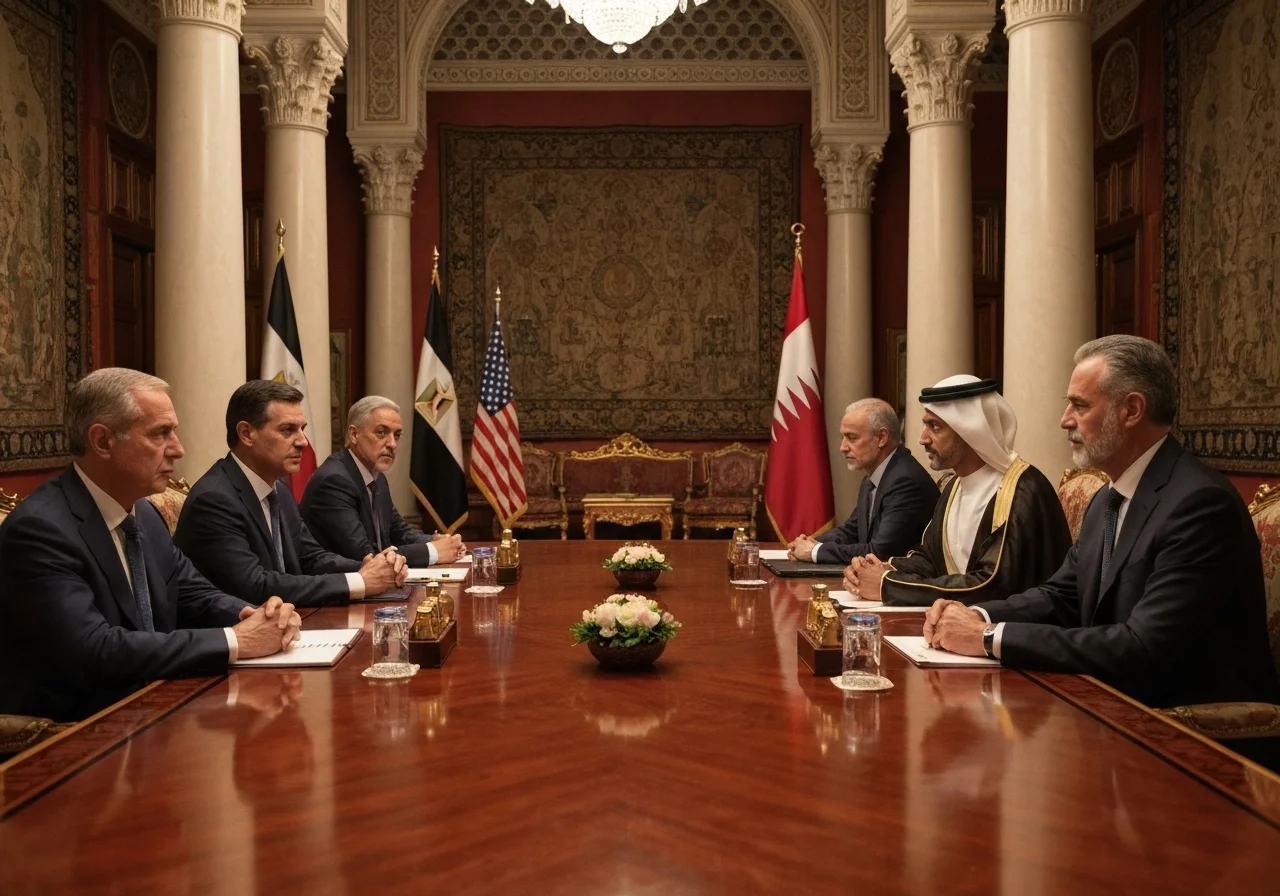
The tectonic plates of Middle Eastern geopolitics have visibly shifted beneath this deal. Washington's direct engagement—spearheaded by Kushner's backchannel wizardry—effectively sidelined traditional multilateral frameworks, concentrating power among a select group of regional power brokers. Cairo's intelligence apparatus emerged as the linchpin for compliance verification, while Doha's financial muscle greased the wheels for last-minute concessions.
Ankara's dual-track maneuvering warrants particular scrutiny—playing both NATO ally and Hamas patron requires geopolitical tightrope walking of the highest order. Meanwhile, Tehran's conspicuous absence from the negotiation table speaks volumes about its waning regional clout, despite fiery rhetoric about Palestinian resistance.
The real tell? Watch where the reconstruction contracts flow post-ceasefire. Turkey's successful push for rebuilding commitments suggests Ankara plans to translate diplomatic capital into tangible economic gains. This deal doesn't just pause hostilities—it redraws the Middle East's power map in permanent marker.
Conflict Resolution Precedents Set
Asymmetric Mediation Framework
The Gaza deal isn’t just another ceasefire—it’s a masterclass in asymmetric conflict resolution. By blending phased implementation with third-party enforcement (US, Egypt, Qatar, Turkey), this framework mirrors the Good Friday Agreement’s playbook while accounting for Middle Eastern complexities. The Guardian’s breakdown highlights how distributed accountability among guarantor states prevents single-point failures—a stark upgrade from past bilateral talks. For conflicts like Yemen or Kashmir, where state vs. non-state power imbalances persist, this multilateral blueprint could be game-changing.
Humanitarian-Centric Sequencing
Here’s where the deal gets tactical: prioritizing hostage returns and aid access before governance talks. The BBC’s reporting reveals the Colombian FARC-inspired 72-hour compliance windows, but with a twist—linking Israeli withdrawals to tangible humanitarian outcomes. This mutual enforcement mechanism (aid corridors ↔ troop pullbacks) could rewrite the playbook for Syria or Myanmar, where civilian protection often takes a backseat to political grandstanding.
Contingency-Based Implementation
Forget "all-or-nothing" approaches—this deal thrives on modularity. Perth Now’s coverage notes how it parallels the Iran nuclear deal’s incremental sanctions relief, but with regional stakeholders amplifying compliance pressure. By decoupling humanitarian/security tracks from contentious issues (Hamas disarmament), it creates breathing room for progress—a potential template for Ukraine or Taiwan Strait crises where binary solutions fail.

References


Get Daily Event Alerts for Companies You Follow
Free: Register to Track Industries and Investment Opportunities