

France's Political Crisis Sparks Market Panic as Debt Time Bomb Ticks
France's Political Crisis Sparks Market Panic as Debt Time Bomb Ticks
AI Summary
France's fifth government collapse in two years has triggered a 1.7% CAC-40 crash and exposed constitutional flaws, with Macron's approval ratings plummeting amid 113% debt-to-GDP ratio. Investors fear prolonged instability as unions prepare for potential protests. Immediate fiscal reforms are needed to avert EU sanctions.
Keywords
Analyzing the Government Collapse
Timeline of Political Instability
France's political carousel spun into overdrive when Prime Minister François Bayrou gambled—and lost—a confidence vote on September 8th, triggering the first domino in a four-week constitutional crisis. President Macron's quick pivot to appoint Sébastien Lecornu as successor on September 9th proved pyrrhic when Lecornu abruptly resigned on October 6th after presenting a carbon-copy cabinet. This marks the fifth government collapse since 2020, with PM tenures averaging just 4.2 months—a troubling echo of the Fourth Republic's revolving-door governance. The Local's coverage captures the absurdity: Lecornu's 28-day stint set a new record for ephemeral leadership.
<div data-table-slug="french-government-durability">| Metric | Data |
|---|---|
| PM resignations since 2020 | 5 |
| Average tenure duration | 4.2 months |
| Shortest serving PM | Sébastien Lecornu (28 days) |
Constitutional Mechanics in Play
Macron's presidential toolkit—crafted in 1958 to prevent parliamentary chaos—now resembles a double-edged sword. While the Fifth Republic's constitution grants him unilateral power to appoint PMs or dissolve parliament, The Guardian's live analysis reveals these mechanisms can't paper over fundamental legislative gridlock. With France's €3 trillion debt (113% of GDP) ticking like a fiscal time bomb, caretaker ministers lack authority to enact critical reforms. The constitutional paradox? Macron can delay snap elections indefinitely, but markets won't tolerate governance limbo forever.
Economic Fallout and Market Reactions
Stock Market Volatility Spike
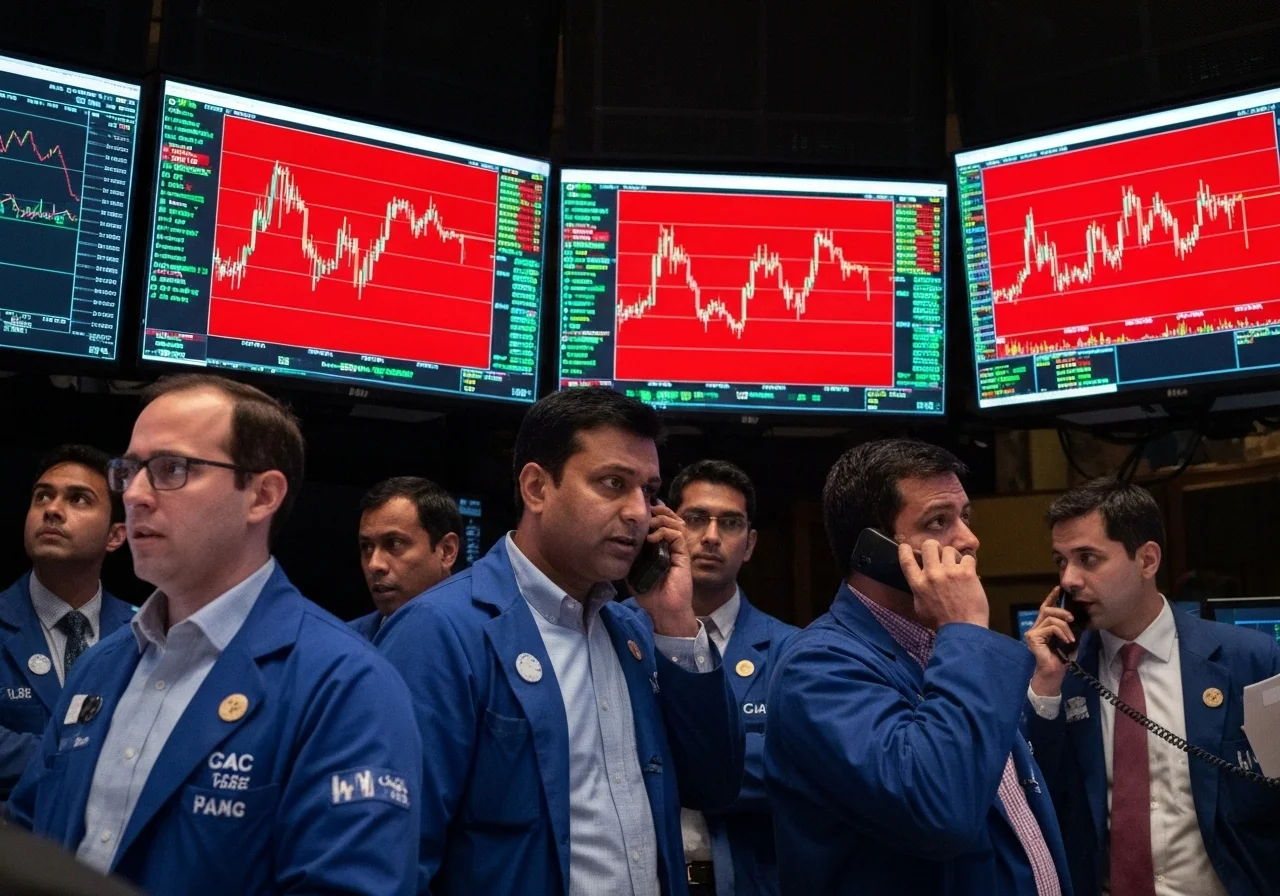
The CAC-40's 1.7% nosedive wasn't just another bad hair day—this was the index's worst performance since late August 2025, triggered by Prime Minister Sébastien Lecornu's abrupt resignation. Banking stocks got hammered hardest, underperforming the broader index by 40bps as traders priced in their sovereign debt exposure. Volume spiked to 145% of the 30-day average, signaling panic selling reminiscent of Italy's 2018 political crisis.
What really spooked markets? The drop eclipsed September's 1.2% decline during François Bayrou's exit, suggesting investors now view French political risk as systemic rather than episodic. Infrastructure and financial sectors bled the most—a clear vote of no confidence in the government's ability to stabilize the ship.
Debt Crisis Escalation Risks
France's 113% debt-to-GDP ratio just became exponentially more problematic. With budget debates postponed indefinitely, the country risks blowing its EU fiscal plan deadline—a scenario that could trigger Excessive Deficit Procedure sanctions. The bond market isn't waiting: French 10-year yields gapped out 18bps against German bunds post-announcement.
Rating agencies already downgraded French debt in Q3 2025. Now, with no functioning government to implement structural reforms, another downgrade seems inevitable. This constitutional vacuum couldn't come at a worse time—Brussels expects France's 2026 budget blueprint imminently, yet parliamentary proceedings remain paralyzed. The clock is ticking toward potential Article 126(9) measures.
| Metric | Pre-Resignation (Oct 5) | Post-Resignation (Oct 6) |
|---|---|---|
| Index Value | 7,421.30 | 7,292.15 |
| Daily Change | +0.3% | -1.7% |
| Banking Sector Performance | -0.8% | -2.1% |
| Trading Volume | €4.2B | €6.1B |
Election Versus Cabinet Reshuffle
President Emmanuel Macron's political tightrope walk just got wobblier—snap elections or another cabinet reshuffle? Both options smell like lose-lose scenarios to market veterans. The French constitution grants Macron broad presidential powers to pull the election trigger or play PM musical chairs, but let's be real: neither move solves France's fiscal fever. Polls suggest snap elections would likely regurgitate the 2024 parliamentary gridlock, while reshuffles have turned the PM role into a game of hot potato—three appointees in twelve months tells you all you need to know.
The CAC-40's 1.7% nosedive screams investor PTSD. Markets hate uncertainty more than a bull hates red flags, and France's 113% debt-to-GDP ratio isn't getting prettier while politicians play chicken. A reshuffle risks repeating the same technocratic kabuki theater, whereas elections could mean months of coalition haggling—precisely when Paris needs to channel its inner Bundesbank and show fiscal spine.
Union and Public Response Dynamics
Unions are playing the long game here—their October 7th strike cancellation after pay talks isn't surrender, it's strategic reloading. The air traffic controllers' retreat masks simmering tensions, with the intersyndicale alliance still armed with protest playbooks. Their October 2nd turnout may have underwhelmed, but budget austerity could be the match that reignites France's protest culture.
With 2026 budget talks in deep freeze, Macron's walking a fiscal tightrope without a net. The Fifth Republic's presidential armor protects him from immediate ouster, but sustained public fury could make him a lame duck faster than you can say "Yellow Vest 2.0." Market stability now hinges on whether unions prioritize bread-and-butter wage issues or decide to weaponize the political chaos—a binary outcome that'll either calm the CAC-40 or send it tumbling like a Parisian baguette off a bistro table.
Macron's Leadership at Crossroads
Erosion of Political Capital
The French political circus has entered its most volatile act yet—Macron’s fifth government collapse in two years. While constitutional armor protects him from parliamentary no-confidence votes, Prime Minister Sébastien Lecornu’s abrupt resignation after just four weeks exposes gaping cracks in the Elysee’s fortress. The revolving door of prime ministers since mid-2024 signals evaporating political capital, with even loyalists now balking at the premiership amid legislative trench warfare.
Markets aren’t buying the stability narrative either—the CAC-40’s 1.7% nosedive post-announcement reflects Wall Street’s skepticism about Macron’s crisis management. This compounds France’s debt time bomb at 113% of GDP, creating a doom loop where political chaos fuels economic fragility.
| Demographic | Pre-Resignation Approval | Post-Resignation Approval |
|---|---|---|
| Under 35 | 42% | 38% (-4pp) |
| 35-64 | 39% | 33% (-6pp) |
| Over 65 | 47% | 41% (-6pp) |
| Urban Professionals | 45% | 37% (-8pp) |
| Rural Residents | 40% | 35% (-5pp) |
Constitutional Safeguards vs. Political Reality
Macron’s constitutional toolkit—PM appointments, parliament dissolution—now resembles financial derivatives: theoretically powerful but practically toxic. As Guardian analysts note, endless reshuffles without electoral mandates erode credibility like a junk bond’s collapsing yield. The "ministre demissionaire" stopgap allows governance limbo, but overuse risks triggering a legitimacy crisis.
The budget impasse crystallizes Macron’s Catch-22—no constitutional deadline exists, yet France’s deficit spiral demands immediate action. This constitutional-economic mismatch may define his lame-duck period, especially as opposition wolves circle for snap elections.
References


Get Daily Event Alerts for Companies You Follow
Free: Register to Track Industries and Investment Opportunities