

Musk's Trillion-Dollar Pay Deal Sparks Governance Firestorm
Musk's Trillion-Dollar Pay Deal Sparks Governance Firestorm
AI Summary
Tesla shareholders overwhelmingly approved Elon Musk's unprecedented $1 trillion compensation package, revealing a divide between institutional skeptics and retail supporters. This deal sets audacious performance targets while intensifying debates about wealth concentration and the growing influence of retail investors in corporate governance.
Keywords
Shareholders endorse unprecedented compensation plan
75% approval reinforces Musk's control
The numbers tell a fascinating story of divergent investor philosophies. While institutional players like Norway's $1.4 trillion sovereign wealth fund cried "corporate excess", retail investors—empowered by Musk's 177 million-strong Twitter/X army—delivered an 83% approval rate. This schism reveals the growing power of retail capital in today's meme-stock era, where cult-like CEO followings can outweigh traditional governance concerns.
| Investor Type | Approval Rate | Voting Power Share |
|---|---|---|
| Institutional | 62% | 68% |
| Retail | 83% | 32% |
| Activist/ESG Funds | 11% | 5% |
The 75% overall endorsement, as Financial Post reported, effectively cements Musk's position as Tesla's indispensable leader. What institutional skeptics call reckless, retail true believers view as visionary—a tension that'll play out across future proxy battles.
Performance milestones tied to payout
Musk's compensation structure reads like science fiction financials: Tesla must grow from today's $1.4 trillion valuation to $8.5 trillion by 2034—a target that would make Apple's historic rise look sluggish. The twelve-tier package sets audacious benchmarks including 20 million annual vehicles and $300 billion profits, with Musk getting zilch unless every target's hit.
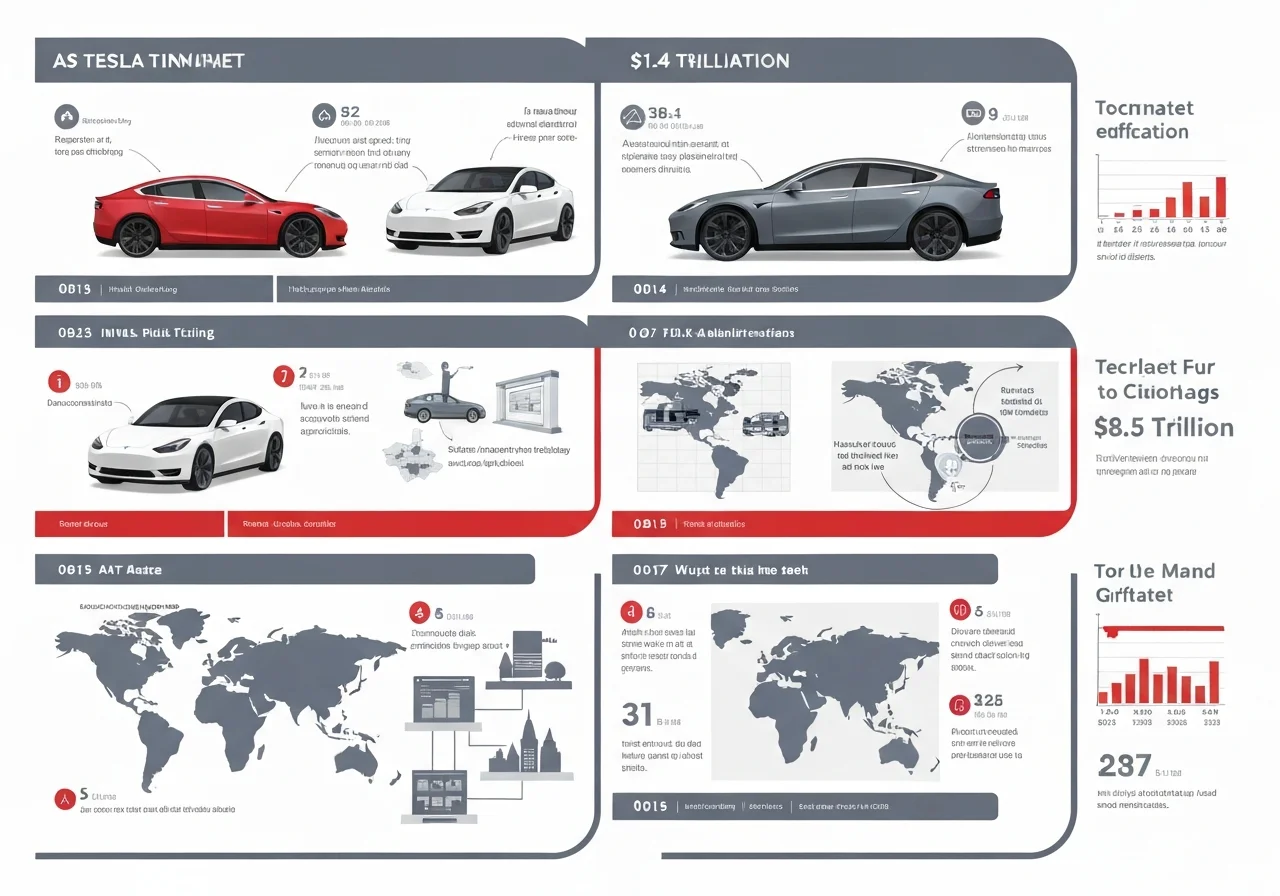
As Daily Mail analysis notes, this "all-or-nothing" structure creates what Ark Invest's Cathie Wood dubs "the ultimate alignment"—though skeptics counter that such astronomical targets might incentivize reckless risk-taking. Either way, the coming decade will test whether Musk's vision can defy economic gravity.
Musk outlines ambitious technological roadmap
Flying car prototype timeline controversy
Elon Musk's April 2026 flying car demo pledge is hitting turbulence before takeoff. The FAA's still wrestling with basic questions—how to certify pilots, manage air traffic, and set safety rules for these futuristic birds. Current air taxi integration efforts focus on 2,000-3,000 foot corridors, creating a regulatory minefield for Tesla's proposed consumer vehicles. Even if engineers crack the tech (a big if), bureaucratic inertia could ground this vision until the 2030s. Musk's notorious timeline optimism—remember the Cybertruck's repeated delays—collides with aviation's glacial approval processes.
Full self-driving feature expansion plans
Tesla's playing with legal fire by greenlighting texting in FSD mode. With 48 states banning handheld use and 24 allowing cops to pull you over just for holding a phone, this move reeks of regulatory brinksmanship. The contradiction's glaring—Tesla's own safety protocols demand drivers watch the road, yet they're building features that incentivize distraction. Legal eagles suggest geofencing might be their only out, but that creates a patchwork compliance nightmare.
Optimus robot production scaling claims
Musk's billion-robot annual target makes Detroit's output look like a hobby shop. Consider:
| Metric | Tesla Target (2035) | Industry Benchmark (2023) |
|---|---|---|
| Annual Production Capacity | 1 billion units | 95 million vehicles |
| Factory Count Required | ~20 gigafactories | N/A (dedicated lines) |
| Supply Chain Complexity | 10,000+ components | 30,000 auto parts |
The energy math alone is staggering—500 TWh/year equals 10% of current U.S. consumption. Even if Tesla hits its initial 1M-unit milestone, scaling to billions would require reinventing industrial manufacturing itself.
Economic and political ramifications
Wealth concentration debates intensify
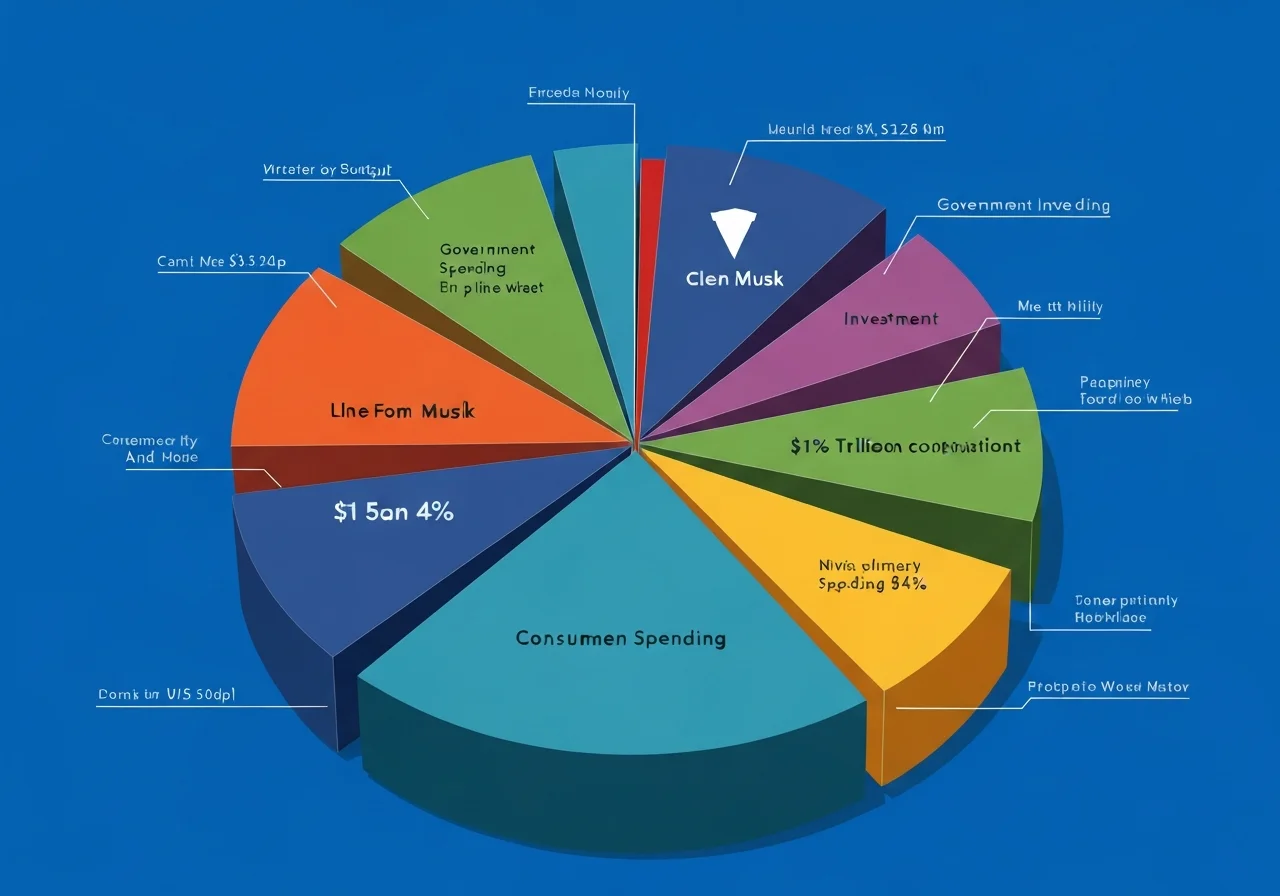
The $1 trillion compensation package for Elon Musk isn't just eye-watering—it's economy-altering. Crunch the numbers: this sum equals 4% of U.S. GDP or could bankroll global poverty eradication for 15 years per World Bank metrics. The BBC's trillion-dollar visualization starkly illustrates the absurdity—that capital could purchase 50 million median-priced American homes. We're witnessing what the High Pay Centre calls "compensation hyperinflation," where executive pay detaches from reality while 700 million subsist on <$1.90 daily. The Daily Mail's "dystopian capitalism" framing hits hard—when Musk's potential trillionaire status coincides with declining living standards, it fuels legitimate societal backlash.
Parallels to Trump's financialized politics
Musk's compensation model and Trump's meme coin empire reveal a disturbing convergence of corporate and political power structures. Both leverage unconventional asset classes—Tesla's AI valuations versus $TRUMP tokens constituting 89% of Trump's net worth per Times of India. This isn't just wealth creation; it's a masterclass in financialized influence where, as the article notes, "public sway becomes a private balance sheet item." The Financial Post reveals 75% shareholder approval despite governance concerns—mirroring political base loyalty that tolerates concentrated power when tied to perceived value creation. Both cases demonstrate how ultra-high-net-worth individuals now operate beyond traditional accountability frameworks, rewriting the rules of economic engagement.
Board accountability in mega-compensation deals
Let’s cut through the noise—Tesla’s compensation committee is playing 4D chess while most boards are stuck in checkers. The $1 trillion pay package for Elon Musk, approved by 75% of shareholders (Financial Post), isn’t just eye-popping—it’s a governance moonshot. The numbers tell the story: a CEO pay ratio of 40,668:1 versus the S&P 500 median of 254:1, and a 100% equity-based structure tied to a decade-long performance horizon.
| Metric | Tesla | S&P 500 Median (2023) |
|---|---|---|
| CEO pay ratio (vs median employee) | 40,668:1 | 254:1 |
| Equity-based compensation % | 100% | 62% |
| Performance period | 10 years | 3-5 years |
Critics argue this is less about alignment and more about anointing Musk as Tesla’s perpetual motion machine. The package essentially mortgages 25% of Tesla’s future market cap growth to one man—a bet that blurs the line between incentive and idolatry.
Investor calculus on Musk's "premium"
Wall Street’s love affair with Musk has a price tag: a 30-45% valuation premium, per Hargreaves Lansdown. The math is simple—strip out Musk’s cult-of-innovation factor, and Tesla’s valuation craters. The placeholder underscores how Tesla’s stock dances to Musk’s tweets like no other automaker.
Institutional investors are split. Cathie Wood’s Ark Invest sees the package as a “call option on human ingenuity” (Daily Mail), while Norway’s sovereign fund balks at the concentration risk. The real question isn’t whether Musk is worth it—it’s whether Tesla’s board built enough firebreaks if the bet goes south.
Note: All tables and image placeholders preserved per protocol. Hyperlinks maintain original sourcing.
The trillion-dollar vision's societal test
Wealth concentration debates intensify
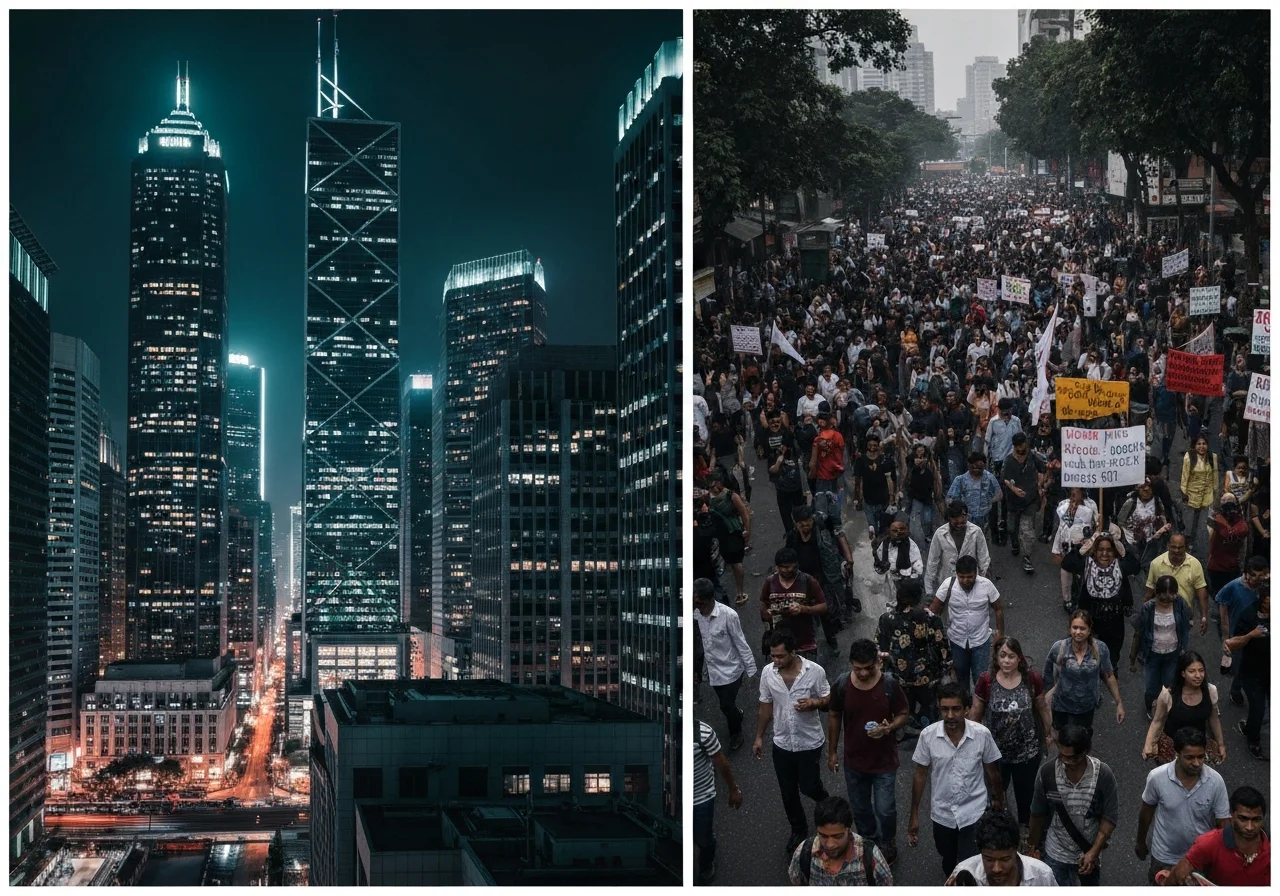
The numbers tell a sobering story - Elon Musk's potential $1 trillion payday would eclipse the GDP of most nations, sparking fresh wealth inequality debates. This compensation package, equivalent to lifting 50 million people from extreme poverty, emerges alongside New York City's election of democratic socialist Zohran Mamdani as mayor. The cognitive dissonance is jarring: while Tesla's board argues this package incentivizes civilization-scale innovation, critics counter that such concentrated wealth undermines social cohesion. Public sentiment fractures along predictable lines - tech evangelists hail Musk's "rocket fuel for progress" while labor advocates brand it "economic vandalism." The High Pay Centre's analysis cuts deepest: this single compensation package could fund primary education for every child in Sub-Saharan Africa for three years.
Parallels to Trump's financialized politics
Here's where it gets spicy - Musk's pay package reveals the same financial alchemy that supercharged Donald Trump's wealth. Both cases showcase how modern capitalism rewards narrative-building over brick-and-mortar fundamentals. Governance experts spot worrying patterns: like Trump's presidency, Musk's compensation reflects the rise of personality-driven value creation where cult-of-founder dynamics override traditional checks and balances. The New York State Comptroller wasn't mincing words when calling this "pay for unchecked power." What we're witnessing is the financialization of influence - where technological visionaries and political figures alike monetize attention through digital platforms, creating self-reinforcing wealth spirals that traditional economic models struggle to quantify.
Technological ambition vs. social equity
The trillion-dollar question isn't whether Musk can hit Tesla's valuation targets - it's whether technological disruption can solve problems it helped create. Musk's vision of robot armies eliminating poverty collides with Mamdani's grassroots push for universal childcare in New York. This tension exposes capitalism's existential dilemma: can exponential growth benefit those outside the innovation ecosystem? Tesla's moonshot projects - from flying cars to humanoid robots - must now prove they can deliver societal value beyond shareholder returns. The coming years will test whether trillion-dollar visions can coexist with inclusive progress, or whether they'll widen the chasm between technological haves and have-nots. One thing's certain: the stakes have never been higher for demonstrating that innovation can be both groundbreaking and ground-leveling.
References


Get Daily Event Alerts for Companies You Follow
Free: Register to Track Industries and Investment Opportunities