

Musk's $1T Payday: Tesla Triumph or Governance Gamble?
Musk's $1T Payday: Tesla Triumph or Governance Gamble?
AI Summary
Tesla's unprecedented $1 trillion compensation package for Elon Musk passes with 75% approval, highlighting institutional confidence in AI and autonomous vehicle targets while raising corporate governance questions amid Texas' legal reforms.
Keywords
Shareholders approve unprecedented compensation plan
75% vote margin for performance-based incentives
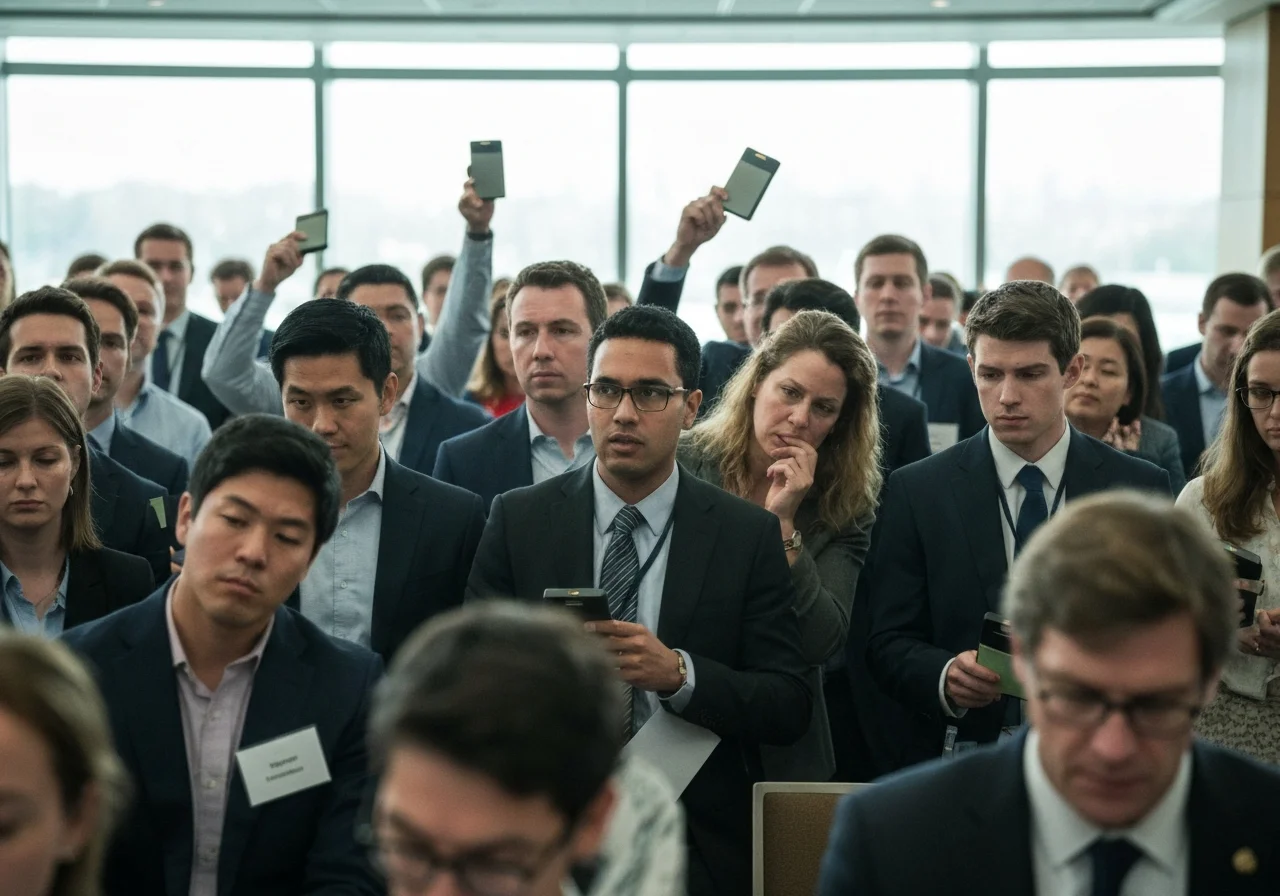
The landslide 75% approval of Elon Musk's $1 trillion compensation package reveals institutional investors' high-stakes gamble on Tesla's future. Heavyweights like BlackRock and Vanguard Group — collectively controlling over 10% of shares — effectively bankrolled this corporate moonshot, overriding governance hawks' objections. This outcome starkly contrasts with Delaware's 2018 rebuke of Musk's $56 billion package, showcasing how Tesla's Texas relocation and retail investor mobilization created a regulatory end-run.
The voting patterns expose Wall Street's Faustian bargain: tolerate questionable governance in exchange for exponential growth potential. While the 25% dissent signals lingering accountability concerns, the majority clearly bets Musk's vision outweighs traditional checks-and-balances. This sets a precedent for other disruptors to demand similar carte blanche compensation structures.
Milestones for full payout realization
Musk's pay package reads like a sci-fi business plan — $8.5 trillion market cap and 20 million annual deliveries represent a 11x scale leap from current operations. The performance tranches essentially mortgage Tesla's future on four unproven technologies: autonomous driving, humanoid robots, robotaxis, and AI infrastructure.
| Metric | Target | Current Baseline (2025) |
|---|---|---|
| Market Capitalization | $8.5 trillion | $1.5 trillion |
| Annual Vehicle Deliveries | 20 million | 1.8 million |
| FSD Subscriptions | 10 million | 500,000 |
| Optimus Robot Deployments | 1 million | Prototype phase |
| Robotaxi Fleet | 1 million | Testing phase |
Wedbush's 20% probability estimate seems generous when considering the execution risk. Each target requires Tesla to simultaneously reinvent manufacturing, AI regulation, and consumer behavior — a trifecta no company has ever achieved. This package doesn't just incentivize performance; it demands industrial revolution.
Legal safeguards against shareholder challenges
Texas corporate law reforms (SB 29/SB 1057)
Texas just rewrote the corporate playbook with SB 29 and SB 1057—and let’s just say, minority shareholders didn’t get an invite to the party. The crown jewel? A 3% ownership threshold for derivative lawsuits, which Tesla swiftly baked into its bylaws. Now, shareholders must prove directors acted in bad faith or broke the law—a Herculean task when you’re up against a $1.5 trillion market cap.
The math is brutal: at Tesla’s valuation, hitting that 3% bar means controlling $42 billion in stock. That locks out everyone but Musk and mega-institutions like BlackRock and Vanguard. Legal eagles are calling it an "accountability vacuum," where boards can operate with near-impunity (Business Insider).
Delaware exodus and jurisdictional arbitrage
Delaware’s loss is Texas’ gain—and the corporate migration wave is real. After Delaware’s courts axed Musk’s $56 billion pay package in 2024, Tesla led a stampede to Texas, with Dropbox and Roblox hot on its heels. Why? Texas’ director-friendly rules make Delaware’s reforms look like child’s play.
STATE INCORPORATION TRENDS
| State | 2023 Incorporations | 2025 Incorporations | Key Legislative Change |
|---|---|---|---|
| Delaware | 68% of Fortune 500 | 54% of Fortune 500 | Raised derivative suit evidence standards |
| Texas | 12% | 22% | 3% ownership threshold for lawsuits |
| Nevada | 8% | 14% | Eliminated fiduciary duty for officers |
This isn’t just a relocation trend—it’s a full-blown race to the bottom. Texas now demands plaintiffs prove fraud or illegality, a far cry from Delaware’s fairness reviews. Game theory in action, folks (Fortune).
Divergent stakeholder reactions to pay package
Institutional support from bullish analysts
The Street’s Tesla bulls are doubling down—this compensation package isn’t just about retaining Musk, it’s about unlocking Tesla’s AI moat. Wedbush’s Dan Ives nails it: the 20M vehicle and 1M Optimus bot targets essentially make this a leveraged bet on exponential growth. Deepwater’s Gene Munster spotlights the rare shareholder-management alignment—investors are willingly trading short-term volatility for Musk’s long-game tech disruption.
Here’s the kicker: the package structures payouts like a 10x call option on Tesla’s current $1.5T cap. No guaranteed comp means Musk only cashes in if he delivers shareholder value—classic skin-in-the-game economics.
Governance critics warning of accountability erosion
Governance hawks aren’t buying the hype. The SOC Investment Group calls out Tesla’s proxy campaign overreach—paid social media pushes and advisor consultations reek of board capture. NY Comptroller DiNapoli frames this as pay for dictatorship, citing Musk’s divided attention across SpaceX and xAI.
The Texas relocation timing screams regulatory arbitrage—SB 29’s 3% lawsuit threshold effectively muzzles minority voices. Safety advocates warn the robotaxi targets create perverse deployment incentives, prioritizing speed over reliability.
Corporate law's evolving power dynamics
State competition for incorporation revenue
Delaware's $2.2 billion golden goose—its incorporation revenue—is under siege as corporate heavyweights like Tesla, Dropbox, and TripAdvisor stampede toward Texas and Nevada. The exodus isn't just about lower fees; it's a calculated bet on director-friendly legal havens. Texas' SB 29 and SB 1057 have rewritten the rules, making shareholder lawsuits a luxury only 3% owners can afford—a far cry from Delaware's shareholder-first ethos.
Oklahoma's Governor Stitt isn't mincing words about his "take down Delaware" campaign, while Nevada quietly tightens its business judgment rules. This isn't just jurisdictional shopping—it's a full-blown race to the bottom where shareholder protections get trampled in the rush to woo corporate registrations.
Shareholder rights in the new legal landscape
Texas didn't just move the goalposts—it buried them under a "good faith" standard that makes Delaware's fairness review look quaint. Now, shareholders must prove directors acted in bad faith rather than simply breaching duty—a Herculean task that effectively neuters fiduciary challenges.
The table below exposes the stark reality:
| Provision | Delaware | Texas | Nevada |
|---|---|---|---|
| Derivative lawsuit threshold | No minimum | 3% ownership | 5% ownership |
| Fiduciary standard | Fairness review | Good faith | Business judgment |
| Director liability | Breach of duty | Fraud only | Gross negligence |
Legal scholars warn this shift toward director primacy could make shareholder oversight obsolete. As Nevada and Oklahoma double down on business-friendly reforms, the traditional checks and balances of corporate governance risk becoming relics.
References


Get Daily Event Alerts for Companies You Follow
Free: Register to Track Industries and Investment Opportunities