

BHP's $92B Copper Gambit: When Mining Titans Collide
BHP's $92B Copper Gambit: When Mining Titans Collide
AI Summary
BHP's disciplined withdrawal from Anglo American highlights copper's 50% price surge and 3.8M-ton deficit. The Anglo-Teck merger creates $800M synergies, forcing miners to rethink acquisition strategies amid AI-driven demand.
Keywords
Analyzing BHP's strategic acquisition approach
Copper assets drive M&A urgency
The copper market's tectonic shift has miners scrambling—what was once a steady commodity now trades like strategic tech metals. BHP's play for Anglo American wasn't just about scale; it was a desperate grab for what industry insiders call "generational copper rights." The Anglo-Teck merger would've locked up reserves equivalent to 15% of global supply, creating an oligopoly that could dictate terms to AI chipmakers and EV manufacturers. With new discoveries drying up faster than a Chilean salt flat, BHP's failed bid reveals the brutal math of modern mining: buy now or get priced out forever.
COPPER-MARKET-DYNAMICS
| Metric | Current Value | 5-Year Projection |
|---|---|---|
| Spot Price (USD/t) | $9,450 | $12,200 |
| Demand Growth Rate | 8.7% YoY | 6.2% CAGR |
| Supply Deficit | 1.4M tons | 3.8M tons |
Financial hurdles in revised bid structure
BHP's second attempt faced the perfect storm—a weakening Aussie dollar and Anglo's surging stock created a 14% valuation gap overnight. As any M&A veteran will tell you, timing is everything in mining deals. The numbers tell a brutal story: replicating BHP's 2023 offer would've required issuing 23% more shares or finding an extra $4B in cash. No wonder Anglo's board scoffed—why abandon their Teck merger for a deal that effectively valued them at a 10% discount to market? Sometimes the best deals are the ones you walk away from.
Synergy advantages of Anglo-Teck merger
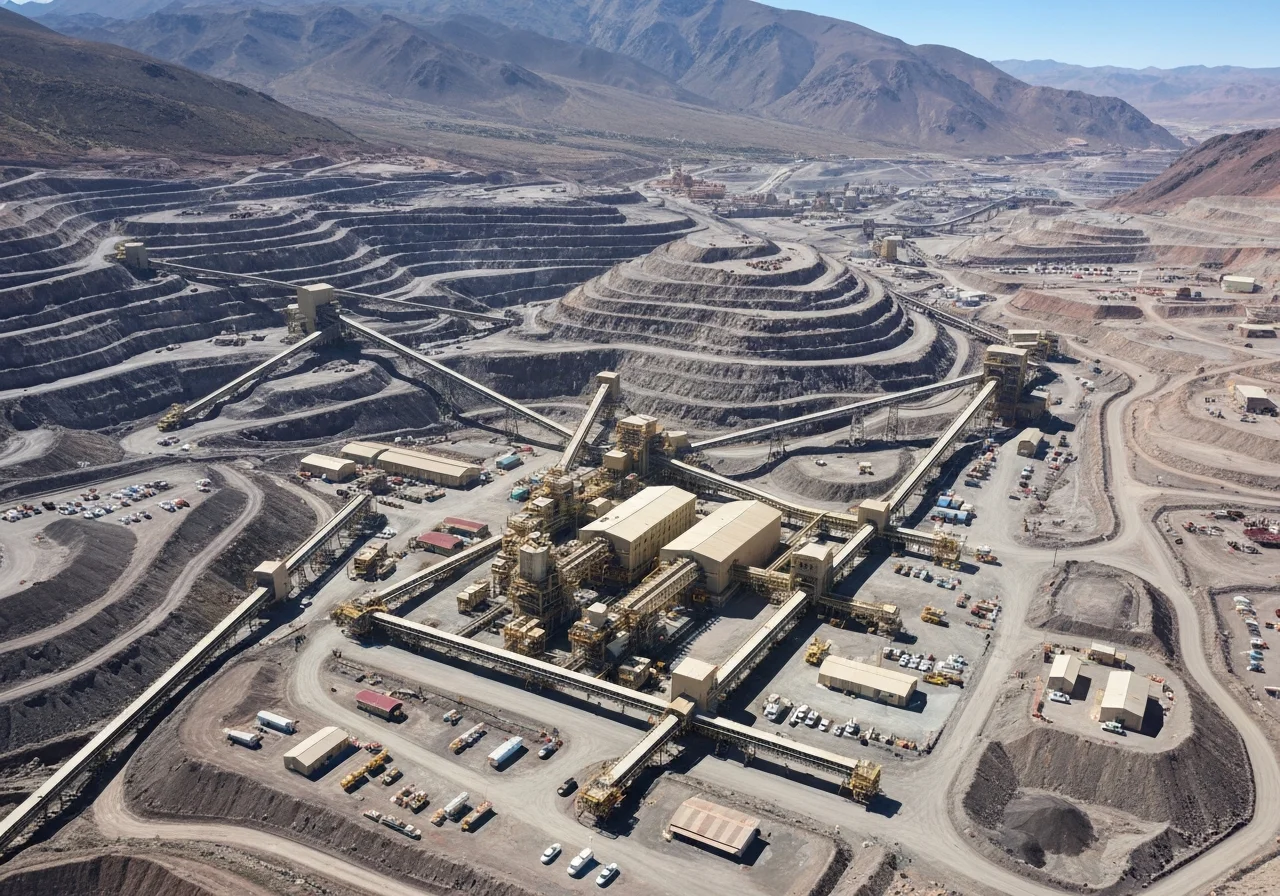
The proposed Anglo-American and Teck Resources merger isn’t just another corporate reshuffle—it’s a masterclass in copper-driven consolidation. By merging their adjacent Chilean assets, the duo could unlock $800 million in annual synergies, primarily through eliminating redundant infrastructure and streamlining ore processing. Both firms currently mine the same orebody separately, a textbook case of capital inefficiency.
Geopolitically, this deal weakens Glencore’s grip as a 44% stakeholder in the Collahuasi JV. The merged entity would command a larger slice of Chile’s copper output, potentially rewriting regional pricing rules. No wonder Anglo’s board shrugged off BHP’s premium—why sell the crown jewels when you’re building a fortress?
Alternative paths for BHP's growth strategy
With the Anglo-Teck merger likely a done deal, BHP must pivot—fast. Smaller targets like Freeport-McMoRan offer lower integration risks, though their reserves pale against Anglo’s tier-one assets. BHP’s disciplined withdrawal signals a strategic recalibration toward measured growth.
Meanwhile, whispers of an iron ore JV with Rio Tinto gain traction as China’s demand cools. Simandou’s development in Guinea could complement BHP’s Pilbara ops, but copper remains the prize—its 50% price surge this year, fueled by AI infrastructure needs, makes it the undisputed star. BHP’s existing copper portfolio buys time to hunt for bargains rather than overpaying for Anglo’s assets.
Strategic discipline in high-stakes mining deals
CEO succession timing impacts deal calculus
The ticking clock on Mike Henry's 2025 retirement created a unique temporal paradox for BHP's Anglo American bid. Unlike Glencore's relentless pursuit of Teck Resources - culminating in its 77% stake grab in Teck's met coal assets after multiple failed takeover attempts - BHP showed remarkable restraint by refusing to "bid against itself" during this leadership twilight zone. The six-year CEO tenure benchmark at BHP injected palpable uncertainty: would Henry or his successor inherit the Herculean task of integrating Anglo's sprawling operations? This leadership limbo ultimately made the scenario "an academic question" after Anglo's rejection, as noted in BHP’s ‘Hail Mary’ bid to gatecrash a $92 billion deal fails. The episode serves as a textbook case of how executive calendars can derail even the most strategically sound mining megadeals.
Market realities versus acquisition ambition
BHP's walk-away from Anglo American reveals a masterclass in valuation discipline. While copper prices have rocketed 50% in 2024 thanks to AI/data center demand, BHP's leadership drew a clear line between "very nice to have" and "must have at any price" assets. The numbers tell the story:
| Miner | EV/EBITDA (2024) | Copper Reserves (Mt) |
|---|---|---|
| BHP Group | 6.2x | 85.4 |
| Anglo American | 5.8x | 62.1 |
| Teck Resources | 6.0x | 48.7 |
| Rio Tinto | 5.5x | 71.9 |
| Glencore | 5.3x | 89.6 |
With BHP already commanding premium valuation multiples and substantial copper reserves, the math simply didn't justify overpaying. As analyzed in Anglo American Said to Reject BHP’s Latest Takeover Proposal, the 5% AUD/GBP depreciation since 2023 would have required significantly more BHP shares to match prior offer values - a bridge too far for even the most ambitious acquirer.
References


Get Daily Event Alerts for Companies You Follow
Free: Register to Track Industries and Investment Opportunities