

Aviation Chaos: 6,000 Planes Grounded in Emergency Software Crisis
Aviation Chaos: 6,000 Planes Grounded in Emergency Software Crisis
AI Summary
Global airlines face massive disruptions as Airbus mandates emergency A320 software updates following altitude control failures. Analysis reveals uneven regional impacts, with India's DGCA grounding 40+ aircraft while US carriers complete patches in 24 hours. Experts recommend checking flight statuses and allowing extra travel time.
Keywords
Airlines implement emergency software updates
Incident triggering safety checks
The aviation world got a rude awakening when a JetBlue A320 decided to play elevator on October 30—dropping altitude uncommanded during a Cancun-Newark hop before making an unscheduled pitstop in Tampa. This wasn't some rogue pilot move, but a flight control computer glitch potentially triggered by cosmic rays frying critical data streams. Fifteen passengers learned the hard way why seatbelts should stay fastened, with Airbus later pointing fingers at solar radiation-induced single-event upsets—the avionics equivalent of a cosmic temper tantrum.
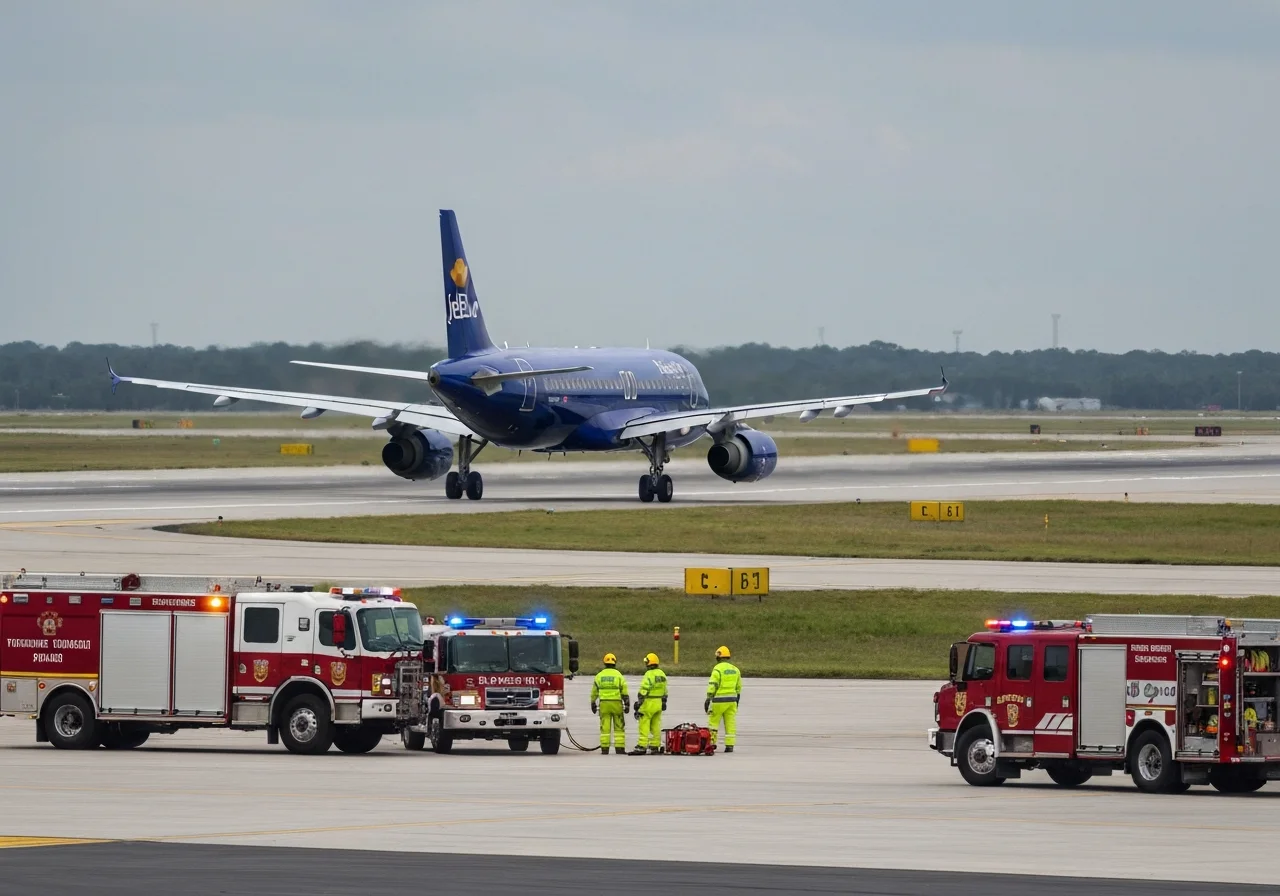
Scope of affected aircraft
Brace for impact—Airbus just dropped a 6,000-plane software bomb on the industry, hitting half their global fleet. The DGCA in India wasn't messing around, grounding 40+ birds immediately, while airlines face a patchwork of downtime:
| Carrier | Aircraft Affected | Cancellations (Nov 29) | Update Completion |
|---|---|---|---|
| Air France | 220 | 35+ | 48 hours |
| Wizz Air | 150 | 12 | 72 hours |
| EasyJet | 180 | 8 | 60 hours |
| British Airways | 3 | 0 | Completed |
| American Airlines | 340 | 15 | 24 hours |
| IndiGo | 95 | 5 | Ongoing |
From Hyderabad's minor hiccups to Air France's 50-flight massacre at Charles de Gaulle, this patch job reveals the ugly truth about global aviation's uneven safety dance.
Regional operational impacts
European flight cancellations
The Airbus software alert sent shockwaves through European aviation corridors faster than a transatlantic redeye. Air France took the initial brunt, scrubbing 35+ flights at Paris' Charles de Gaulle—equivalent to 12% of its Saturday morning operations. The BBC's tally of 50 cancellations reveals the domino effect, particularly on domestic hops where aircraft utilization rates run highest. What's telling is how carriers diverged in their crisis playbooks: Wizz Air's disclosure that its birds were among 6,500 needing patches shows rare transparency, while EasyJet's update completion claims suggest preemptive action. EASA's confirmation of "short-term pain for long-term safety" reads like textbook regulatory speak, but the real story lies in the low-cost carriers' operational agility—a competitive edge when the chips are down.
Asian regulatory responses
Asia's aviation watchdogs swung the regulatory hammer with surgical precision. India's DGCA didn't just nibble around the edges—it grounded 40+ A320 variants cold turkey until software certs were in hand, a move that'll ripple through the world's fastest-growing aviation market. Meanwhile, Hyderabad's Rajiv Gandhi International turned into a crisis comms lab, blending proactive passenger advisories with real-time coordination—exactly what you'd expect from an airport handling 20 million passengers annually. The Philippine Airlines grounding of 40 domestic flights reveals the hidden cost curve of compliance, while IndiGo's "business as usual" stance during inspections shows why it's the region's operational benchmark. When the dust settles, this episode will likely rewrite Asia's aviation contingency playbooks.
[image<european-airport-chaos|Passengers checking departure boards at Charles de Gaulle Airport with multiple cancellation notices visible|Wide-angle shot capturing frustrated travelers and airline staff at information desks, early morning lighting]
[image<asian-aviation-response|DGCA officials inspecting an A320 cockpit in Hyderabad|Close-up of technical checklist being verified, Indian aviation authority badges clearly visible]
Manufacturer and supplier accountability
The Airbus A320 software saga reads like a corporate game of hot potato—Thales, the aerospace defense contractor behind the flight control hardware, was quick to confirm compliance while neatly sidestepping the software debacle. This "our-hands-are-clean" stance exposes the Achilles' heel of modern aviation: a fragmented supply chain where accountability dissolves like jet fuel vapor.
Airbus didn’t just send a memo—they deployed an Alert Operators Transmission (AOT), essentially a digital fire alarm for 6,000 aircraft. When regulators like the FAA and EASA start harmonizing emergency directives, you know the stakes transcend corporate balance sheets.
Airline contingency measures
American Airlines turned crisis management into a speedrun—340 aircraft patched in 24 hours—though passengers still faced the inevitable delay domino effect. Meanwhile, IndiGo’s transparent maneuvers in India proved disruption mitigation isn’t just about tech, but trust.
The UK emerged relatively unscathed—just three BA planes needed attention, allowing Luton Airport to keep its espresso machines humming. Wizz Air’s masterclass? Treating passengers like adults with SMS alerts—a simple tactic that should be industry standard.
Aviation safety and passenger communication
Proactive traveler notifications
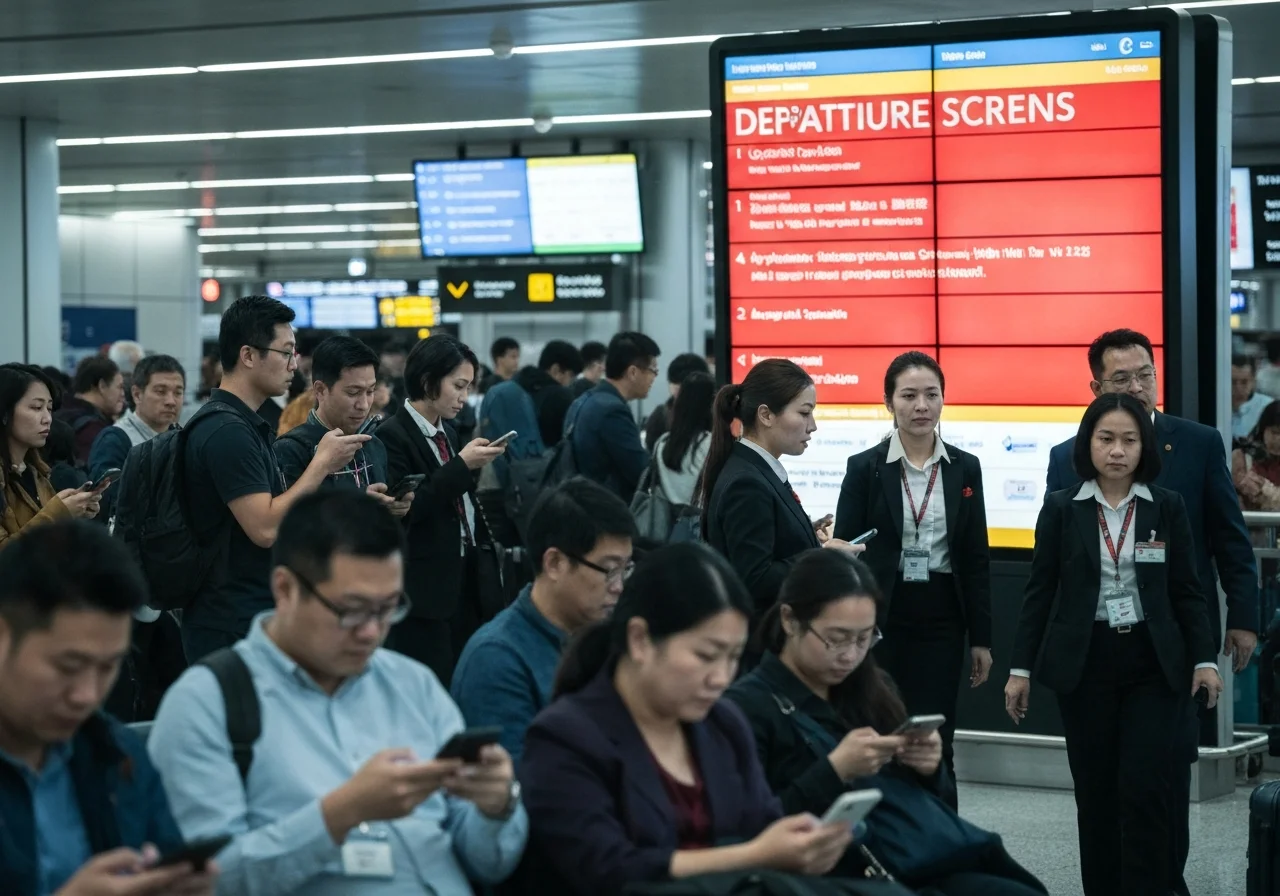
The A320 software crisis has become a masterclass in operational agility, with carriers deploying notification arsenals that would make a FedEx logistics hub blush. Wizz Air's surgical SMS blitz—detailed in their Friday statement—demonstrates how modern airlines treat passenger comms as critical infrastructure. Their mobile app's real-time itinerary tracking isn't just convenient; it's become a psychological lifeline for travelers facing uncertainty across 6,500 affected aircraft.
EasyJet's dual-channel approach—marrying Flight Tracker alerts with SMS—shows how crisis comms now demand redundancy. Hyderabad Airport's Twitter diplomacy proves airports can't just be physical hubs anymore; they're digital nerve centers during operational meltdowns.
Balancing transparency and reassurance
Airlines are walking a tightrope between regulatory candor and brand protection—Wizz Air's "overriding priority" safety mantra (Daily Mail) and EasyJet's manufacturer-compliance boasts (The Local) reveal an industry scrambling to control the narrative.
The four-week disclosure lag exposed by DNA India raises uncomfortable questions about aviation's incident-to-alert pipeline. Meanwhile, EASA's new solar radiation protocols—requiring both code patches and hardware tweaks—show how 21st-century threats demand hybrid solutions. The real test? Whether passengers will trust these systems when the next crisis hits.
References


Get Daily Event Alerts for Companies You Follow
Free: Register to Track Industries and Investment Opportunities