

How Will US Tariffs and AUKUS Shape Australia's Future?
How Will US Tariffs and AUKUS Shape Australia's Future?
AI Summary
Australia faces 100% tariffs on pharmaceuticals and 50% on steel, yet leverages critical minerals for defense and trade negotiations. The $368bn AUKUS pact encounters submarine delays, testing US-Australia alliance resilience against China's aggression.
Keywords
Assessing bilateral trade dynamics
Key exports facing US tariff pressures
Australia’s trade dance with the U.S. is getting trickier by the minute. While the baseline 10% tariff might seem like a sweetheart deal—especially compared to the punitive rates slapped on other partners—the devil’s in the details. Sectors like pharmaceuticals and steel/aluminum are getting hammered with duties as high as 100% and 50%, respectively (Trump welcomes Albanese into White House ahead of talks). The numbers don’t lie: a $53.1bn trade deficit for Australia in 2024, despite the two nations sitting on a staggering $2.9tn in cumulative investment.
AUS-US TRADE BALANCE 2024
| Sector | Export Value (AUD) | Tariff Rate | Impact Assessment |
|---|---|---|---|
| Pharmaceuticals | $4.2bn | 100% | Severe margin compression |
| Steel/Aluminum | $3.8bn | 50% | Competitive disadvantage |
| Agricultural Products | $12.1bn | 10% | Moderate price elasticity |
| Services | $28.7bn | 0-5% | Minimal disruption |
Critical minerals as negotiation leverage
Here’s where Australia plays its ace: critical minerals. With China controlling 85% of the global rare earths market, Canberra is positioning itself as the West’s lifeline for EV and defense supply chains (Albanese-Trump meeting LIVE updates). The Albanese government isn’t just selling rocks—it’s selling geopolitical insurance. Washington’s desperation to break Beijing’s stranglehold could mean tariff exemptions in exchange for guaranteed Australian supply. Now that’s leverage.
Evaluating AUKUS defense commitments
Submarine procurement challenges
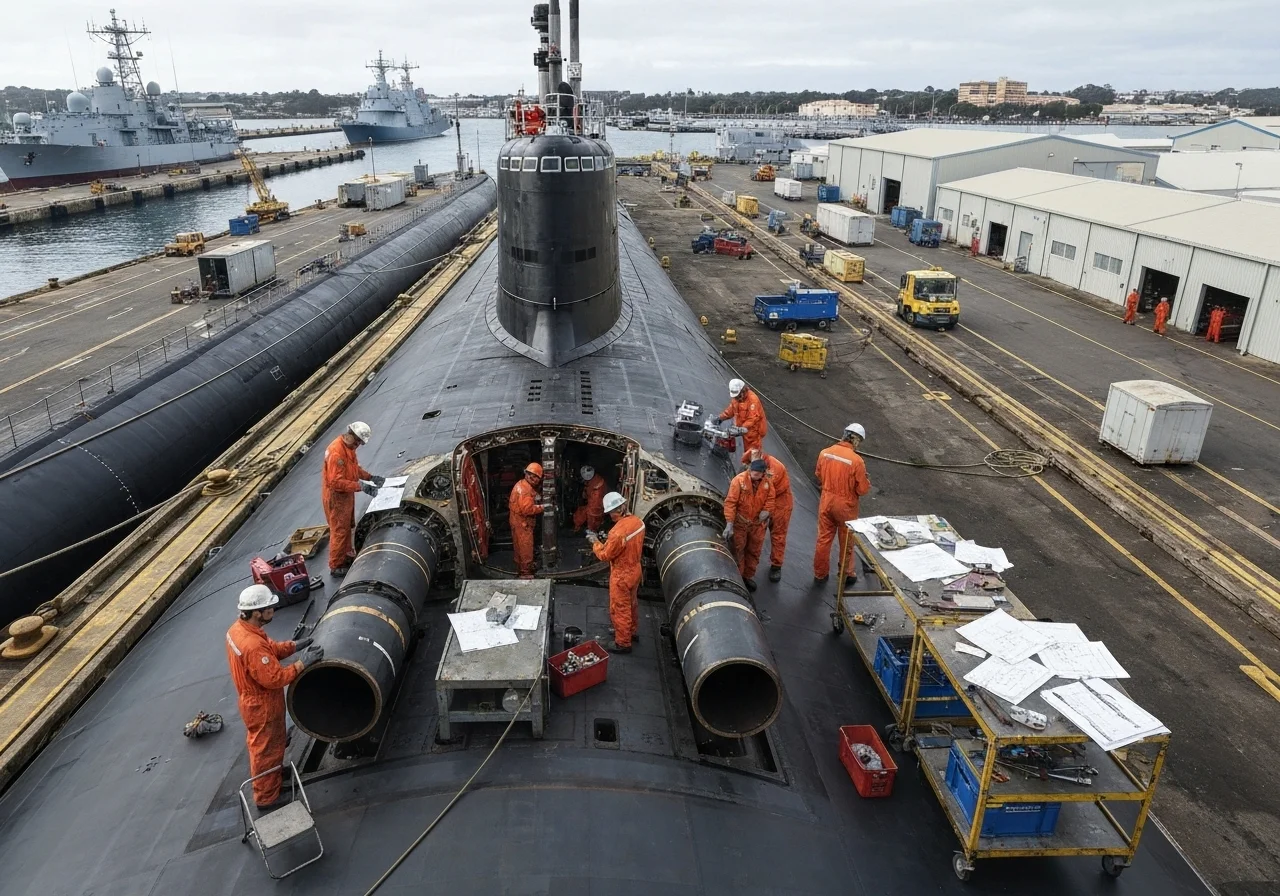
The $368 billion AUKUS pact is hitting rough waters as Pentagon bottlenecks threaten to torpedo Australia's nuclear submarine dreams. According to PerthNow's coverage, the promised delivery of three Virginia-class submarines now hangs by a thread due to America's creaking naval industrial base. This couldn't come at a worse time for Canberra, which desperately needs to replace its geriatric Collins-class fleet with nuclear-powered vessels as the crown jewel of its defense modernization.
Defense wonks are sounding the alarm about the precarious timing—Australia's acquisition schedule assumes flawless US production cadence. The Guardian's report quotes Republican Congressman Michael McCaul calling AUKUS "what keeps Chairman Xi up at night," underscoring how delivery delays could weaken this critical deterrent against Chinese expansionism.
China's regional aggression as catalyst
Beijing's muscle-flexing near Taiwan and the Philippines has transformed AUKUS from a PowerPoint slide to an operational must-have. The Sydney Morning Herald's sources reveal Pentagon brass view Australia's geographic sweet spot and capabilities as the perfect counterweight to China's gray-zone tactics. This aligns with the beefed-up Talisman Sabre war games, now explicitly rehearsing Taiwan Strait contingencies.
The PerthNow article spotlights Australia's track record of riding shotgun with Washington—from Afghanistan to the South China Sea—as proof this alliance has teeth. Former PM Kevin Rudd, now Canberra's top envoy in DC, recently framed AUKUS at a think tank shindig as "the ultimate insurance policy for Indo-Pacific stability," sending Beijing an unmistakable message about allied cohesion.
Geopolitical Positioning Against China
Coordinated critical minerals strategy
The rare earths game just got real, folks. Washington and Canberra are playing 4D chess against China's stranglehold on critical minerals—the lifeblood of everything from F-35s to Tesla batteries. As The Sydney Morning Herald reports, Team Trump is strong-arming allies to break Beijing's 80% market monopoly, with Australia's Lynas Corporation emerging as the Western world's only viable processing alternative.
This isn't just about supply chain diversification—it's economic statecraft at its rawest. China's gallium/germanium export controls exposed the West's Achilles' heel, and now Australia's sixth-largest rare earth reserves are being weaponized as bargaining chips. The PerthNow article reveals the $2.9 trillion bilateral investment pool funding end-runs around Chinese refining choke points.
Diplomatic signaling through leader optics
The West Wing entrance photo-op between Trump and Albanese wasn't just another handshake—it was a masterclass in geopolitical semiotics. Contrast this carefully choreographed moment (their sixth interaction, per PerthNow) with Trump's infamous Oval Office showdown with Zelenskyy, and you've got a case study in alliance management.
Behind the Instagram-ready "we love Australia" platitudes lies serious business: closed-door AUKUS talks that The Guardian suggests are keeping Xi Jinping awake. The decision to forego Trump's trademark reality-TV negotiation style speaks volumes—when the cameras stay off, the real diplomacy begins.
Projecting Long-Term Impacts of Tariff Exemptions on Defense Collaboration
The Afghanistan deployment precedent—where Aussie diggers fought shoulder-to-shoulder with US troops post-9/11—still echoes in Pentagon corridors as the gold standard for alliance resilience. Fast forward to today’s tariff chess match: exempting Aussie critical minerals from Trump’s 10% baseline rate isn’t just about economics; it’s a backdoor play to cement AUKUS tech transfers. That sweetheart tariff position (lowest among US partners, per PerthNow) gives Canberra serious bargaining chips—enough to offset Virginia-class submarine delays if played right.
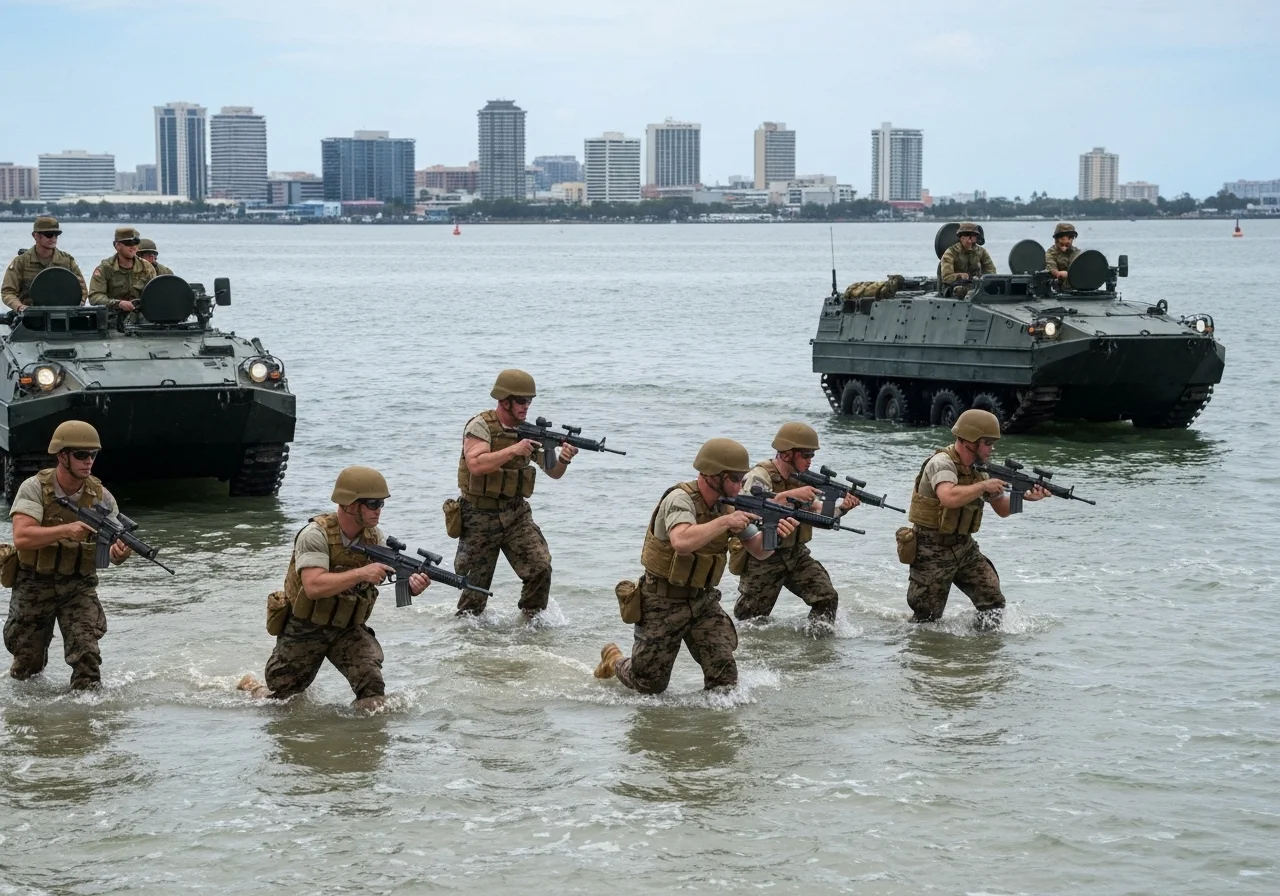
Here’s the kicker: carve-outs from Trump’s 100% pharma tariffs could mirror the old Afghanistan quid pro quo, funneling savings into joint submarine maintenance hubs. With $2.9 trillion in bilateral investments (PerthNow) underpinning the deal, we’re looking at a fiscal springboard for undersea warfare R&D—a direct counter to China’s South China Sea shopping spree.
Historical Alliance Benchmarks and Future Trajectories
From Korea’s frozen trenches to Afghanistan’s dust-choked valleys, Australia’s coalition track record has more staying power than a Sydney Harbour Bridge paint job. White House mandarins now wield this legacy to fast-track AUKUS, transforming Talisman Sabre war games (Guardian) into multi-domain rehearsals against PLA missile barrages.
The endgame? Swap Aussie rare earth exports for submarine tech, creating an electoral-cycle-proof partnership. Even Trump’s "America First" brigade can’t ignore what Kevin Rudd calls the "Indo-Pacific insurance policy" backed by bipartisan Congressional muscle.
References


Get Daily Event Alerts for Companies You Follow
Free: Register to Track Industries and Investment Opportunities