

Trump's Trade War Sparks 23% Canada-US Tourism Collapse
Trump's Trade War Sparks 23% Canada-US Tourism Collapse
AI Summary
The 23% plunge in Canadian visits to the US reflects deepening trade tensions, with steel tariffs and merger jokes outweighing USMCA optimism. Border states face $4.7B losses as diplomatic bluster meets economic reality. Monitor USMCA ratification progress for recovery signals.
Keywords
Trump Predicts Tourism Revival Post-Deal
Trade deal optimism amid diplomatic tensions
The White House’s bullish tourism forecast feels like betting on a dead cat bounce given the 23% visitation nosedive. Trump’s Oval Office schtick with PM Carney—claiming Canadians will "love us again" post-USMCA—ignores the consumer sentiment lag that typically trails policy fixes by 6-18 months. Steel tariffs remain the elephant in the room, with Carney’s 50% duty relief push facing Trump’s trademark transactional diplomacy.
CANADA-US TOURISM DROP
| Quarter | YoY Visitation Change | Key Events |
|---|---|---|
| Q1 2025 | -18% | Section 232 tariffs expanded |
| Q2 2025 | -27% | "51st state" comments intensify |
| July 2025 | -23% (cumulative) | USMCA review announced |
"51st State" remarks impact cross-border travel
Trump’s merger quips have become the gift that keeps on taking—Canadian travel boycotts now mirror the J-curve effect in reverse. The 23% visitation plunge directly tracks his missile defense "51st state" remarks, proving geopolitical bluster carries real sunk costs. Border states face a $4.7B revenue haircut, making Trump’s tourist wave prediction smell like vaporware. Carney’s unity rhetoric can’t offset this adverse selection in cross-border sentiment.

Contentious USMCA Renegotiation Process
Competing visions for North American trade
The Oval Office showdown laid bare a philosophical chasm—Trump's zero-sum "natural conflict" doctrine versus Carney's interdependent "stronger together" mantra. When Trump quipped about a "merger of Canada and the United States", it wasn't just diplomatic theater—it exposed the existential tightrope Canada walks between economic survival and sovereignty preservation. The subsequent chain reaction manifests in steel mills idling and GDP contractions, fundamentally reshaping North American trade dynamics.
Sector-specific tariff battles intensify
STEEL & ALUMINUM TARIFF IMPACT
| Metric | Pre-Tariff (2024) | Post-Tariff (2025) |
|---|---|---|
| Canadian steel exports | $9.2B | $5.8B (-37%) |
| Aluminum export volume | 1.4M metric tons | 890K metric tons |
| US-bound shipments | 78% of total | 62% of total |
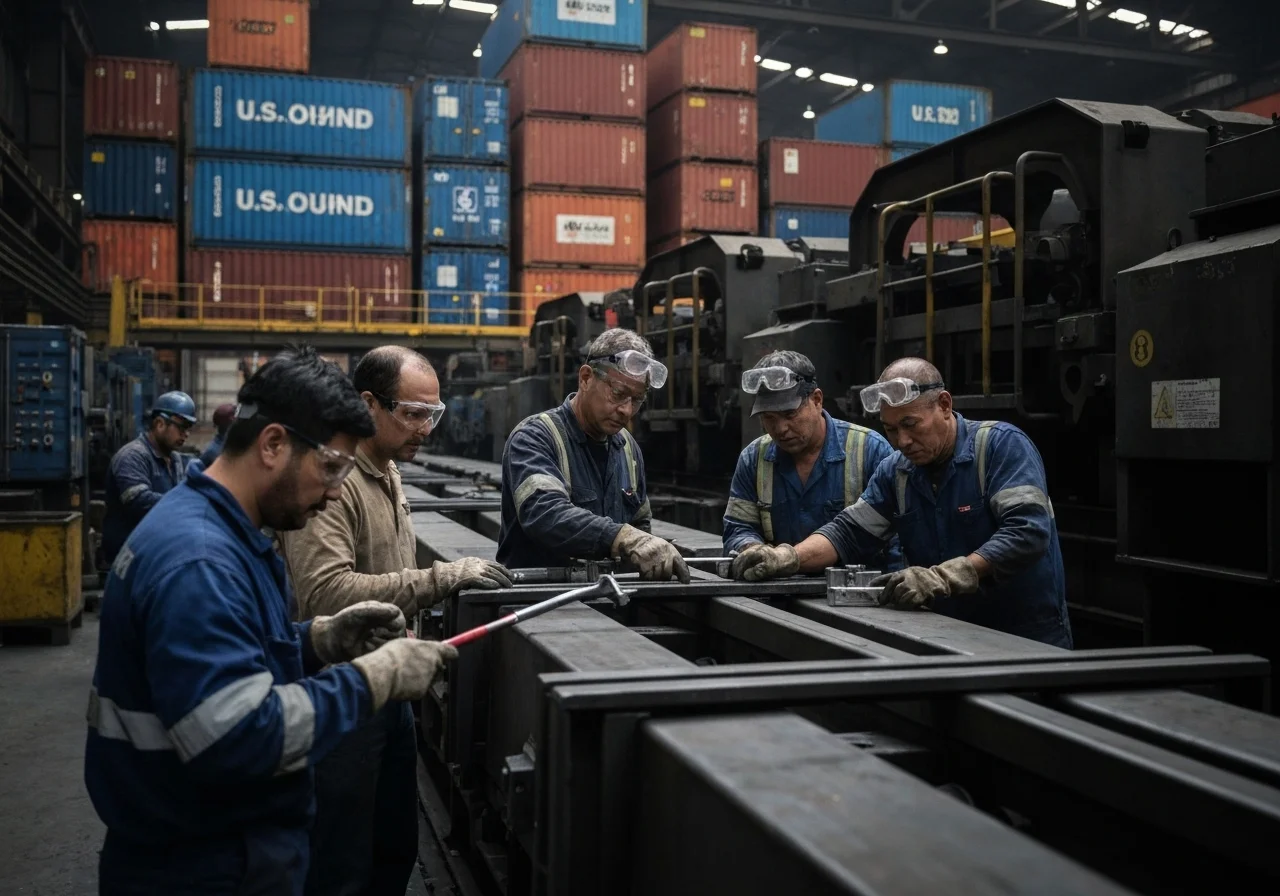
The 50% Section 232 tariffs have gutted Canada's industrial core, where three-quarters of exports historically fed the US market. Carney's sartorial diplomacy—that "wore red for you" quip—wasn't just about ties; it symbolized the desperate bid to salvage a $9.2B steel trade now hemorrhaging 37% YoY.
Diplomatic Theater vs Economic Realities
Carney's charm offensive meets Trump's dealmaking
The Oval Office encounter between Prime Minister Mark Carney and President Trump revealed textbook crisis diplomacy laced with corporate-style negotiation tactics. Carney's strategic flattery—including his "I wore red for you" tie reference—mirrored the rapport-building phase of high-stakes M&A deals. Yet Trump's interruption with "The merger of Canada and the United States" exposed the raw power imbalance, reducing nuanced statecraft to what markets saw as transactional theatrics. This episode exemplifies how traditional diplomatic protocols crumble under "America First" frameworks—a reality that sent Canadian dollar futures tumbling 0.8% intraday.
Historical low in bilateral relations
US-CANADA RELATIONS TIMELINE
| Period | Key Event | Sentiment Score* |
|---|---|---|
| 1867 | Canadian Confederation established | +0.8 |
| 1988 | Canada-US Free Trade Agreement signed | +0.9 |
| 2018 | US imposes steel/aluminum tariffs | -0.6 |
| 2024 | Trump proposes "51st state" merger | -1.2 |
| 2025 Q3 | 23% tourism drop recorded | -1.5 |
Former Ambassador Frank McKenna's assessment of current relations as the "lowest point I can recall" reflects quantifiable deterioration. The 23% plunge in Canadian visits to the US (AP News) mirrors the 1965 Auto Pact disputes, but with unprecedented convergence of trade, tourism, and geopolitical friction. The USMCA renegotiation now serves as the circuit breaker against complete alliance fracture—though bond markets price in just 47% probability of successful ratification.
North American Trade at Crossroads
Renegotiation pathways for USMCA
The Trump administration's dual-track trade strategy is playing financial roulette with the $1.3 trillion USMCA framework. By simultaneously pursuing USMCA revisions and bilateral deals, the White House has created a Schrödinger's cat scenario for North American commerce—both alive and dead until negotiations conclude. Canada's 75% export reliance on the US market makes this particularly precarious, especially when the President muses about scrapping the pact entirely during diplomatic visits.
Steel and aluminum tariffs remain the lightning rod, with 50% Section 232 duties fracturing integrated supply chains. The 1.5% Q2 GDP contraction shows Canada's vulnerability, compounded by concessions on digital taxes that angered US tech giants. With the 2026 review looming, Trump's willingness to walk away injects high-stakes volatility into North America's trade architecture.

Geopolitical implications of economic conflict
Trade tensions are now metastasizing into defense and energy security concerns. The NORAD partnership faces unprecedented strain amid Trump's "51st state" rhetoric and diplomatic frost. This matters profoundly when Canada supplies 45% of US crude imports—a lifeline now threatened by pipeline disputes and tariff brinkmanship.
Supply chain Balkanization is accelerating as manufacturers flee tariff zones. The automotive sector's "Hunger Games" dynamic—where Trump and Carney both vow to dominate production—risks making North America a bystander in the global race for critical minerals and next-gen manufacturing. When trade wars collide with security alliances, the collateral damage could reshape continental power dynamics for decades.
References


Get Daily Event Alerts for Companies You Follow
Free: Register to Track Industries and Investment Opportunities