

Trump's Troop Threat! Insurrection Act Sparks Constitutional Crisis!
Trump's Troop Threat! Insurrection Act Sparks Constitutional Crisis!
AI Summary
Trump's conditional Insurrection Act rhetoric triggers legal battles and market volatility as courts clash over military deployments in Democratic cities. Analyze risks and precedents.
Keywords
Threatening military deployment in Democratic cities
Oval Office remarks on emergency powers
Let’s cut through the noise—when a sitting president openly toys with invoking the Insurrection Act, markets should perk up. Trump’s conditional rhetoric—"If I had to enact it, I would"—isn’t just political theater; it’s a volatility trigger dressed in legal ambiguity. The Japan Times nails the subtext: this is about circumventing state-level resistance (Trump says may invoke Insurrection Act to deploy more troops in U.S.). The casualties-or-courts threshold? A classic moving goalpost strategy, eerily reminiscent of executive overreach precedents.
Legal basis of the Insurrection Act
The Insurrection Act of 1807 isn’t some dusty relic—it’s a loaded weapon with three clear triggers, per Newsweek’s breakdown (Could Donald Trump Invoke the Insurrection Act? What We Know). Trump’s framing leans hardest on the defiance-of-federal-law clause, but here’s the rub: courts are already balking, as seen in Portland. The table below spells out the legal tripwires—note how each historical invocation (Detroit ’67, Little Rock ’57) required catastrophic failure of state authority.
| Triggering Scenario | Historical Precedent | Legal Threshold |
|---|---|---|
| State inability to suppress unrest | 1967 Detroit riots (LBJ deployment) | Widespread violence disrupting governance |
| Defiance of federal law | 1957 Little Rock integration crisis | State refusal to enforce court orders |
| Threat to federal property | 1992 Los Angeles riots (GHW Bush) | Attacks on federal assets or personnel |
The guardrails? Thin. The market implications? Thicker—federalism fractures historically spook institutional investors. Watch the 10-year Treasury yields for flight-to-safety signals.

Conflicting judicial rulings on troop deployments
Oregon's temporary block on Portland deployment
Federal Judge Karin Immergut delivered a constitutional gut-check to the Trump administration's National Guard deployment plans in Portland, slapping a temporary injunction that exposed glaring factual gaps in the White House's rationale. The Trump-appointed jurist didn't mince words—calling the president's determination "untethered to the facts"—a judicial mic-drop that framed this as a high-stakes showdown between constitutional order and executive overreach. The administration's immediate appeal signals we're in for a protracted legal brawl over emergency powers.
Here's the kicker: Oregon officials successfully argued Portland showed zero evidence of insurrection justifying military deployment under the dusty 1807 Act. While this ruling creates temporary precedent, it's essentially a legal placeholder—the administration's aggressive appellate strategy suggests this injunction might have the shelf life of milk in the desert.
Illinois' partial allowance for Chicago troops
Meanwhile, Illinois became the testing ground for some truly bizarre interstate military logistics. District Judge April Perry played legal chess rather than checkers—declining an immediate restraining order but scheduling a full constitutional showdown for Thursday. The ruling greenlights Texas to ship 200 federalized guardsmen into Chicago, creating the surreal scenario of Republican-led Texas deploying troops into Democratic Illinois over Governor JB Pritzker's explicit objections.
Governor Pritzker's "fear and confusion" accusation cuts to the heart of the matter—this case resurrects obscure provisions allowing cross-state National Guard deployments without gubernatorial consent. Legal eagles are watching closely as this could rewrite federalism playbooks during domestic crises.
CURRENT_NATIONAL_GUARD_MOVEMENTS
| Jurisdiction | Deployment Status | Legal Challenge Status |
|---|---|---|
| Portland, OR | Temporarily blocked | Under appellate review |
| Chicago, IL | Partially allowed | Hearing scheduled 10/10 |
| Los Angeles, CA | Active deployment | Ongoing litigation |
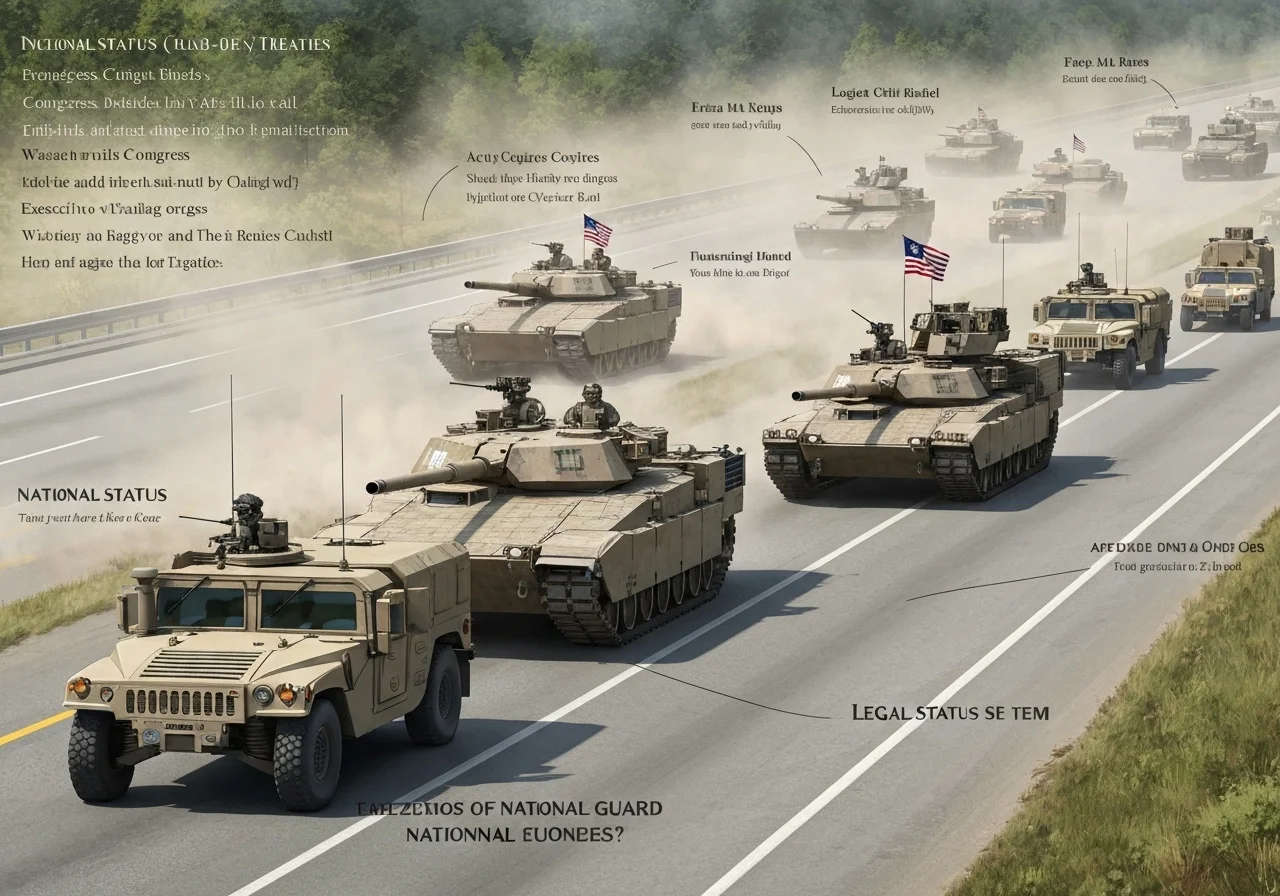
Political backlash and constitutional concerns
Governors' accusations of manufactured chaos
The political theater reached fever pitch as Democratic governors accused the administration of "creating fear and confusion" to justify military deployments. Illinois Governor JB Pritzker didn't mince words, likening federal tactics to "thuggery" during controversial Chicago raids—a move straight out of the political brinkmanship playbook. State AG Kwame Raoul doubled down legally, framing Texas National Guard movements as "unlawful occupation" targeting political adversaries. The constitutional chess match intensified when Homeland Security's "war zone" rhetoric mirrored Trump's Portland characterization, triggering Tenth Amendment alarm bells.
Public opinion on military domestic use
| Demographic Group | Support Deployment | Oppose Deployment |
|---|---|---|
| Republicans | 68% | 29% |
| Democrats | 12% | 85% |
| Independents | 34% | 58% |
| Urban Residents | 19% | 76% |
| Rural Residents | 47% | 46% |
The CBS poll's 58% opposition to deployments revealed a nation cleaving along familiar fault lines—urban/rural splits mirroring 1967 Detroit's disastrous precedent. Partisan divides showed Republicans (68% supportive) and Democrats (85% opposed) locked in a feedback loop of distrust. These numbers torpedo any claim of consensus, exposing the political calculus behind "law and order" posturing. Historical parallels suggest such polarization often precedes lasting institutional damage—a cautionary tale for those betting on short-term military solutions to complex governance challenges.
Expiring rural airport subsidies
The government shutdown is about to pull the plug on rural air service subsidies, and let me tell you—this isn’t just bureaucratic red tape. The Essential Air Service (EAS) program’s $315 million lifeline for 160 remote communities expires Sunday, leaving airlines holding the bag on money-losing routes. We’re talking about Alaska and mountain towns where the next Greyhound might be a dogsled.
Here’s the kicker: DOT can’t even paper over the crisis because shutdown rules freeze contract extensions. That’s bad news for National Guard logistics—many of these airstrips double as military hubs. Déjà vu alert: The 2019 shutdown cost aviation $105 million in EAS funds, and this round could ground more than just planes.

Bondi's Senate scrutiny over dual crises
Attorney General Pam Bondi’s walking into a Senate Judiciary Committee buzzsaw with two hot potatoes: the Comey indictment and Epstein document delays. Critics are crying foul over DOJ norms getting tossed out the window for political payback.
Meanwhile, the shutdown’s becoming a convenient scapegoat for stalled Epstein disclosures—Senator Durbin’s not buying the “we’re understaffed” excuse. Truth is, FOIA requests are piling up like unpaid invoices at a bankrupt firm. The hearing could redefine executive transparency during fiscal standoffs, especially with Epstein document reviews needing fewer resources than claimed.
Constitutional balance in crisis governance
Martial law rhetoric versus checks and balances
The Trump administration's saber-rattling about invoking the Insurrection Act has Wall Street and constitutional scholars alike reaching for their risk assessment matrices. When POTUS declared he'd override "governors or mayors holding us up" per The Japan Times, it wasn't just political theater—it was a stress test for federalism's balance sheet. Judge Immergut's "untethered to facts" ruling (Economic Times) created immediate judicial counterpressure, revealing the system's built-in circuit breakers against executive overreach.
This constitutional arbitrage opportunity—where the 1807 Act's broad language meets Governor Pritzker's "manufactured chaos" accusations—could trigger a cascade of state sovereignty impairments. The potential for federal troops clashing with state National Guard units hasn't been priced into markets since Reconstruction-era volatility.

Long-term institutional damage risks
The Texas-to-Illinois National Guard pipeline—met with Pritzker's "stay the hell out" (Economic Times)—isn't just political brinkmanship; it's a leveraged buyout of state autonomy. With 58% public opposition (CBS data), these emergency power plays threaten to write down the value of Posse Comitatus protections that have underpinned civil-military relations since 1878.
As federal judges issue contradictory rulings—Oregon's block versus Illinois' partial allowance—the judicial system becomes the last remaining covenant protecting against executive overreach. The ongoing government shutdown (The Guardian) compounds these systemic risks, creating operational debt that could impair crisis response capacities for quarters to come.
References


Get Daily Event Alerts for Companies You Follow
Free: Register to Track Industries and Investment Opportunities