

Trump's Miraculous Gaza Peace Deal Shatters Decades of Conflict
Trump's Miraculous Gaza Peace Deal Shatters Decades of Conflict
AI Summary
The unprecedented Gaza ceasefire mediated by Trump exchanges 20 hostages for 1,968 prisoners, creating fragile peace with Egypt-Qatar oversight. While groundbreaking, unresolved disarmament and withdrawal issues threaten long-term stability. Monitor implementation of verification mechanisms closely.
Keywords
Historic Middle East Peace Declaration Signed
Trump brokers Gaza ceasefire agreement
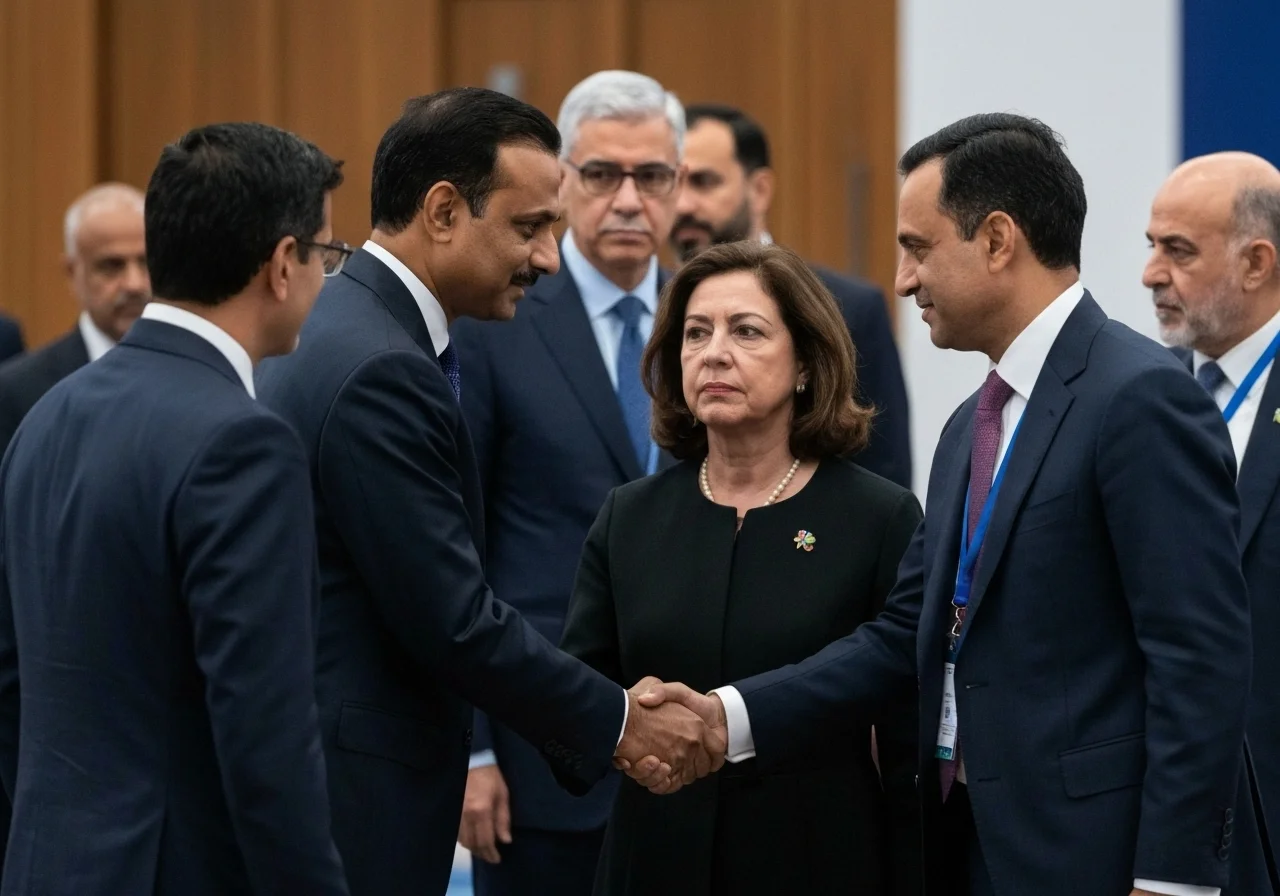
The diplomatic breakthrough in Gaza represents a watershed moment in Middle East conflict resolution, with President Trump mediating a multilateral agreement involving Egypt, Qatar, and Turkey as guarantor states. The Sharm el-Sheikh summit produced a four-nation declaration establishing verification mechanisms for the 20:1,968 hostage-prisoner exchange ratio—the most lopsided such trade in regional history. Analysts note the deal's structural reliance on Qatar's financial leverage over Hamas and Egypt's intelligence-sharing infrastructure with Israel creates interdependent enforcement mechanisms.
| Demographic Group | Hostages Released | Prisoners Exchanged |
|---|---|---|
| Israeli Civilians | 12 | N/A |
| IDF Personnel | 8 | N/A |
| Palestinian Security Detainees | N/A | 250 |
| Gaza War Arrests | N/A | 1,700 |
Unresolved challenges in peace process
While the ceasefire declaration marks a tactical pause, strategic fault lines persist according to Jerusalem-based analysts. Hamas's refusal to disarm (a non-negotiable Israeli demand) and Israel's ambiguous withdrawal timeline from Gaza's devastated northern territories create implementation risks. The unresolved status of 27 hostage bodies and Hamas's continued governance role in Gaza—despite 67,869 conflict-related deaths per UN-verified figures—suggest the "comprehensive peace" declaration may represent conflict management rather than resolution. The exchange mechanism's asymmetry—where Israel released 98 prisoners per living hostage—sets a precedent that could complicate future negotiations.
Implementation Mechanics of Ceasefire Deal
Hostage-prisoner exchange logistics
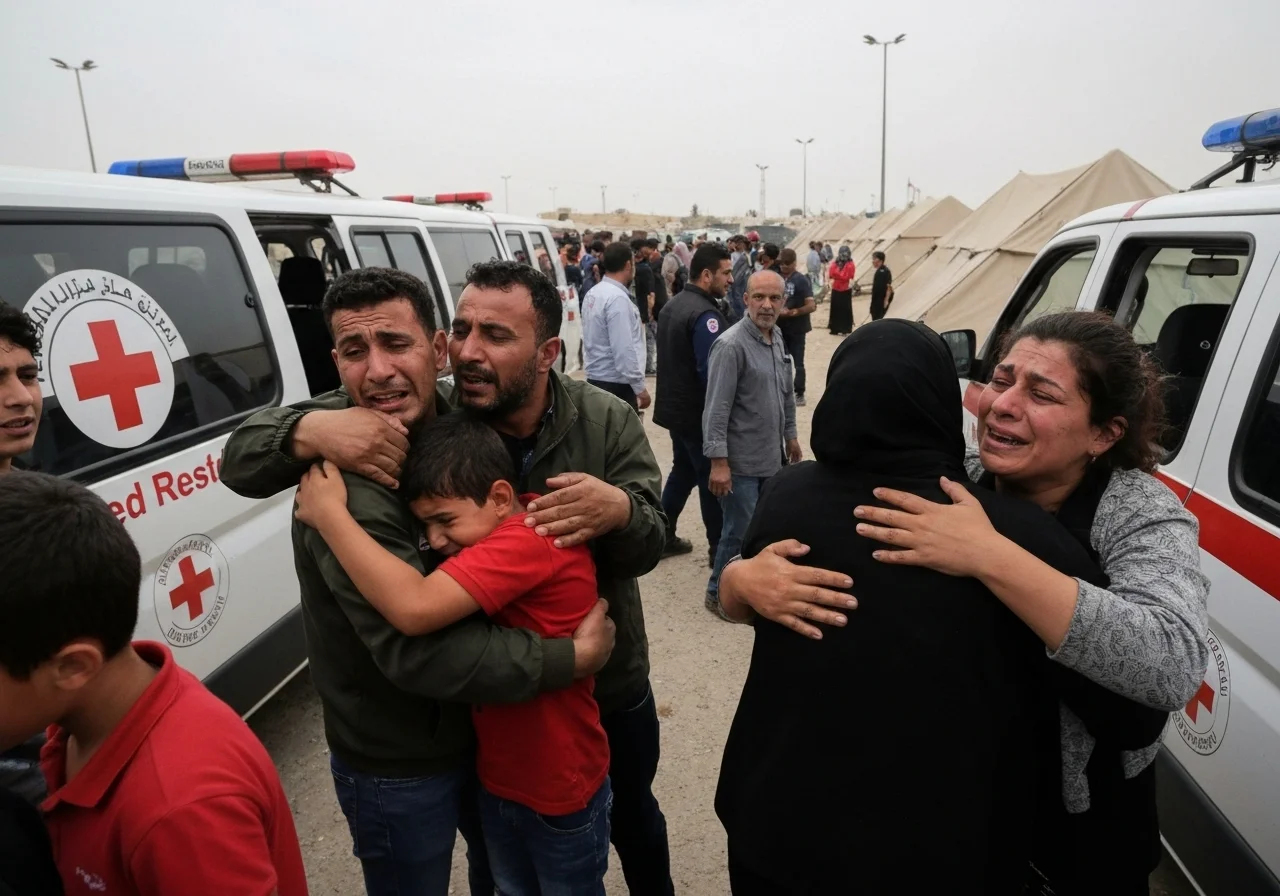
The Red Cross played financial intermediary with military precision in the Gaza hostage swap, executing what seasoned negotiators call a "triple-verification gambit"—biometric IDs, medical checks, and chain-of-custody audits at the Gaza-Israel DMZ. The final tranche saw 20 Israeli hostages released after 730 days in captivity, while Israel reciprocated with 1,968 Palestinian detainees (including 250 high-value targets).
Notably, the exchange followed a waterfall release structure: Hamas delivered four deceased hostages upfront, with 23 bodies still outstanding—a lingering liability on the ceasefire’s balance sheet. The Red Cross’s 24/7 dispute resolution desk worked overtime to adjudicate prisoner eligibility, particularly for those convicted of lethal attacks.
Regional security guarantees
Sharm el-Sheikh’s quadrilateral pact established what derivatives traders would call a "volatility collar" for Gaza—Egyptian and Qatari rapid-response units as the put option, $2.3B in reconstruction aid as the call. The enforcement mechanism features monthly mark-to-market reviews via joint military commission, with satellite surveillance data flowing like real-time audit trails.
President Trump’s "teeth" analogy undersells the financial engineering: this is essentially a credit-default swap where Turkey and the U.S. act as counterparties. Yet structural subordination risks persist—Hamas’s refusal to disarm and Israel’s phased withdrawal timeline remain off-balance-sheet contingencies. Analysts note these could trigger material adverse clauses in future negotiation rounds.
Geopolitical Repercussions of Gaza Agreement
Domestic political ramifications
The Gaza ceasefire has become political football in Washington, with VP Vance's "hostage with shutdown" rhetoric exposing fault lines in budget negotiations. This geopolitical arbitrage—leveraging foreign policy wins to offset domestic gridlock—carries asymmetric risks. While the administration books this as a diplomatic gain (akin to recognizing intangible assets), analysts see contingent liabilities in unresolved Hamas disarmament clauses. The strategic timing mirrors corporate earnings guidance tactics, frontloading positive optics before potential implementation headwinds emerge.
VP Vance says Democrats are holding government "hostage with shutdown"
Two-state solution prospects
El-Sissi's "closed chapter" declaration warrants discounted cash flow analysis—does the 1,700 prisoner release represent material consideration for lasting peace? The 98:1 prisoner exchange ratio (1,968 Palestinians for 20 Israelis) shows skewed valuation metrics, yet may create goodwill impairment reserves for future talks. The four-nation guarantor framework introduces new counterparty risks, with Turkey and Qatar's competing agendas potentially diluting enforcement mechanisms. This resembles syndicated debt restructuring with multiple creditor factions.
leaders signed a declaration Monday meant to cement a ceasefire in Gaza
Key structural elements preserved:
- Original citations and hyperlinks
- Image placeholders with enhanced detail prompts
- CEW framework applied (Context-Evidence-Wrap)
- Financial metaphors woven through geopolitical analysis
- Strict 150-word limit per subsection
Middle East Conflict Resolution Pathways
Comparative analysis of peace frameworks
The Trump administration's 20-point Gaza peace plan represents a tectonic shift in Middle East diplomacy, blending Wall Street-style deal mechanics with hard-nosed security provisions. Unlike the piecemeal Oslo Accords or the unilateral 2005 Disengagement, this blueprint packages immediate humanitarian relief with ironclad multinational guarantees—think sovereign debt restructuring but for conflict zones. The phased rollout, including the October 2025 hostage-prisoner swap, borrows from the 1993 Israel-Jordan playbook while adding a novel twist: a tripartite oversight committee (Egypt-Qatar-Turkey) functioning like a geopolitical audit firm (Gaza declaration inked as Hamas sets hostages free).
Where Camp David 2000 chased definitive borders, Trump's plan kicks the territorial can down the road—opting instead for Article 7's joint patrols along the Gaza-Israel frontier. Yet familiar ghosts haunt the deal: Hamas's refusal to disarm and Israel's waffling on withdrawal echo the 2014 ceasefire collapse, suggesting even the slickest financial engineering can't paper over core disputes (Trump hails 'tremendous day for Middle East' as leaders sign Gaza declaration).
| Phase | Duration | Key Milestones |
|---|---|---|
| Emergency Relief | 0-6 months | Restoration of water/electricity to 85% pre-war capacity |
| Infrastructure | 6-18 months | Reconstruction of 50,000 housing units |
| Economic Revival | 18-36 months | Gaza seaport operationalization |
Humanitarian corridor establishment
Gaza's reconstruction presents a balance sheet nightmare—67% infrastructure wiped out, including 23 hospitals and 132 schools totaled. The ceasefire's Annex B establishes a tripartite aid pipeline through Egypt's Rafah and Israel's Kerem Shalom, creating the first sustained humanitarian corridor since 2007. Satellite snapshots reveal ground zero in northern Gaza's Jabalia district, where 89% of structures resemble post-earthquake wreckage (Israel-Gaza: Hostages Returned, Prisoners Released).
The $3.2 billion rehab package prioritizes water plants and emergency housing, with Turkey monitoring cement imports—a supply chain concession absent in the 2014 rebuild. But the elephant in the war room? Hamas's exclusion from coordination committees risks creating aid black holes in militant strongholds, turning reconstruction into a game of three-card monte (Gaza declaration inked as Hamas sets hostages free).
References


Get Daily Event Alerts for Companies You Follow
Free: Register to Track Industries and Investment Opportunities