

Why Did Rome's Torre dei Conti Collapse? A Safety Failure Exposed
Why Did Rome's Torre dei Conti Collapse? A Safety Failure Exposed
AI Summary
The catastrophic collapse of Rome's Torre dei Conti highlights critical flaws in heritage restoration, with 66-year-old worker Octav Stroici trapped for 11 hours. Systemic risks in EU-funded projects demand urgent regulatory reforms and enhanced worker protections.
Keywords
Investigating the Torre dei Conti Collapse
Timeline of Structural Failures
The catastrophic collapse sequence at Rome's Torre dei Conti on November 3, 2025, exposed critical flaws in heritage restoration protocols. Initial structural failure at 11:30am local time saw the southern buttress crumble during active renovation—a scenario straight out of a construction risk management nightmare. Eyewitness footage reveals how the 13th-century masonry behaved unpredictably under modern intervention, triggering a secondary collapse at 1pm that trapped veteran worker Octav Stroici beneath stairwell debris.
TABLE_NAME
<div data-table-slug="torre-collapse-timeline">| Time | Event | Rescue Response |
|---|---|---|
| 11:30am | Initial collapse of southern buttress and base | 140 firefighters deployed, aerial ladders used for initial evacuations |
| 1:00pm | Secondary collapse of stairwell/roof during rescue | Specialized drone reconnaissance deployed after retreat from unstable structure |
| 10:00pm | Final extraction of Stroici after 11-hour entrapment | Crane-assisted rubble removal and medical oxygen administration |
Rescuers faced medieval construction hazards straight from the Dark Ages playbook—load-bearing walls failing without warning, dust clouds obscuring vital sightlines. The operation's turning point came when thermal imaging confirmed Stroici's location beneath three tons of fractured travertine, forcing responders to balance extraction speed against structural integrity.
Victim Profile and Rescue Efforts
Octav Stroici's tragic case embodies the human cost of construction safety failures—a 66-year-old Romanian immigrant with 30 years' experience, crushed by the very heritage he helped preserve. Medical reports reveal the cruel paradox of his 11-hour entrapment: conscious enough to communicate through rubble gaps, yet doomed by progressive crush syndrome as rescue teams battled unstable masonry.
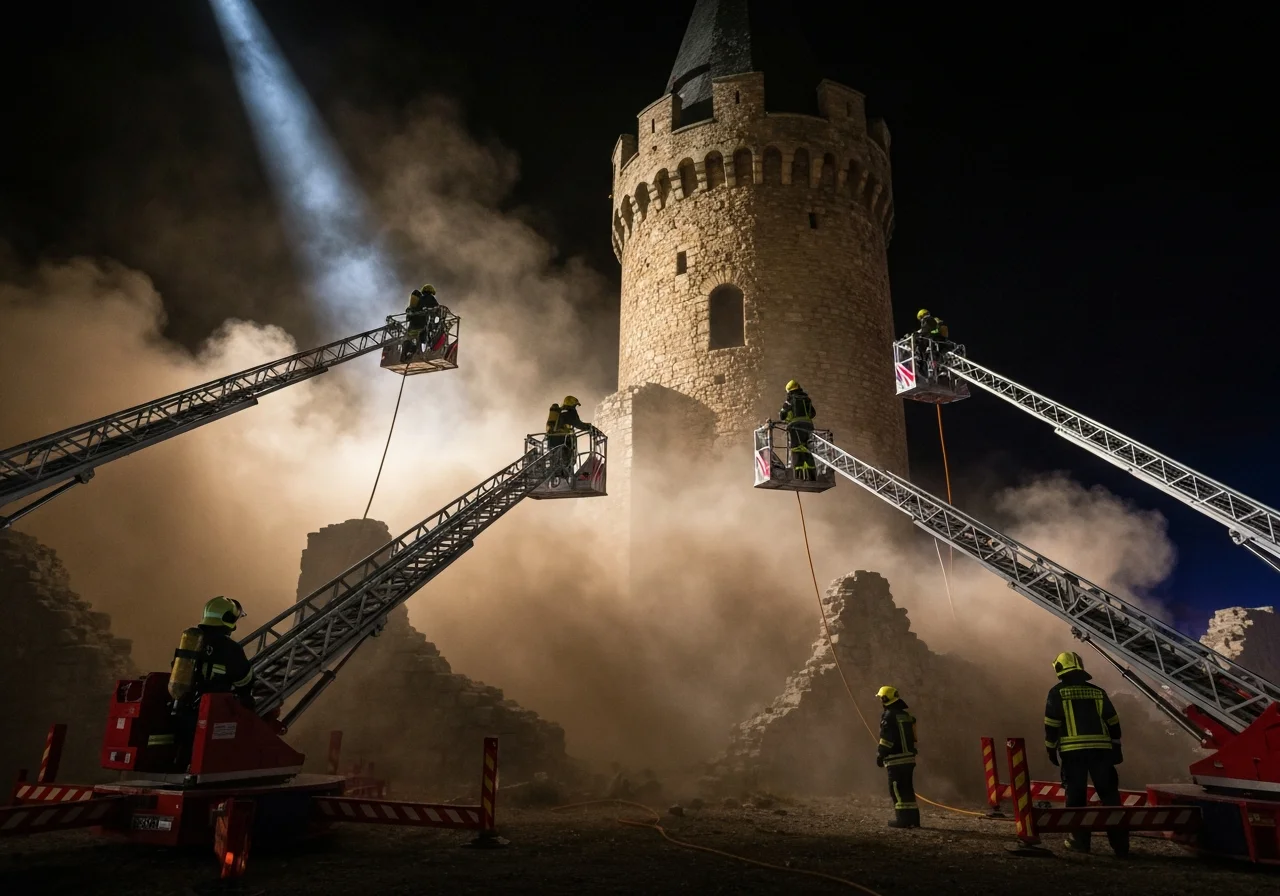
The survivor dichotomy speaks volumes—while Gaetano La Manna walked away with minor fractures, Stroici's fatal injuries spotlight the razor-thin margin between life and death in structural collapses. Firefighters' bare-hand excavation efforts, documented in real-time risk assessments, underscore how heritage sites demand specialized emergency protocols beyond standard construction rescue training.
Systemic Risks in Cultural Heritage Projects
EU Funding and Safety Oversight
The €6.9 million restoration of Rome's Torre dei Conti—bankrolled by the EU's post-pandemic recovery fund—has become a cautionary tale in heritage project mismanagement. Despite structural surveys allegedly "confirming safety conditions," the fatal collapse exposed gaping holes in oversight protocols. Italy's CGIL union isn't mincing words, calling this a textbook case of systemic failure in a country averaging three construction fatalities daily. The manslaughter investigation now underway could send shockwaves through EU-funded restoration initiatives, particularly those fast-tracked through pandemic recovery programs.
Structural Vulnerabilities and Historical Context
This 800-year-old tower was essentially a geological time bomb—its height halved by centuries of earthquakes, with a magnitude 3.3 tremor hitting days before the collapse. Throw in concurrent asbestos removal (because why not add toxic materials to structural instability?), and you've got a perfect storm of heritage conservation risks. The comparative data reveals an uncomfortable truth: fatalities consistently occur during restoration, not from natural decay. Ancient structures demand more than cosmetic fixes—they require forensic-level structural analysis before any intervention.
Comparative risk assessment of 5 historic renovation projects
| Project | Age (Years) | Budget (€M) | Hazard Type | Fatalities |
|---|---|---|---|---|
| Torre dei Conti | 800 | 6.9 | Structural collapse | 1 |
| Madrid Hotel | 120 | N/A | Foundation failure | 4 |
| Notre-Dame Paris | 860 | 700 | Fire | 0 |
| Dresden Frauenkirche | 300 | 180 | Masonry instability | 0 |
| Pompeii House | 2,000 | 105 | Volcanic ash exposure | 0 |
The numbers don't lie—when working with historical structures, the greatest dangers emerge not from time, but from our attempts to cheat it.
Regulatory Reforms and Industry Accountability
Prosecutorial Response and Legal Precedents
The manslaughter probe into Rome's Torre dei Conti collapse isn't just another workplace safety case—it's shaping up to be the canary in the coal mine for heritage restoration accountability. Prosecutors are throwing the book at contractors under Italy's Article 589 for culpable homicide, mirroring Madrid's 2025 luxury hotel fiasco where developers got slapped with criminal charges for cutting corners on structural safety. The smoking gun? Eyewitness accounts of sudden collapses directly contradicting those glossy pre-construction safety certifications.
This legal showdown exposes the dirty little secret of EU-funded restorations—when budgets prioritize Instagram-worthy facades over actual reinforcement, you're basically playing Jenga with people's lives. The Daily Mail's Madrid parallel hits home: same song, different medieval structure.
Union Demands for Safety Overhauls
CGIL's Natale Di Cola isn't mincing words—"In a healthy country, Octav wouldn't have been doing dangerous work at 66 just to eat." That gut-punch statement to The Guardian lays bare Italy's three-daily-workplace-deaths epidemic. The union's playbook? Mandatory age caps for high-risk gigs and real-time structural monitoring that doesn't rely on firefighters' bare hands as backup safety equipment.
Their EU fund pivot proposal is genius—redirect those restoration millions into actual worker armor: ancient masonry training programs and contractor penalties with teeth. When rescue crews spend 11 hours clawing through debris, it's not an operation—it's an indictment.
Cultural Heritage Preservation vs Worker Protections
Economic Priorities vs Labor Rights
The Torre dei Conti restoration project exemplifies the high-stakes gamble of cultural tourism economics. While the €6.9m EU-funded initiative promised to revitalize Rome's tourism sector, the human cost exposes darker realities of Italy's labor market. CGIL union leader Natale Di Cola's indictment—"In a healthy country, Octav, aged 66, wouldn’t have found himself on a construction site performing demanding, intense and dangerous tasks to earn a living"—cuts to the heart of systemic exploitation.
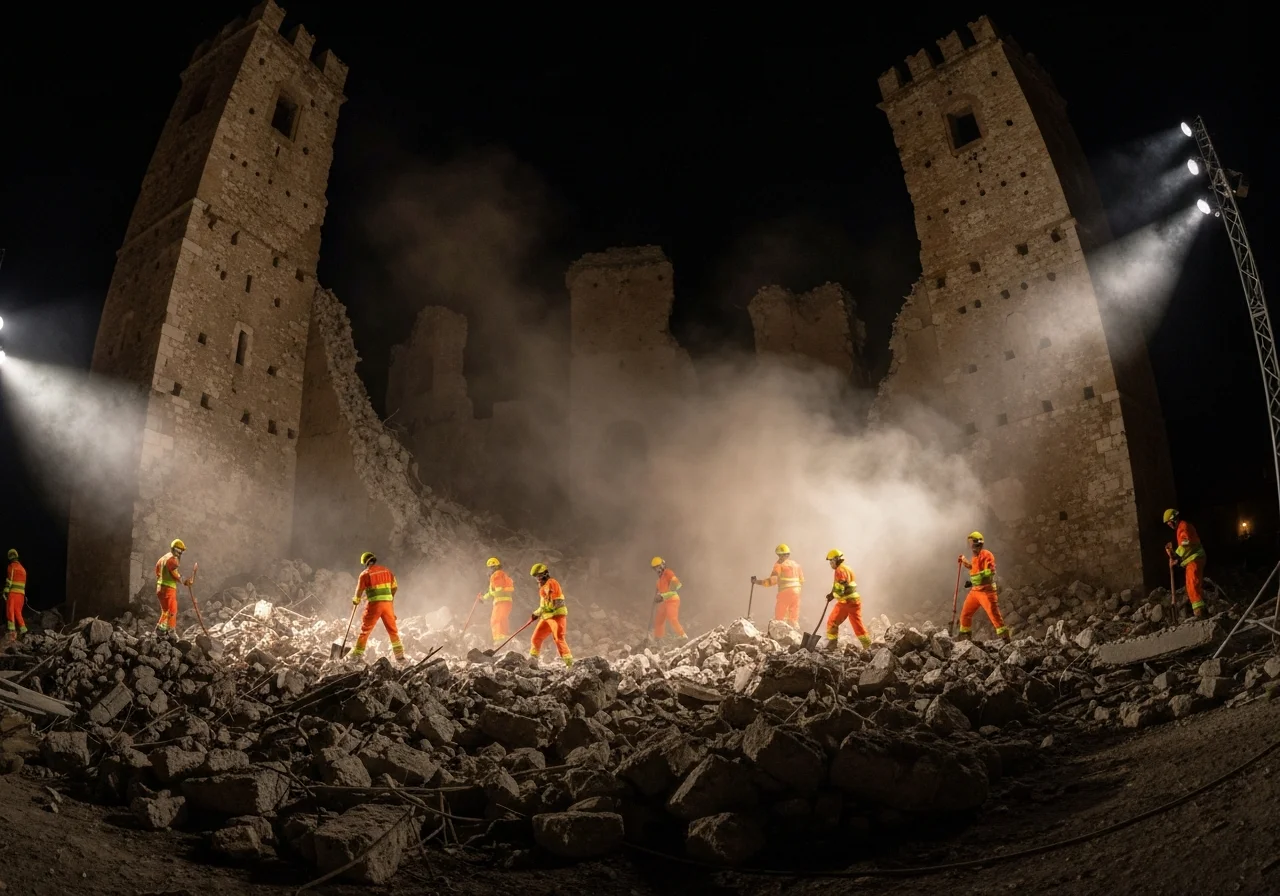
Structural Safeguards Under Scrutiny
Pre-collapse safety certifications now read like tragic irony after the tower's sequential failures. The 3.3-magnitude earthquake theory (ABC News) gains credence when juxtaposed with Madrid's recent collapse, where inspectors had flagged structural vulnerabilities weeks prior. This pattern suggests either willful negligence or fundamental flaws in assessing historical building integrity.
Elena Cerchi's observation about Rome's urban fragility resonates beyond geography—it's a metaphor for institutional decay. The subsequent chain reaction manifests in aging workers like Stroici becoming collateral damage in the rush for cultural prestige. Fundamentally, this dynamic underscores the need for enforceable occupational safety standards that don't buckle under economic or historical pressures.
References


Get Daily Event Alerts for Companies You Follow
Free: Register to Track Industries and Investment Opportunities