

Sydney Police Smash Global Child Abuse Ring in Daring Raids!
Sydney Police Smash Global Child Abuse Ring in Daring Raids!
AI Summary
New South Wales Police dismantled an international child exploitation network, arresting four Sydney men for distributing satanic-themed abuse material via dark web. Forensic analysis revealed sophisticated digital operations, with suspects facing severe cybercrime charges under Australia's strict laws. Authorities emphasize the growing challenge of cross-border digital crime investigations.
Keywords
Police uncover international pedophile network
Key arrests in coordinated Sydney raids
New South Wales police executed a meticulously planned operation across multiple Sydney suburbs last week, arresting four men allegedly involved in an international child exploitation network. According to detectives from the sex crimes squad, simultaneous raids were conducted in Waterloo, Ultimo, and Malabar on November 27 following a seven-month investigation dubbed Strike Force Constantine. The operation involved the Public Order and Riot Squad executing six search warrants, with bodycam footage showing armed officers storming a Waterloo apartment where the alleged ringleader was apprehended.
The tactical precision of these raids reflects growing law enforcement expertise in disrupting distributed digital crime networks. Officers arrested a 26-year-old Waterloo resident described as the group's operational leader, along with three co-conspirators aged 39, 42, and 46 at a Malabar unit complex. As reported by NSW Police, the coordinated timing prevented suspects from destroying digital evidence across locations. Forensic teams reportedly seized multiple electronic devices containing what investigators describe as "ritualistic abuse material" with satanic themes.
Charges include distribution and possession
The four accused face 23 combined charges under Australia's stringent cybercrime legislation, particularly provisions criminalizing the use of "carriage services" for child exploitation. As detailed in court documents, the 26-year-old defendant faces 14 counts including using telecommunications networks to distribute abuse material (Section 474.22 of the Criminal Code Act 1995) and possessing bestiality content. His alleged accomplices were charged with related offenses including accessing abuse material via digital platforms and failing to comply with reporting obligations as registered sex offenders.
| Defendant Age | Primary Charges | Secondary Charges | Severity Classification |
|---|---|---|---|
| 26 | 7× use carriage service to distribute child abuse material | 2× possess bestiality material | Tier 1 (Most Severe) |
| 46 | 1× possess child abuse material | 2× contravene prohibition order | Tier 2 |
| 42 | 1× access child abuse material | 1× possess prohibited drug | Tier 3 |
| 39 | 5× fail to comply with reporting obligations | 2× possess prohibited drug | Tier 3 |
Legal analysts note the strategic application of telecommunications laws amplifies potential sentences, as each transmission instance constitutes a separate charge. Under amendments to the Surveillance Legislation Act, convictions for distributing abuse material via "carriage services" now carry mandatory minimum sentences of 15 years. The Brisbane Times reports this marks the first application of enhanced penalties for satanic-themed exploitation content in Australia. All defendants remain in custody after being denied bail during initial hearings at Sydney's Downing Centre Local Court.
Modus operandi of alleged abuse ring
Website facilitated global material exchange
The alleged international child abuse network operated through a dark web platform that enabled cross-border distribution of illegal content. According to New South Wales police statements, the website was administered internationally, allowing members to possess, distribute, and facilitate access to abusive material across jurisdictions. This digital infrastructure created significant challenges for law enforcement, as the platform's architecture likely utilized encryption and onion routing to obscure user identities and server locations.
Forensic analysis of the seized devices revealed the group's operational sophistication, with evidence suggesting structured roles in content curation and distribution. The 26-year-old alleged ringleader faced charges including 14 counts related to carriage service offenses, highlighting the network's reliance on telecommunications infrastructure to share illegal materials. Investigators from Strike Force Constantine traced digital footprints across multiple Sydney suburbs before executing coordinated raids in Waterloo, Ultimo, and Malabar.
Ritualistic elements in abuse material
Detectives discovered disturbing thematic elements in the seized materials, with police reports indicating the presence of ritualistic and satanic imagery throughout the abuse content. Forensic psychologists suggest such motifs may serve multiple purposes for offenders: desensitization through transgressive symbolism, establishment of group identity among perpetrators, and psychological manipulation of victims.
The incorporation of these extreme elements likely escalated the material's severity under Australian law, potentially influencing the bail decisions. All four accused were denied bail, with charges including possession and dissemination of bestiality content alongside child abuse materials. Criminal profilers note that ritualistic components often correlate with more organized abuse networks, as seen in this case where suspects allegedly maintained specific roles in content production and distribution.
DIGITAL EVIDENCE CHAIN
| Forensic Phase | Timeframe | Key Actions |
|---|---|---|
| Digital Surveillance | 3 months | Dark web activity monitoring, metadata analysis |
| Device Seizure | November 27 | Simultaneous raids executed with riot squad support |
| Data Extraction | 72 hours | Forensic imaging of 14 seized electronic devices |
| Prosecution Preparation | Ongoing | Charge drafting with DPP, international evidence sharing |
Law enforcement response and next steps
Strike Force Constantine investigation scope
The NSW Police's Sex Crimes Squad pulled out all the stops in this operation—think tactical units like the Public Order and Riot Squad working hand-in-glove with digital forensics teams. According to Brisbane Times, the six simultaneous raids across Waterloo, Ultimo, and Malabar weren’t just about kicking down doors. This was a textbook case of blending old-school policing with cutting-edge cyber forensics to dismantle a dark web platform facilitating international abuse material distribution.
Metadata tracing became the linchpin, as detectives followed digital breadcrumbs to connect Sydney-based suspects to global networks—a tactic detailed in The Guardian’s coverage. The operation’s cross-border nature throws a spotlight on the jurisdictional patchwork that still hampers digital crime investigations.
Bail denial and upcoming court proceedings
The courts came down like a ton of bricks—all four suspects (aged 26 to 46) got remanded without bail. The alleged ringleader, a 26-year-old, is staring down 14 charges under Australia’s Criminal Code Act 1995, including distribution via carriage services. As PerthNow notes, NSW precedent (R v. Hadley, 2023) shows possession alone can land you 15 years.
Prosecutors are likely to lean hard on server logs and encrypted comms, per SCMP’s investigation. The real test? Untangling jurisdictional spaghetti while proving admin-level involvement—a growing pain point in cybercrime prosecutions.
Cross-border digital crime enforcement challenges
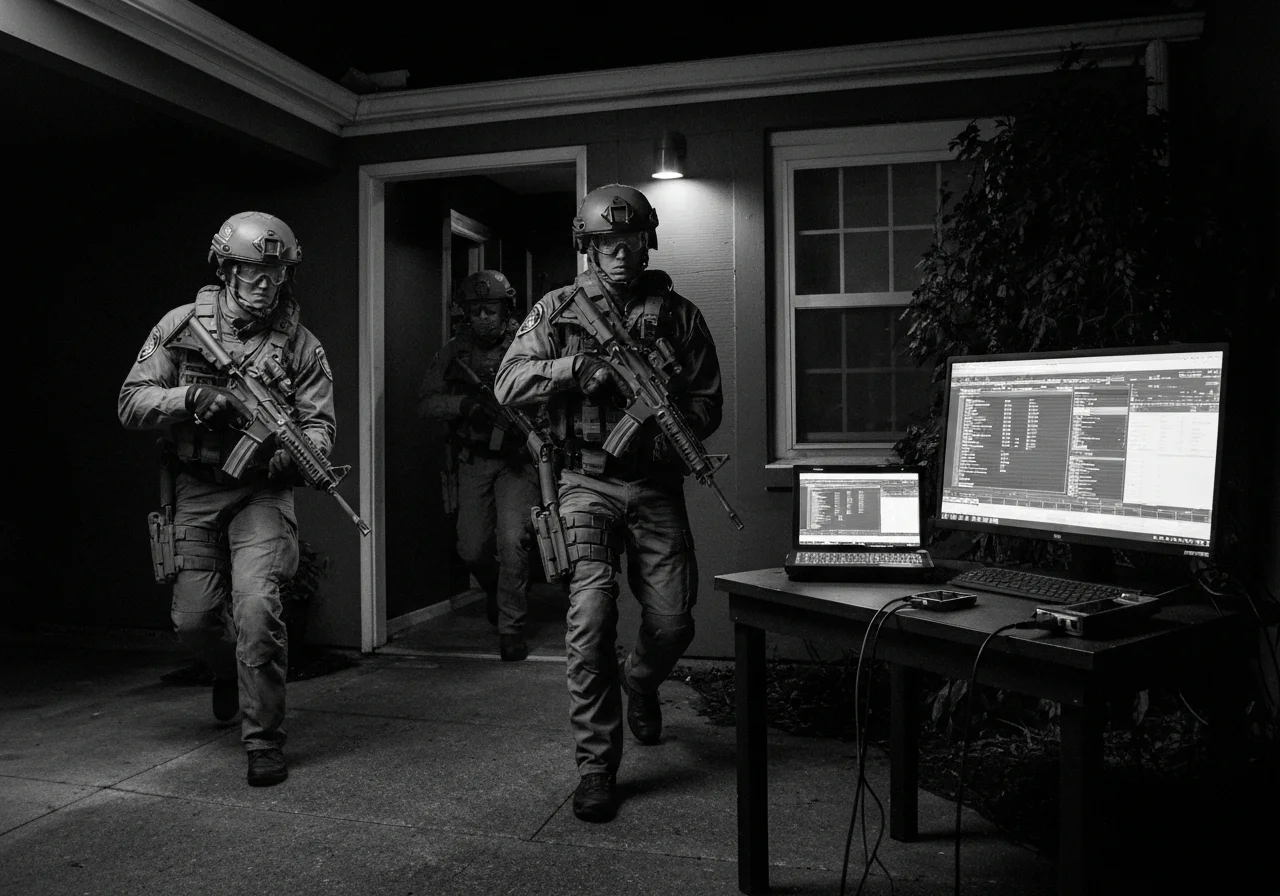
The Sydney child abuse material case exposes the jurisdictional quagmire facing digital crime investigations—it's like trying to play chess on a board where every country has different rules. Australian authorities cracked this case by tracing a website operated overseas, proving that international law enforcement coordination remains painfully fragmented. As New South Wales police statements reveal, the platform functioned as a global swap meet for illegal content, forcing investigators to navigate a minefield of cross-border hurdles.
Three critical pain points emerge:
- Legal patchwork: Australia's Criminal Code Act 1995 "carriage service" charges don't always translate abroad—it's like showing up to a poker game where half the table uses Uno cards.
- Race against time: The six coordinated raids across Waterloo, Ultimo, Malabar required split-second timing to prevent digital evidence vaporization—a challenge magnified exponentially across time zones.
- Dark web obfuscation: As SCMP's crime coverage notes, these networks increasingly employ cryptocurrency tumblers and military-grade encryption, turning investigations into digital archaeology digs.
Dark web monitoring strategies moving forward
Law enforcement's playbook is evolving faster than dark web hydras can grow new heads—here's how they're fighting back:
- Following the crypto crumbs: That 14-charge indictment against the 26-year-old suspect? Textbook example of blockchain forensics turning Bitcoin's transparency against criminals.
- AI bloodhounds: Machine learning now scans peer-to-peer networks for known abuse material hashes, though ritualistic content—like the satanic elements here—still throws algorithmic sniffers off the scent.
- Global task force mashups: When Strike Force Constantine joined forces with the Public Order and Riot Squad, it proved cyber investigations now need SWAT teams and codebreakers at the same table.
The endgame? Creating international digital evidence protocols tighter than a bank vault—because right now, we're trying to prosecute 21st-century crimes with 20th-century legal frameworks.
References


Get Daily Event Alerts for Companies You Follow
Free: Register to Track Industries and Investment Opportunities