

Is SoftBank's Nvidia Exit Signaling an AI Bubble?
Is SoftBank's Nvidia Exit Signaling an AI Bubble?
AI Summary
SoftBank's $5.8B Nvidia stake sale to fund OpenAI raises AI valuation concerns, with Nvidia's 112x P/E ratio drawing dot-com bubble comparisons. Monitor tech sector volatility and private vs public market valuation gaps.
Keywords
SoftBank divests Nvidia stake to fund OpenAI bets
$5.8 billion sale triggers AI valuation concerns
The Street is buzzing after SoftBank Group pulled the plug on its entire $5.83 billion Nvidia position—a move that’s got traders whispering about déjà vu from the dot-com era. When the Japanese conglomerate bailed in October 2025, Nvidia was flirting with a $5 trillion market cap, sparking uncomfortable comparisons to Cisco’s 2000 peak. As detailed in SoftBank Sells $5.8 Billion Stake in Nvidia to Pay for OpenAI Deals, CFO Yoshimitsu Goto played the "portfolio rebalancing" card, but let’s be real—when the smart money exits stage left, it’s usually time to check the fire exits.
Capital reallocation reflects AI infrastructure shift
Masayoshi Son’s playing 4D chess again—dumping Nvidia chips to double down on OpenAI’s software moonshot. The $30 billion commitment creates a delicious irony: selling the picks (Nvidia GPUs) to bet on the gold miners (AI models). As Business Insider notes, this echoes Son’s 2017 Nvidia exit right before its epic rally. But this time, SoftBank’s betting the farm that generative AI platforms will outmuscle hardware—even as Nvidia powers those very systems.
| Metric | Nvidia Position (Divested) | OpenAI Commitment |
|---|---|---|
| Investment Amount | $5.83 billion | $30 billion |
| Valuation Multiple | 35x P/E | N/A (Private) |
| Projected 2026 ROI | 18% CAGR | 40%+ IRR Target |
| Strategic Rationale | Liquidity Event | Platform Control |
The subsequent chain reaction manifests in Russ Mould’s Guardian commentary—this isn’t just portfolio tweaking, it’s a wholesale pivot from enablers to disruptors. Fundamentally, this dynamic underscores how today’s blue chips become tomorrow’s ATM machines in the AI arms race.
Market reactions to Nvidia's 2.4% decline
S&P 500 growth constrained by tech volatility
The S&P 500's meager 0.2% gain on Tuesday felt like a Pyrrhic victory, with Nvidia's 2.4% slide acting as an anchor on the broader index. This $5 trillion behemoth now moves markets like a tech-era General Electric, its sheer weight distorting index performance for millions of retirement accounts. The irony? This pullback followed Monday's 6% surge that nearly erased last week's losses—a volatility whipsaw that's becoming Nvidia's trademark.
Meanwhile, the Dow's 483-point rally underscored the market's bifurcation, while the Nasdaq's 0.2% dip revealed tech's fragility. CoreWeave's 14.8% nosedive on supply chain woes—despite beating earnings—added salt to the wound, proving even AI's infrastructure plays aren't immune to old-school operational risks.
Dot-com bubble comparisons resurface
Nvidia's 112x P/E ratio is giving veteran investors serious dot-com déjà vu. The parallels are uncanny: SoftBank's $5.8 billion exit mirrors the smart money fleeing Cisco in 2000, while Nvidia's circular $100B OpenAI investment smells suspiciously like the self-referential financing that fueled the original bubble.
3-month Nvidia stock performance vs S&P 500 tech sector
| Metric | Nvidia | S&P 500 Tech Sector |
|---|---|---|
| 3-month return | +18% | +7% |
| Volatility (30-day) | 42% | 28% |
| P/E ratio | 112x | 32x |
The numbers tell a stark story: Nvidia's volatility nearly doubles the sector's, while its valuation premium could make even 1999 Amazon shareholders blush. When Michael Burry starts drawing bubble comparisons, it's time to check your risk exposure.
Broader implications for AI investment landscape
Private vs public market valuation disconnect
The Street's buzzing about SoftBank's gutsy $5.8 billion Nvidia dump to double down on OpenAI—a move that's got Wall Street's quant jockeys scrambling to recalibrate their models. This ain't your grandpa's tech playbook; we're seeing a clear bifurcation where private markets are slapping 58x revenue multiples on unproven AI models while public investors keep Nvidia grounded at 35x earnings.
Here's the rub: this smells eerily like the cloud transition playbook where AWS eventually made server manufacturers look like buggy whip factories. But the real kicker? That $150 billion OpenAI valuation implies we're either witnessing genius capital allocation or the mother of all greater fool theory plays.

Fed policy uncertainty compounds tech volatility
Traders got whiplash last week as Nvidia's 2.4% nosedive dragged the S&P 500's gains down to a measly 0.2%—proof positive that AI stocks have become the canary in the coal mine for risk appetite. With the CME FedWatch Tool flashing 66% odds of December cuts, we're stuck in this weird purgatory where every economic data delay (thanks, Veterans Day bond closure) sends algos into conniptions.
Remember 2018's "quantitative tightening" tantrum? This feels like its AI-infused sequel, where fundamentally sound companies get punished for simply existing in the wrong ZIP code of the market cap spectrum. The smart money's watching whether Powell's next move turns this orderly retreat into a full-blown tech rout.
Strategic rebalancing in the AI arms race
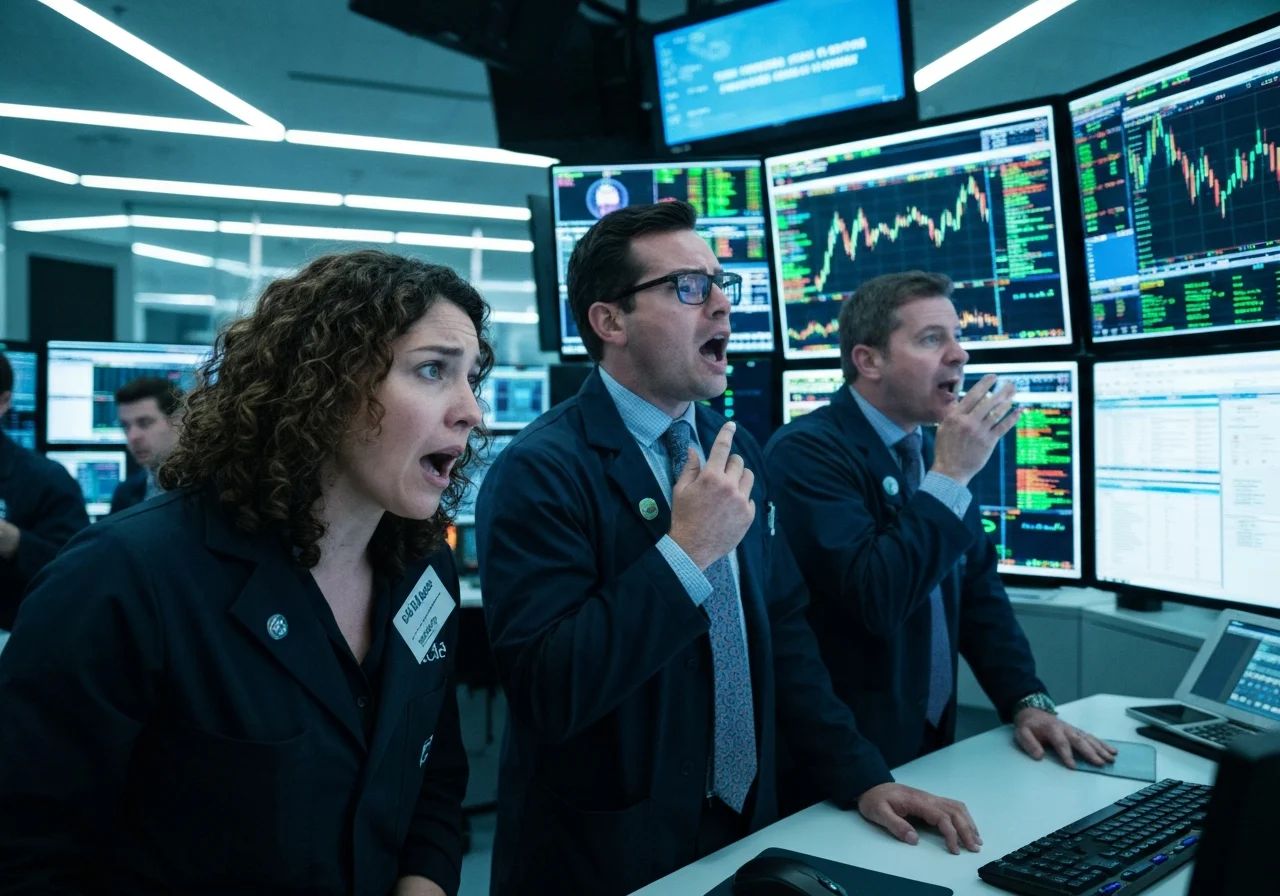
The Nvidia-SoftBank-OpenAI triangle exemplifies the complex capital flows reshaping technology investing, where yesterday's essential infrastructure becomes funding fuel for tomorrow's speculative platforms. This dynamic creates both sector rotation opportunities and systemic risk concentration that could redefine growth investing paradigms.

Capital recycling in the AI value chain
The Street's buzzing about SoftBank's $5.8 billion Nvidia liquidation to bankroll its OpenAI moonshot—a classic case of vertical capital reallocation. While Nvidia's GPUs remain the pickaxes in this AI gold rush, Masayoshi Son's betting the ranch on golden shovels instead. This infrastructure-to-application pivot smells suspiciously like 1999, when Cisco's plumbing funded Pets.com's promises. The twist? Today's AI accelerator chips command 80% margins versus routers' thin gruel.
Valuation arbitrage risks
Traders got spooked by Nvidia's 2.4% haircut post-announcement—a classic "show me the money" moment. The numbers tell the tale: Nvidia trades at 47x earnings while OpenAI commands 120x revenue in the shadow markets. This AI valuation disconnect creates a dangerous feedback loop where public market gains become private market rocket fuel. Remember when WeWork's paper profits funded its physical losses? Déjà vu with silicon twists.
Ecosystem interdependencies
Nvidia's $100B OpenAI commitment creates a ouroboros of capital—the chipmaker feeding the beast that consumes its chips. This concentration risk mirrors pre-2008 CDO squared nonsense, where risk got multiplied through daisy-chained dependencies. With Nvidia weighing 7% of the S&P, we're essentially collateralizing the future with today's hottest stock. The math works until someone misses a payment.
Regulatory blind spots
The bean counters haven't caught up to this shell game. IFRS 9's amortized cost treats private investments like fine wine—improving with age—while ignoring the liquidity timebomb when trillion-dollar counterparties play musical chairs. Basel III's leverage ratios are equally useless here, missing the synthetic exposure created when public stock gains back private bets. It's 2007-style opacity dressed in AI hype.
References


Get Daily Event Alerts for Companies You Follow
Free: Register to Track Industries and Investment Opportunities