

RJD Implodes as Kidney Donation Sparks Dynastic Warfare
RJD Implodes as Kidney Donation Sparks Dynastic Warfare
AI Summary
Rohini Acharya's public accusations against Tejashwi Yadav's inner circle reveal systemic governance failures in RJD, compounded by electoral losses and toxic family dynamics. Analysts warn of reputational collapse without structural reforms.
Keywords
Rohini Acharya's Public Accusations
Allegations Against Tejashwi Yadav's Aides
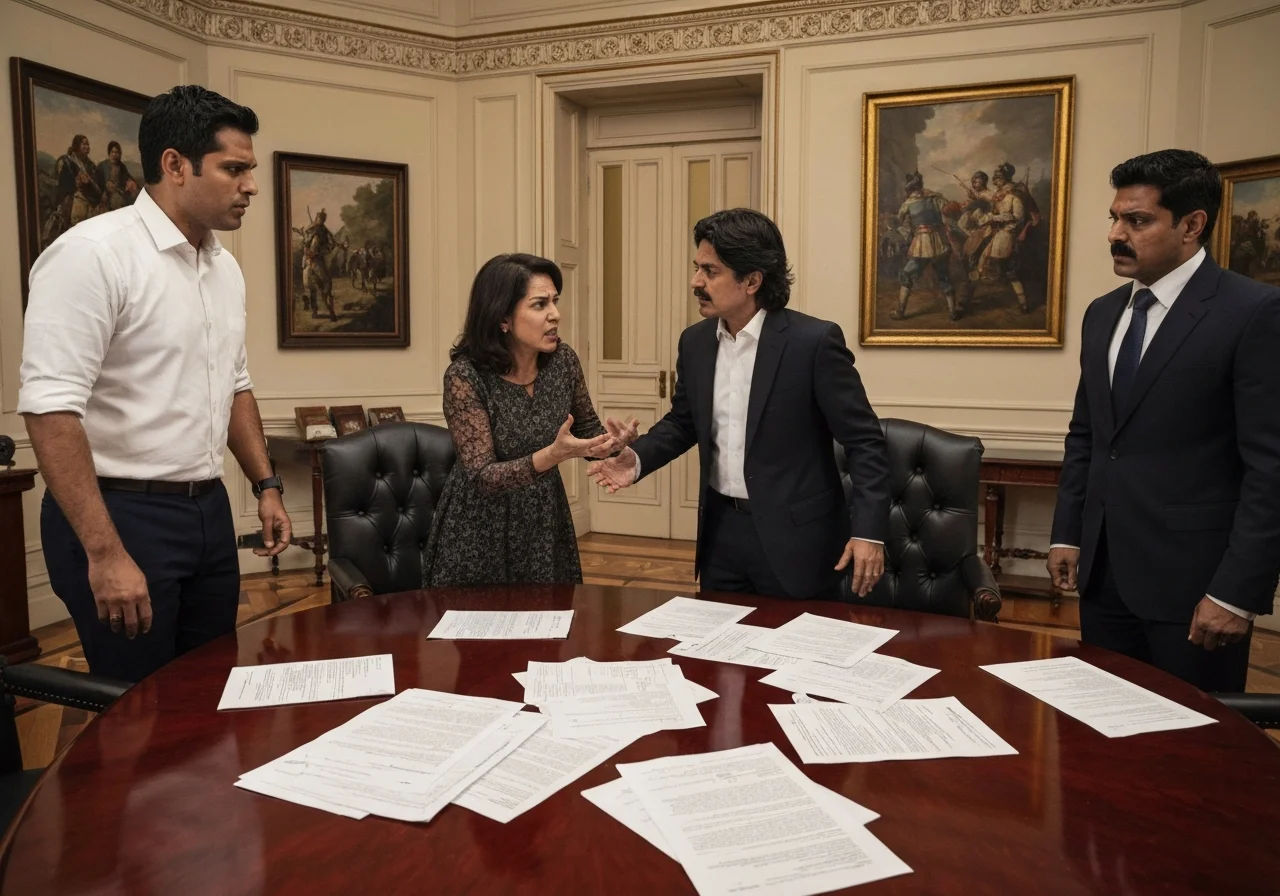
The political equivalent of a hostile takeover bid unfolded within Bihar's first family when Rohini Acharya—daughter of RJD patriarch Lalu Prasad Yadav—dropped a bombshell on X (formerly Twitter). She accused her brother Tejashwi's inner circle, specifically aides Sanjay Yadav and Rameez Nemat, of crossing the line from political maneuvering into outright abuse. The alleged incident—involving hurled slippers and toxic verbal assaults—reads like a case study in governance breakdowns within dynastic structures.
Contextually, this isn't just family drama—it's a cautionary tale about unregulated power centers. Rohini's claim that unelected advisors "orchestrated her ouster" from strategic discussions mirrors corporate governance failures where shadow directors override formal hierarchies. The timing—hours after RJD's electoral rout—suggests scapegoating dynamics familiar to analysts studying succession crises in family-run enterprises.
Kidney Transplant Controversy
What began as political infighting took a grotesque turn with Rohini alleging her 2022 kidney donation to Lalu Prasad was weaponized against her. The aides' reported taunt—calling it a "filthy kidney"—isn't just cruel; it exposes how women's sacrifices get commodified in dynastic politics.
The timeline reveals chilling opportunism:
| Date | Event |
|---|---|
| December 5, 2022 | Lalu undergoes transplant with Rohini's kidney |
| November 15, 2025 | Aides allegedly mock donation during post-election clash |
| November 16, 2025 | Rohini publicizes abuse, framing transplant as emotional leverage |
This isn't mere mudslinging—it's reputational capital being liquidated. The fact that Rohini's sacrifice was later used as ammunition underscores the volatility of political goodwill in family-run regimes.
RJD's Electoral Collapse Aftermath
Bihar Assembly Election Results
The Rashtriya Janata Dal (RJD) just got handed a brutal reality check—their seat count nosedived from 75 in 2020 to a paltry 25 in the 2025 Bihar Assembly elections. This isn’t just a stumble; it’s a full-blown faceplant, marking their worst performance since 2010. Despite fielding candidates in over 140 seats and rallying the Mahagathbandhan coalition behind Tejashwi Yadav, the party got steamrolled. The BJP, meanwhile, flexed its muscles with 89 seats—its highest-ever tally in Bihar. The numbers don’t lie: RJD’s leadership decisions, particularly the outsized influence of unelected advisors like Sanjay Yadav and Rameez Nemat, are now under the microscope.
TABLE_NAME
| Party | 2020 Seats | 2025 Seats | Change |
|---|---|---|---|
| RJD | 75 | 25 | -50 |
| BJP | 74 | 89 | +15 |
| JD(U) | 43 | 85 | +42 |
Leadership Accountability Dispute
Rohini Acharya isn’t mincing words—she’s calling out Tejashwi Yadav’s inner circle for what she describes as a toxic power grab. Her allegations? Verbal abuse, physical intimidation, and being ostracized for daring to question the campaign’s direction. The irony? This is the same woman who donated a kidney to her father, Lalu Prasad Yadav, in 2022—a sacrifice she claims was weaponized against her. The feud exposes a glaring flaw in political dynasties: unelected advisors wielding more clout than elected representatives. If RJD doesn’t course-correct, this could be more than a temporary setback—it might be the beginning of the end.
Structural Weaknesses in Political Dynasties
Unelected Advisors' Growing Influence
The meteoric rise of Rameez Nemat—from cricket buddy to political kingmaker—exposes the soft underbelly of dynastic governance. This backroom operator, who joined the RJD in 2016, now controls the gates to Tejashwi Yadav's inner sanctum despite zero electoral credentials. His trajectory mirrors Sanjay Yadav's controversial Rajya Sabha ascent in 2024, revealing how personal loyalty trumps institutional accountability in political families. The powder keg exploded when Rohini Acharya accused these unelected advisors of engineering her ouster (Who is Rameez Nemat? The man behind Rohini Acharya’s exit from RJD). Such shadow governance structures inevitably corrode party legitimacy—a textbook case of putting the cart before the horse in political management.
Succession Planning Failures
The RJD's leadership car crash reveals why dynasties need corporate-style succession blueprints. Tejashwi's reliance on a cabal of unelected advisors stands in jarring contrast to sister Rohini's claims—especially after her 2022 kidney donation to patriarch Lalu Prasad. This follows Tej Pratap Yadav's earlier defection after public meltdowns, exposing the absence of conflict resolution mechanisms. The party's freefall from 75 to 25 Bihar seats (Rohini Acharya again hit out at Tejaswi’s close aides alleging they made her an orphan) mirrors the collapse of Lehman Brothers—when weak governance meets emotional decision-making, the house always loses.
FAMILY-POWER-STRUCTURE
| Role | Current Holder | Key Attributes |
|---|---|---|
| Party President | Lalu Prasad Yadav | Ailing, limited active role |
| De Facto Leader | Tejashwi Yadav | Relies on unelected inner circle |
| Marginalized Member | Rohini Acharya | Kidney donor, now disowned |
| Expelled Member | Tej Pratap Yadav | Formed breakaway party |
Governance Implications of Family Feuds
Political Fallout Analysis
The Yadav family feud offers a masterclass in governance decay—think Enron-style oversight failures but with political dynasties. When Rohini Acharya exposed how unelected operatives like Sanjay Yadav and Rameez Nemat hijacked decision-making (as detailed in this TOI report), it revealed the political equivalent of shadow banking risks. The RJD's seat count nosediving from 75 to 25? That's what happens when internal controls fail harder than a Lehman Brothers risk model.
Opposition parties reacted like hedge funds spotting weakness:
| Party | Key Statement | Strategic Position |
|---|---|---|
| BJP | "The way Lalu Yadav’s family is constantly falling apart... no one will like it" | Capitalizing on RJD's weakness |
| JD(U) | Demanded Lalu's intervention through official channels | Positioning as stable alternative |
| Congress | No public comment | Avoiding collateral damage |
| Samajwadi Party | Silent despite Rameez's familial ties | Protecting UP alliances |
Institutional Credibility Risks
Nothing tanks brand equity faster than mocking a kidney donor—Rohini's 2022 organ transplant becoming insult fodder (per this exposé) mirrors Wells Fargo's fake accounts scandal. The BJP's response? Textbook IFRS 9 impairment assessment—quantifying reputational damage before engaging, while JD(U) went full activist investor demanding immediate governance overhauls.
This saga proves political dynasties need Basel III-style contingency buffers—because when family feuds meet electoral math, the only certainty is collateral damage.
References


Get Daily Event Alerts for Companies You Follow
Free: Register to Track Industries and Investment Opportunities