

Putin's 'Flying Chernobyl' Missile Redefines Nuclear Deterrence Forever
Putin's 'Flying Chernobyl' Missile Redefines Nuclear Deterrence Forever
AI Summary
Russia's Burevestnik missile achieves 14,000 km range with nuclear propulsion, challenging global defense systems. Analysts warn of ecological risks and escalating arms race dynamics. Monitor NATO's response strategies closely.
Keywords
Putin announces advanced nuclear missile capabilities
Burevestnik's unlimited range and evasion features
Russia's Burevestnik nuclear-powered cruise missile represents a quantum leap in strategic deterrence, blending apocalyptic range with evasion capabilities that rewrite the rulebook. The 9M730 system (NATO's ominously named SSC-X-9 Skyfall) demonstrated a staggering 14,000 km reach during October testing—enough to circumnavigate 35% of the globe without refueling. What truly rattles defense analysts is its nuclear propulsion, enabling theoretically unlimited flight duration while executing complex aerial maneuvers that mock traditional interception calculus.
| Specification | Burevestnik (9M730) | NATO Reference |
|---|---|---|
| Maximum Tested Range | 14,000 km | Exceeds ICBM ranges |
| Flight Duration | 15 hours | Unlimited potential |
| Propulsion System | Nuclear-powered | SSC-X-9 Skyfall |
| Evasion Capability | Complex maneuvers | Bypasses THAAD/SM-3 |
The "Flying Chernobyl" moniker isn't hyperbole—its radioactive exhaust trail creates ecological hazards mirroring the 1986 disaster. While still in development, Putin's announcement of completed "crucial testing" suggests this doomsday asset may soon enter Russia's strategic inventory.
Strategic implications for global defense systems
This technological gambit effectively nullifies decades of missile defense investments. Unlike traditional ICBMs, the Burevestnik hybridizes cruise missile stealth with nuclear endurance, creating what Pentagon planners call a "persistent threat vector." Its ability to loiter for hours before executing terminal maneuvers renders interception algorithms obsolete—think of it as a hypersonic chess piece that changes the board's geometry mid-game.
The timing coincides ominously with Russia's recent nuclear drills, showcasing integrated strike capabilities. With mobile launchers and unlimited range, the system guarantees second-strike viability even after catastrophic first attacks. Analysts warn this could trigger dangerous brinkmanship, especially given Russia's current edge in deployed warheads (5,459 vs US 5,177). The strategic calculus has fundamentally shifted—deterrence now includes ecological consequences from radioactive exhaust plumes.
Geopolitical reactions to weapons development
Concurrent military actions in Ukraine
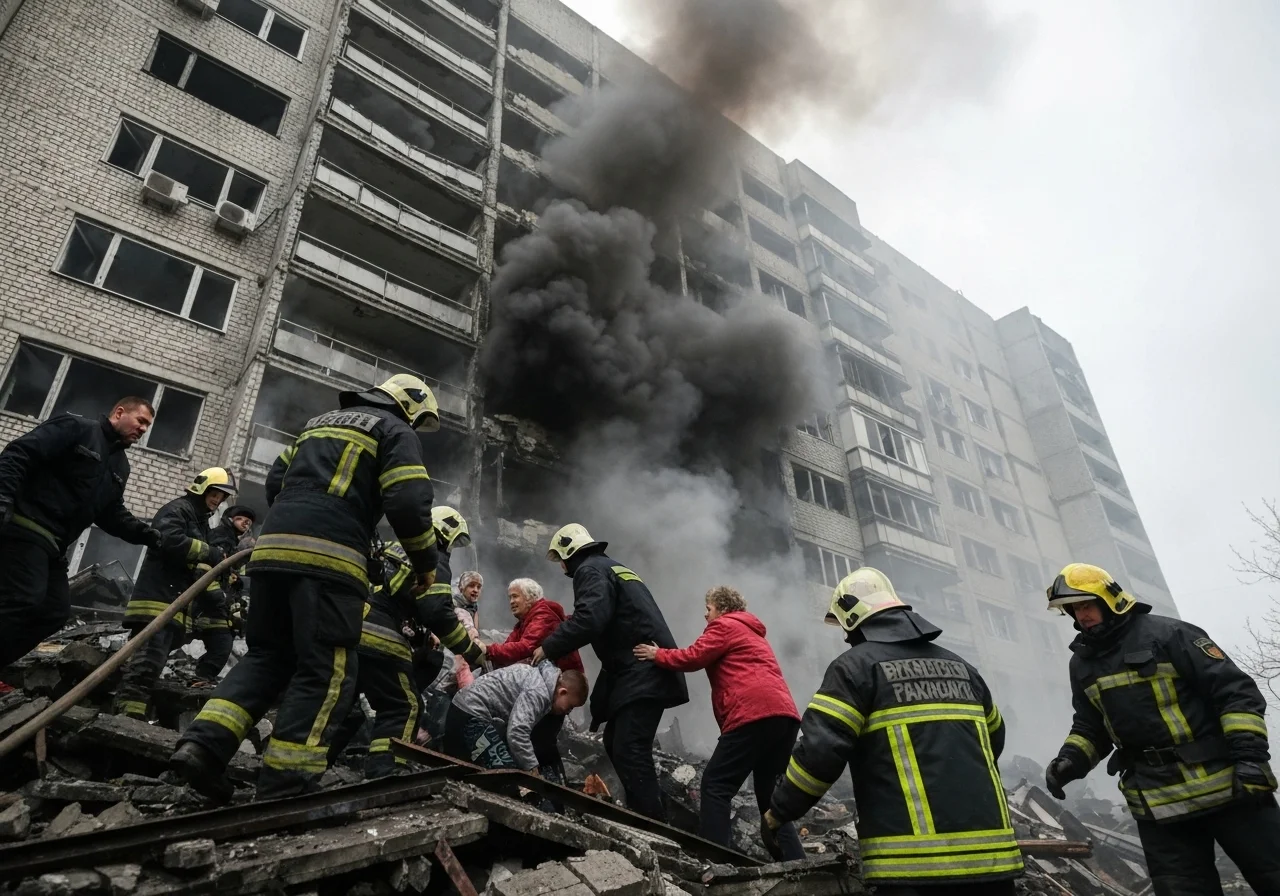
The chilling synchronization of Russia's October 21 Burevestnik missile test with Kyiv's civilian bombardment reveals Moscow's playbook—blending nuclear posturing with conventional terror tactics. As Putin reviewed the 14,000 km test flight data, nine-story apartment towers became impact zones, killing three and injuring 29. The subsequent chain reaction manifests in Zelensky's condemnation of 1,200+ drone strikes targeting civilians—a grim calculus where weapons development doubles as psychological warfare.
International diplomatic responses
Washington's sweeping oil sanctions collide with Putin's admission that the Burevestnik remains developmental—despite his "crucial testing" claims. The Kremlin's disinformation blitz, falsely blaming Ukrainian air defenses for civilian casualties, underscores a fundamental tension: economic deterrence versus military escalation. Treasury's forthcoming measures now face the radioactive reality of a missile system testing Western resolve mid-conflict.
independent observers confirm Moscow's hybrid strategy—advancing strategic weapons while destabilizing truth itself. This paradigm shift correlates with Russia's willingness to weaponize both uranium and misinformation simultaneously.
Nuclear arms race dynamics post-test
Comparative analysis of global arsenals
The recent Burevestnik missile test throws gasoline on the smoldering embers of nuclear brinkmanship, with Russia's arsenal now holding 5,459 warheads versus America's 5,177—a 5.4% edge that looks more psychological than strategic. These figures, sourced from the Federation of American Scientists, reveal Moscow's breakneck modernization pace, though both superpowers remain comfortably in MAD territory. The real game-changer? That 14,000 km range demonstrated on October 21—enough to lap 35% of the planet's waistline—effectively redrawing Cold War-era deterrence maps.
| Country | Warheads (2025) | Delivery Systems |
|---|---|---|
| Russia | 5,459 | ICBMs, SLBMs, Cruise Missiles |
| United States | 5,177 | ICBMs, SLBMs, Strategic Bombers |
| China | 410 | Limited ICBM Fleet |
| France | 290 | SLBMs Only |
Thresholds for strategic deterrence
Dubbed "Flying Chernobyl" by nervous analysts, the Burevestnik's unshielded reactor spews radioactive exhaust that could turn deterrence theory into an environmental liability. The Daily Mail reports its 15-hour test flight likely violated the 1963 Partial Test Ban Treaty, while NATO's missile defenses—designed for conventional propulsion—are suddenly playing catch-up. When General Gerasimov boasts of "unlimited range," he's not just rattling sabers; he's erasing the geographic sanctuaries that once kept nuclear brinksmanship somewhat predictable.
Strategic calculus in modern warfare
Nuclear-conventional warfare integration
The Burevestnik tests reveal Russia's evolving doctrine of nuclear-conventional entanglement, demonstrated through concurrent missile development and Ukrainian battlefield actions. While the nuclear-powered cruise missile achieved 14,000 km range during its October 21 test, Russian forces simultaneously launched conventional strikes on Kyiv residential blocks, killing three civilians. This parallel deployment mirrors Cold War-era "escalate to de-escalate" strategies, where nuclear posturing seeks to deter Western intervention in conventional conflicts. The 15-hour flight duration, as reported by General Gerasimov, provides persistent strike capability that could force adversaries to maintain constant defensive postures.
Psychological warfare dimensions
The "Flying Chernobyl" moniker weaponizes historical trauma, evoking memories of the 1986 disaster to amplify deterrence through ecological terror. As noted in Kyiv attack reports, the missile's unshielded reactor creates radioactive exhaust plumes - a characteristic deliberately highlighted to compound civilian fears beyond traditional blast effects. This terminology operates as a force multiplier, with Putin's public emphasis on the weapon's "unlimited range" (per PerthNow analysis) serving dual purposes: reassuring domestic audiences of strategic parity while triggering Western risk-aversion. The Kremlin's staged demonstration of the missile's evasion capabilities during active combat operations illustrates calibrated escalation designed to fracture NATO cohesion.

The subsequent chain reaction manifests in defense budget reallocations across NATO members, fundamentally altering strategic calculus. Notably, this paradigm shift correlates with increased nuclear modernization spending as nations hedge against asymmetric threats. The radioactive exhaust factor introduces unprecedented ecological liabilities, potentially creating a new class of environmental warfare derivatives in geopolitical risk assessments.

Fundamentally, this dynamic underscores the weaponization of financial markets through defense sector volatility. The Kremlin's dual-track approach—showcasing strategic weapons while executing tactical strikes—mirrors corporate raiding tactics, where demonstrative actions (like poison pill defenses) aim to manipulate adversary risk thresholds. As with hostile takeovers, the psychological impact often outweighs technical specifications in determining strategic outcomes.
References


Get Daily Event Alerts for Companies You Follow
Free: Register to Track Industries and Investment Opportunities