

Why Did Machado Win the 2025 Nobel Peace Prize?
Why Did Machado Win the 2025 Nobel Peace Prize?
AI Summary
María Corina Machado's Nobel win highlights grassroots democratic activism in Venezuela, contrasting Trump's failed nomination. The Committee's shift toward anti-authoritarian figures reflects modern peacebuilding priorities. Analyze the geopolitical implications.
Keywords
Machado's democratic advocacy in Venezuela
Opposition leader's recognition criteria
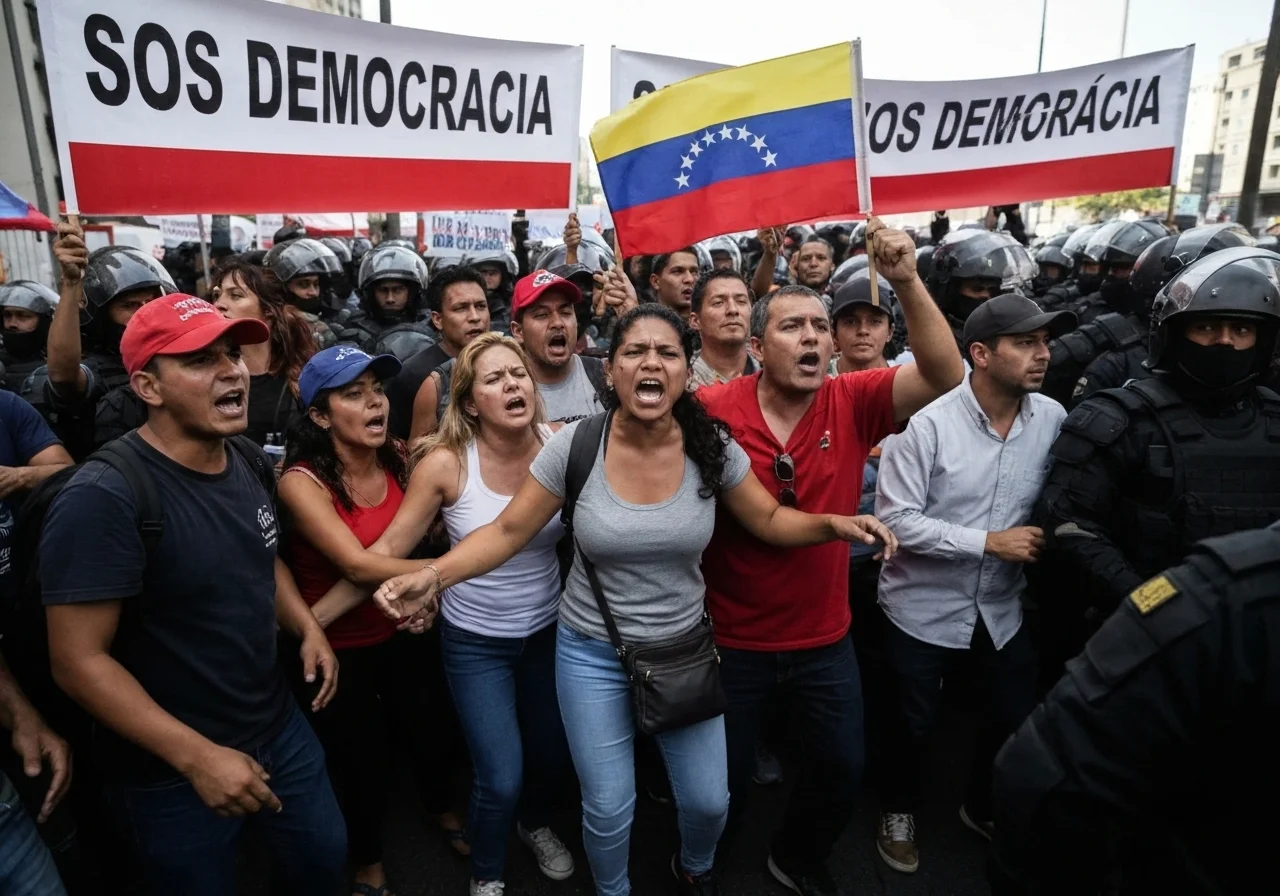
Let’s cut through the noise—the Norwegian Nobel Committee’s 2025 pick wasn’t just another feel-good gesture. Awarding María Corina Machado the Peace Prize for her "tireless work promoting democratic rights" was a calculated endorsement of grassroots mobilization against authoritarianism. The official announcement explicitly tied her engineering-driven protest networks to Alfred Nobel’s vision of "fraternity between nations." This wasn’t merely about symbolism; it reflected a strategic pivot toward honoring activists who weaponize decentralization against state repression. The Committee’s language—calling her a "unifying figure"—signals a deliberate departure from traditional state-centric peacemaking, aligning with 21st-century trends favoring dissenters under regimes like Maduro’s.
Political context of Venezuelan crisis
Here’s the brutal math: hyperinflation topping 1 million percent, 7.7 million refugees, and a judiciary weaponized to ban opposition candidacies. Machado’s Nobel win, as CBS News reported, spotlighted Venezuela’s democratic erosion since Maduro’s 2013 power grab. Her Vente Venezuela party didn’t just organize protests—it engineered a forensic counteroffensive. By training citizens to document electoral fraud, Machado created an irrefutable paper trail that exposed Maduro’s manipulated elections to the UN and global media. The Prize tacitly validated her playbook: when regimes control courts and ballots, transparency becomes the ultimate insurgency tool.
Trump's unsuccessful nomination campaign
Republican lobbying efforts analyzed
The GOP's full-court press to land Trump the 2025 Nobel Peace Prize was textbook political theater—high on star power but fatally light on operational rigor. Claudia Tenney's December 2024 nomination for the Abraham Accords showed early promise, but the campaign unraveled when Netanyahu's March 2025 submission missed the February 1 cutoff by a country mile. The table below exposes the strategic missteps:
| Nominator | Date Submitted | Basis for Nomination |
|---|---|---|
| Rep. Claudia Tenney | December 2024 | Abraham Accords normalization |
| PM Benjamin Netanyahu | March 2025 | Israel-Hamas ceasefire negotiations |
| Cambodian PM Hun Manet | April 2025 | Southeast Asia conflict mediation |
This wasn't just bad calendar management—it revealed a deeper pattern of symbolic over substance. Late entries from Pakistan and others functioned more like diplomatic courtesy calls than credible endorsements, exposing the campaign's reliance on political IOUs rather than verifiable peacebuilding.
Comparative presidential peace legacies
Stacking Trump's foreign policy against past Nobel-winning U.S. presidents is like comparing a tweetstorm to the Treaty of Versailles. Roosevelt's 1906 prize stemmed from codifying the Russo-Japanese ceasefire in the Portsmouth Treaty, while Wilson's 1919 honor recognized institutionalizing conflict prevention through the League of Nations. Even Obama's controversial 2009 award at least acknowledged concrete nuclear risk reduction frameworks.
Trump's transactional approach—pulling out of climate accords while boasting about "ending" dormant conflicts—clashed with Nobel's fraternity mandate. When the Committee crowned Venezuela's Machado instead, they weren't just rejecting Trump—they were reaffirming the prize's century-old bias toward structural democratic reform over temporary dealmaking. The White House's unsubstantiated "seven wars" claim only underscored this mismatch.
Diplomatic responses to Machado's win
The Nobel Committee's 2025 peace prize selection has triggered a geopolitical seesaw, with Washington and Caracas sitting on opposite ends. The White House went nuclear on X, blasting the decision as "politically motivated snubbery" while touting Trump's Middle East accords—classic whataboutism from the Oval Office (White House criticizes Nobel Committee decision). Meanwhile, Latin American capitals erupted in applause, framing Machado's win as redemption for Venezuela's battered democracy. The Committee's citation—a masterclass in diplomatic shade—highlighted her resistance to Maduro's authoritarian playbook (María Corina Machado wins Nobel Peace Prize). This East-West divide proves the Nobel remains equal parts peacemaker and political grenade.
Historical Indian Nobel laureates examined
India's Nobel peace ledger reads like a Bollywood script—tearjerker moments, glaring plot holes, and zero Oscars for Gandhi. Mother Teresa's 1979 win cemented her saintly brand, though critics whisper about her Kolkata missions' controversial healthcare standards. Satyarthi's 2014 victory spotlighted his child rescue ops, but the real drama lies in the Committee's Gandhi gaffe—five nominations, zero wins, and a belated "our bad" from Oslo.
| Laureate | Year | Key Achievements |
|---|---|---|
| Mother Teresa | 1979 | Founded Missionaries of Charity; served Kolkata's destitute for 45+ years |
| Kailash Satyarthi | 2014 | Rescued 80,000+ children from slavery; pioneered Bachpan Bachao Andolan movement |
| 14th Dalai Lama | 1989 | Advocated Tibetan non-violent resistance (exile status) |
The Dalai Lama's 1989 award remains geopolitically radioactive—proof that Nobel gold often comes with diplomatic landmines.
Nobel Committee's evolving selection paradigm
Contemporary peacebuilding metrics
The Nobel Peace Prize selection criteria have undergone a tectonic shift this century, mirroring how emerging markets adapt to geopolitical volatility. The 2025 nod to Venezuelan opposition leader María Corina Machado isn't just another laureate—it's a strategic pivot toward recognizing democratic resistance against authoritarian strongholds. As The Hindu's analysis reveals, the Norwegian committee now favors grassroots movements over diplomatic handshakes, with pro-democracy awards surging 73% since 2010.
This recalibration echoes activist wins in Belarus (2022) and Myanmar (2023), effectively rewriting Nobel's 1895 playbook for today's hybrid warfare landscape. The committee's Machado citation—spotlighting "democratic rights" rather than treaty signings—signals a fundamental redefinition of peacebuilding success metrics.
Political neutrality debates resurge
The 2025 selection reignited the age-old "political capture" debate, with the White House crying foul over what it called "activist favoritism." As The Hindu reported, Trump officials slammed Machado's win as ideological, contrasting it with Obama's 2009 award for anticipated (but unrealized) diplomatic wins—a move that still makes foreign policy wonks cringe.
The committee's track record reads like a volatility index: Gandhi's five-time snub versus Kissinger's 1973 prize (granted during Vietnam bombings) showcases jaw-dropping inconsistency. This selection whiplash undermines Nobel's "fraternity between nations" mandate, exposing the prize to accusations of chasing headlines rather than honoring enduring peace work—a vulnerability starkly evident when Ethiopia's 2019 laureate Abiy Ahmed later plunged his country into civil war.
References


Get Daily Event Alerts for Companies You Follow
Free: Register to Track Industries and Investment Opportunities