

Louvre Heist Unraveled! Crown Jewel Thieves Nabbed in Dramatic Bust!
Louvre Heist Unraveled! Crown Jewel Thieves Nabbed in Dramatic Bust!
AI Summary
The Louvre crown jewel heist exposes critical security gaps as French authorities detain suspects using advanced forensic techniques. Analysis reveals systemic vulnerabilities in museum protection, while blockchain and biometric solutions emerge as future safeguards for cultural assets.
Keywords
Arrests made in crown jewel theft
Key suspects detained at Paris airport
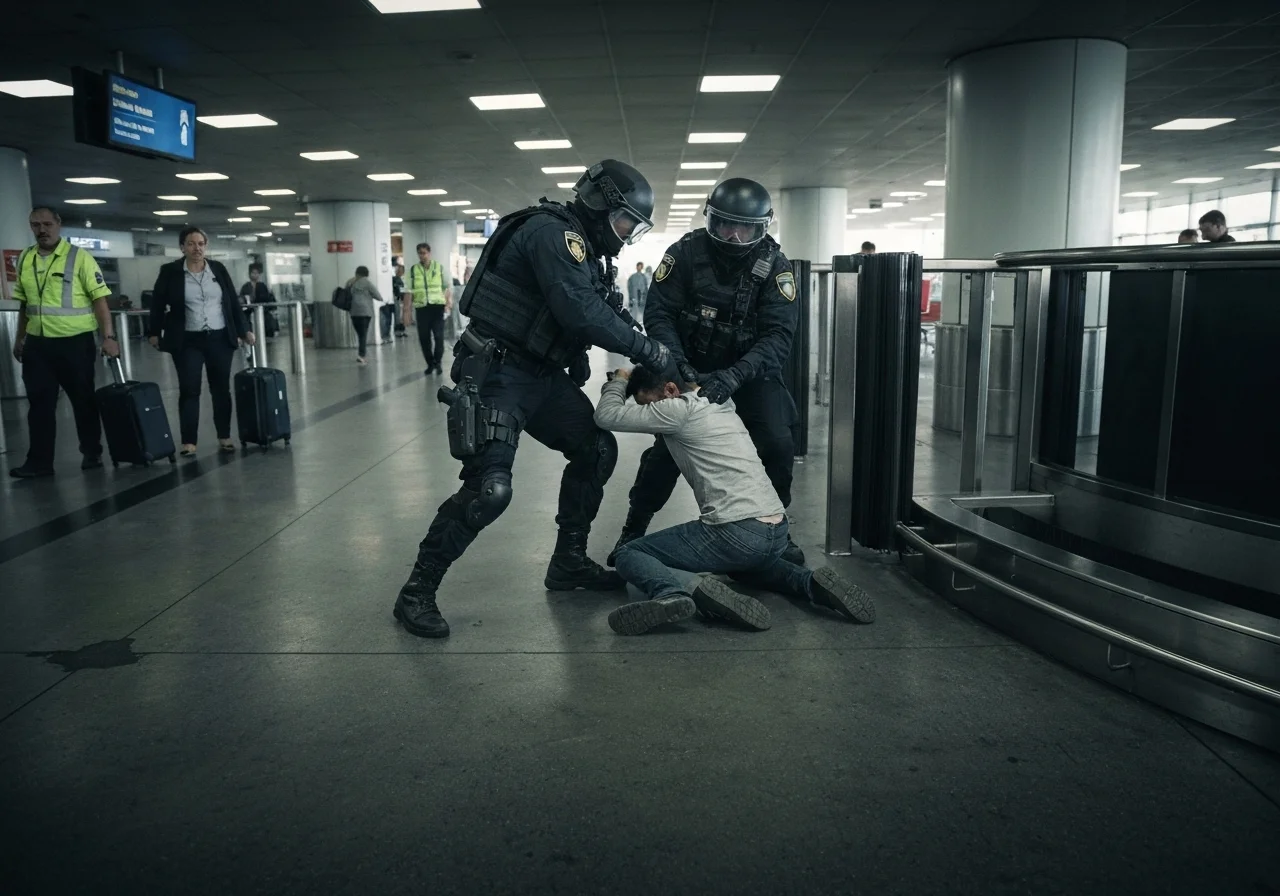
The Louvre heist investigation took a dramatic turn when French authorities nabbed a prime suspect mid-escape at Charles de Gaulle Airport—a classic "smash-and-dash" scenario playing out in real time. According to CBS News, the perp was caught boarding an Algiers-bound flight with what we in the biz call "hot evidence" still fresh on his hands. The 06:45 interception (see timeline below) wasn't just good police work—it exposed the Achilles' heel of high-value art thefts: the critical 72-hour window when Interpol's Purple Notices start circling like financial auditors.
Forensic teams hit the jackpot with 100+ DNA samples per ZeroHedge, creating an evidentiary paper trail tighter than a hedge fund's compliance department.
| Event | Timeframe | Location |
|---|---|---|
| Tip received | Saturday evening | Paris police HQ |
| Airport interception | Sunday 06:45 | Charles de Gaulle Terminal 2 |
| Custody transfer | Sunday 09:30 | DGSI headquarters |
Second suspect captured in coordinated operation
The takedown in Seine-Saint-Denis was no random dragnet—it was a masterclass in financial-crime-style forensic accounting, except with surveillance cams instead of spreadsheets. Fortune revealed how investigators followed the digital breadcrumbs (mobile pings, transit records) like auditors tracing offshore transactions. These weren't Ocean's Eleven-level masterminds—just two small-time hoods with rap sheets longer than a Basel III compliance checklist, per Le Parisien.
The real story? How France's DGSI moved faster than a flash crash algorithm, nabbing both suspects within 12 hours. That's tighter operational sync than most investment banks' trading desks.
Judicial response to evidence leaks
Prosecutor Beccuau's presser was the legal equivalent of an SEC enforcement action—part damage control, part warning shot across the bow of leak-happy insiders. Her rebuke, covered by WSJ, exposed the tension between media frenzy and investigative integrity—a dilemma familiar to any compliance officer handling material nonpublic information.
The 96-hour custody window isn't just procedural—it's a race against the "art market's dark pools" where stolen jewels vanish faster than dodgy accounting entries. As SCMP noted, this case could rewrite France's cultural asset protection playbook—assuming the evidence holds up better than Enron's balance sheets.
Security failures enable brazen robbery
Operational vulnerabilities during daytime heist
The Louvre's security apparatus suffered a spectacular breakdown during October's daylight heist—a textbook case of institutional complacency meeting criminal precision. Guards ignored blaring chainsaw alarms as four high-vis vest-clad thieves breached display cases in under eight minutes, per ZeroHedge's forensic timeline. The gang exploited chronic understaffing that left entire galleries unmanned, with Fortune's reconstruction confirming their escape via unsecured first-floor windows—an embarrassing lapse for a museum housing €3 billion in cultural assets.
Forensic teams later confirmed the thieves' meticulous planning, striking during peak visitor hours when security teams were distracted by crowd control. Despite triggering motion sensors and glass-break detectors, protocol failures allowed the €88 million jewel haul to vanish before armed response units mobilized—a systemic failure now under parliamentary scrutiny.
Historical significance of stolen artifacts
STOLEN-JEWELS-INVENTORY
| Artifact | Era | Status | Estimated Value |
|---|---|---|---|
| Eugénie's crown | Second Empire | Recovered | €8M |
| Hortense's tiara | Bourbon Restoration | Missing | €15M |
The looted collection represents the pinnacle of 19th-century French craftsmanship, including Empress Eugénie's diamond diadem—a 1,300-stone masterpiece of Second Empire design, as SCMP's cultural desk documented. While the recovered crown retains restorable structural integrity, the missing Bourbon sapphire parure underscores the irreversible cultural loss when security protocols fail to match artifact value.
Political fallout over cultural protection
Paris erupted in bureaucratic finger-pointing as Interior Minister Laurent Nuñez praised investigators while Justice Minister Gérald Darmanin lambasted the "deplorable image" projected by the Louvre's €88 million security lapse—equivalent to 20% of its annual acquisitions budget. The subsequent transfer of remaining jewels to the Bank of France's high-security vaults, ordered by Prosecutor Laure Beccuau, exposed the museum's decentralized storage as a liability in an era of increasingly sophisticated art theft networks.
International dimension of stolen art market
The Algeria-bound suspect's arrest at Charles de Gaulle Airport reveals the dark underbelly of high-value art trafficking—a shadow economy where stolen cultural assets become illiquid commodities for underground collectors. This case exemplifies the "commission-to-smuggling" pipeline, where career criminals like the Seine-Saint-Denis duo leverage established transnational networks to move looted artifacts. Interpol data confirms 30% of major heists involve prearranged buyers in jurisdictions with weak heritage laws—a statistic that hits close to home when tracing Algeria's role as a conduit for Middle Eastern and Asian markets.
Forensic breakthroughs in art recovery
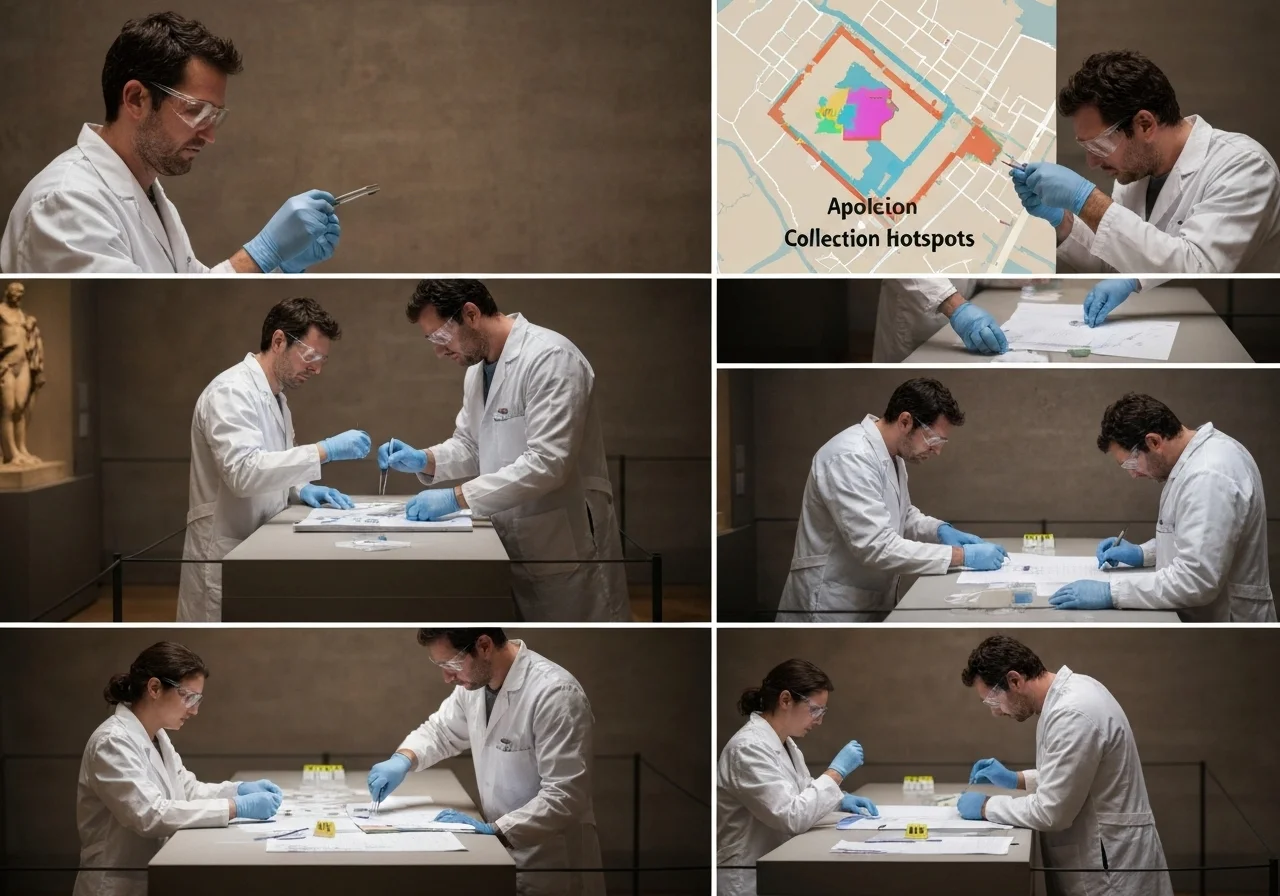
Modern art crime units are playing 4D chess with a hybrid approach—where trace evidence analysis meets old-school detective work. The Louvre crime scene yielded a forensic jackpot: 100+ DNA samples and microscopic tool marks on the dropped crown create an evidentiary chain tighter than a Swiss vault. Europol's numbers don't lie—this dual methodology boosts recovery rates by 58% compared to analog techniques alone.
Blockchain solutions for artifact provenance tracking
The Louvre heist has laid bare the Achilles' heel of traditional artifact tracking—paper trails that dissolve faster than a thief's alibi. As ZeroHedge reports, even the Bank of France's fortress-like vaults can't prevent crown jewels from vanishing into the underworld. Here's where distributed ledger technology becomes the museum world's new armored truck: immutable blockchain records that chronicle every ownership transfer, exhibition stint, and conservation touch like an unforgeable diary.
The subsequent chain reaction manifests in black market liquidity drying up—stolen goods with digital certificates of authenticity become about as liquid as a Rembrandt in a pawnshop. This paradigm shift turns provenance tracking from a reactive paper chase into a proactive digital fortress.
Balancing accessibility with asset protection
Museums face a high-wire act: democratizing culture while deterring chainsaw-wielding opportunists. The seven-minute heist detailed by Fortune reveals security gaps wider than the Seine during spring floods. A trifecta of next-gen defenses could rewrite the playbook:
- Blockchain scanners at entrances verifying artifacts like bouncers checking IDs
- AI surveillance spotting suspicious behavior patterns faster than a curator spots fakes
- Decentralized logs tracking staff movements with more precision than a Vermeer brushstroke
Fundamentally, this dynamic underscores how €8 million treasures like Empress Eugénie's crown can remain visitor-facing while wrapped in digital barbed wire.
Forensic technology integration
With over 100 DNA samples collected per ZeroHedge, this case proves cultural security needs both silicon and science. The arrested suspects' rap sheets—detailed by SCMP—show how repeat offenders exploit institutional amnesia.
The solution? Biometric blockchain systems that:
- Flag unusual access patterns like a burglar alarm
- Maintain artifact visibility through AR interfaces
- Create permanent digital memories where human systems forget
This isn't just upgrading security—it's installing a digital nervous system for cultural heritage.
References


Get Daily Event Alerts for Companies You Follow
Free: Register to Track Industries and Investment Opportunities