

Japan's Fragile Political Economy: Crisis Under Takaichi's Leadership
Japan's Fragile Political Economy: Crisis Under Takaichi's Leadership
AI Summary
Japan faces political instability as Takaichi struggles with LDP divisions and reform resistance. Abenomics' debt legacy and Trump's trade demands compound economic challenges, while symbolic gender progress masks systemic inequality.
Keywords
Navigating Political Fragmentation
LDP's Internal Divisions and Reform Resistance
The LDP's house of cards is showing visible cracks under Takaichi's leadership. Her ideological marriage to Abe's faction—the same group that turned political fundraising into an art form—has effectively stonewalled campaign finance reforms despite public outcry over slush funds. This isn't just about dirty money; it's a structural rot. The LDP's postwar playbook of trading economic growth for corruption tolerance no longer works in Japan's stagnant economy.
Evidence? Look at the approval ratings—a nosedive to 31% as voters connect stagnant wages with systemic graft. Takaichi's refusal to break from Abe's shadow risks turning the LDP into a political relic. As TIME's analysis notes, her election after consecutive losses was less a mandate than a Hail Mary by factional bosses.
Coalition Building with Opposition Parties
Takaichi's minority government faces a coalition calculus worthy of a Wall Street merger model. Nippon Ishin emerges as the prime candidate—their shared appetite for fiscal stimulus and defense spending checks key boxes. But the devil's in the policy details: their anti-immigration stance could torpedo labor market reforms, while protectionist leanings clash with Japan's export-driven recovery needs.
The numbers don't lie—that 8% seat hemorrhage in the Lower House (see table below) means Takaichi must swallow bitter pills. Komeito's centrist bloc could provide temporary relief, but as CBS News reports, her conservative branding complicates outreach. This isn't coalition-building; it's political triage.
| Metric | LDP Performance (% Change) | Opposition Performance (% Change) |
|---|---|---|
| Lower House Seats (2025) | 45% (-8%) | 55% (+8%) |
| Upper House Seats (2025) | 42% (-5%) | 58% (+5%) |
| Public Approval Rating | 31% (-12%) | 49% (+12%) |
Reviving Japan's Stagnant Economy
Abenomics' Controversial Legacy
The ghost of Abenomics still haunts Japan's balance sheets—that 260% debt-to-GDP ratio isn't just a number, it's a fiscal time bomb wrapped in BOJ easing tape. While the Nikkei 225 got its sugar high from ¥50 trillion in ETF purchases, Main Street got crumbs: corporate tax cuts flowed disproportionately to export giants, leaving SMEs and the ballooning precariat (now 40% of workers) holding empty wallets. The weak yen play, meant to supercharge exports, backfired spectacularly when energy imports ate up household budgets—classic case of monetary policy whiplash.
JAPAN-DEBT-GDP
| Year | Debt-to-GDP Ratio | Policy Milestone |
|---|---|---|
| 2012 | 230% | Abenomics launch |
| 2020 | 260% | Abe's resignation |
| 2025 | 255% (est.) | Tapering begins |

Inflation and Non-Regular Employment Crisis
Japan's labor market is running on two engines—one sputtering (non-regular workers facing 9.2% food inflation) and one idling (regular employees with stagnant wages). The yen's 30% depreciation since 2022, once Abenomics' crown jewel, now functions like a regressive tax hitting the 20 million precarious workers hardest. Productivity? Don't get me started—service sectors with irregular staff lag manufacturing by 30%, yet remain excluded from wage hike initiatives. This isn't just an economic headache; it's a full-blown migraine threatening Japan's consumption recovery.
Trump Administration's Trade Demands
Let’s cut through the noise—this $550 billion investment deal is a high-stakes poker game where Japan’s auto sector is the chip stack. The Trump administration’s playbook? Classic "carrot-and-stick" maneuvering: dangling 2.5% auto tariffs (down from 25%) while keeping the threat of snap-back rates in its back pocket. For Japan’s export-driven economy, this isn’t just about margins—it’s existential. The numbers speak volumes: ¥2.6 trillion in profit losses when tariffs briefly spiked earlier this year, with $40 billion in U.S. sales and 5.5 million jobs hanging in the balance.
Prime Minister Takaichi inherits a lopsided dynamic where even Abe’s "Trump whisperer" status couldn’t prevent steel and aluminum tariffs. The real kicker? Trump’s unilateral "clarifications" tilt profit-sharing and operational control toward U.S. interests. This isn’t negotiation—it’s economic brinksmanship.
Regional Tensions Over Historical Issues
Takaichi’s Yasukuni Shrine pilgrimages aren’t just symbolic—they’re diplomatic landmines. To Seoul and Beijing, these visits scream revisionism, given the shrine’s ties to convicted war criminals. While Takaichi frames it as "praying for peace," neighbors see unrepentant militarism—a toxic mix when China’s flexing regional muscle and North Korea’s rattling nukes.
The geopolitical calculus gets thornier with Trump demanding Japan triple defense spending to 3.5% of GDP. With debt already at 260% of GDP, Takaichi must reconcile fiscal reality with alliance obligations. Her nationalist stance, inherited from mentor Abe, leaves little wiggle room. One misstep here, and Japan’s delicate diplomatic thaw with Seoul could freeze over overnight.
Gender Paradox in Japanese Leadership
Symbolic vs Substantive Representation
Japan's political landscape just witnessed a seismic shift with Sanae Takaichi shattering the ultimate glass ceiling—but hold the champagne. This isn’t your feel-good diversity story. The new PM’s conservative track record reads like a playbook for maintaining the status quo, from opposing gender quotas to famously dismissing work-life balance as "work, work, work" during her campaign.
The numbers don’t lie:
| Metric | Japan (2025) | South Korea | Singapore |
|---|---|---|---|
| Political Empowerment Rank | 144 | 102 | 65 |
| Economic Participation | 115 | 98 | 42 |
| 5-Year Change (Positions) | -3 | +9 | +12 |
While Takaichi’s ascent makes headlines, Japan’s gender gap ranking keeps sliding—now trailing regional peers by embarrassing margins. Her Thatcher-esque leadership style might win points with the old guard, but female voters aren’t buying it. The real story? Symbolic wins mean squat without policy teeth. Case in point: blocked anti-harassment laws and slashed maternity leave proposals prove this premiership could actually widen Japan’s equality gap.
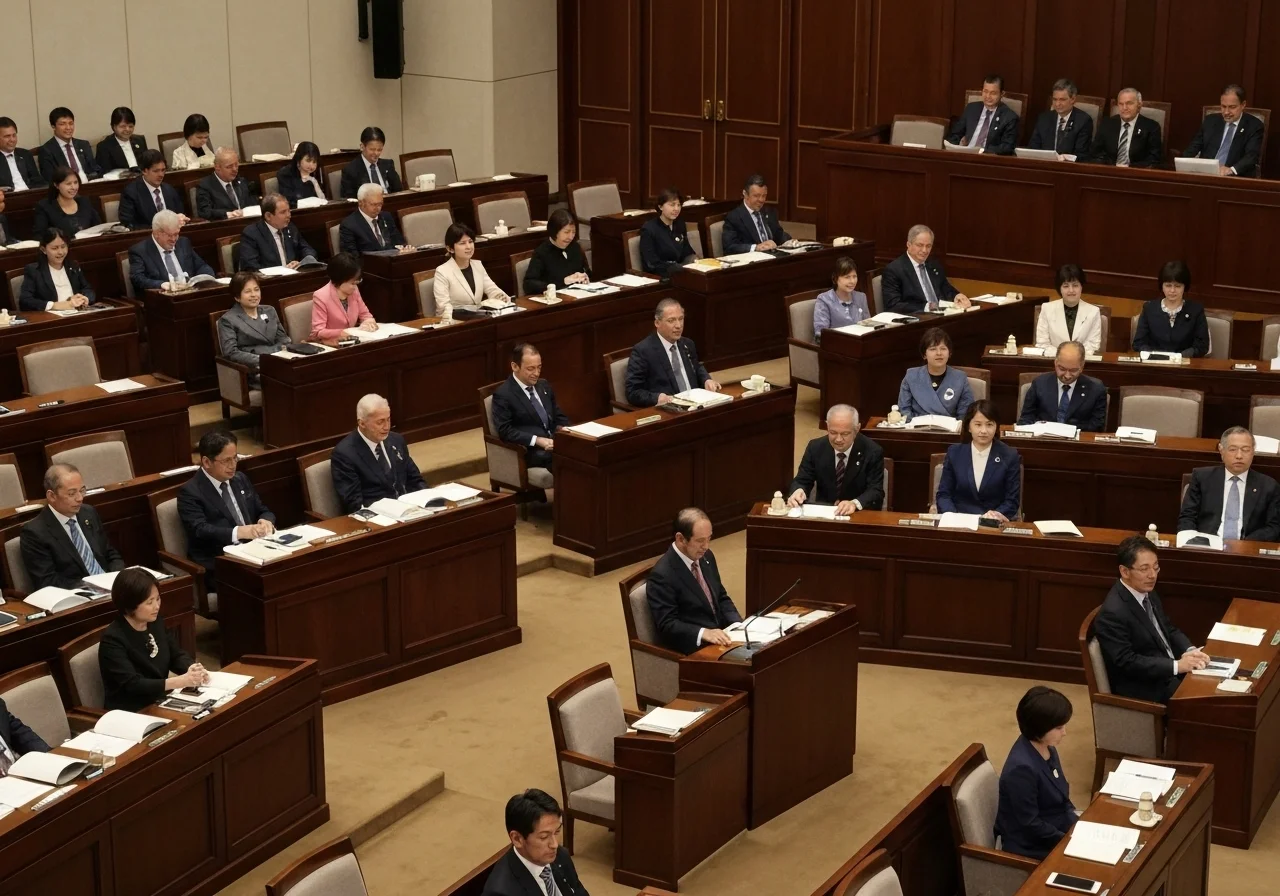
The paradox crystallizes when you contrast the historic milestone with the policy roadblocks. Takaichi’s rise exposes systemic rot rather than fixing it—like installing a female captain on the Titanic after hitting the iceberg. For Japan Inc., this leadership test isn’t about breaking barriers; it’s about whether symbolic representation can ever spark real change.
Japan's Precarious Balancing Act
Domestic Reform Amid Political Fragmentation
Prime Minister Sanae Takaichi steps into a political minefield—the LDP remains fractured by Shinzo Abe's unresolved slush fund scandals, which TIME's analysis notes have eroded public trust. As an Abe loyalist, Takaichi's resistance to campaign finance reforms exacerbates voter disillusionment. Her immediate hurdle? Forging a coalition with Osaka's Nippon Ishin, whose anti-immigration stance clashes with LDP priorities. The rise of far-right groups like Sanseito—which grabbed 15 Upper House seats by riding anti-globalization sentiment—mirrors Japan's deepening polarization.
Economic Revival Through Fiscal Expansion
Takaichi's gamble to revive Abenomics faces headwinds. While Abe's ETF investments buoyed stocks, Japan's debt-to-GDP ballooned to 260%, and income inequality widened. The Bank of Japan's tapering of these investments, paired with incremental rate hikes, risks market instability. Meanwhile, 40% of workers languish in non-regular jobs, and the weak yen—a deliberate Abe-era policy—has spiked living costs. As the BBC reports, households now juggle stagnant wages and inflation, leaving Takaichi minimal margin for error. Her growth-over-austerity pledge echoes Thatcher but lacks the fiscal discipline, raising red flags about debt sustainability.
Alliance Management Under Trump’s Shadow
The U.S.-Japan alliance—a linchpin of regional security—faces turbulence under Trump's unpredictable demands. A $550 billion investment deal, negotiated to avert auto tariffs, now hangs in the balance as Trump's team unilaterally "clarifies" terms to favor U.S. interests. Auto tariffs previously slashed ¥2.6 trillion from Japanese automakers' profits—a threat that could resurge. Concurrently, Takaichi grapples with defense-spending pressures: Japan aims to hit 2% of GDP by 2027, but the U.S. pushes for 3.5%. Her visits to Yasukuni Shrine, as NDTV notes, risk inflaming tensions with China and South Korea, further complicating diplomacy.
LEADERSHIP TIMELINE
| Prime Minister | Tenure (Years) | Key Challenges |
|---|---|---|
| Junichiro Koizumi | 2001–2006 | Postal privatization, deflation |
| Shinzo Abe | 2006–2007, 2012–2020 | Abenomics, constitutional reform |
| Yoshihide Suga | 2020–2021 | COVID-19 response, Olympics |
| Sanae Takaichi | 2025–present | Debt crisis, Trump tariffs, LDP unity |
The Gender Paradox
Takaichi's historic premiership embodies a contradiction: she shatters Japan's glass ceiling yet offers little to advance women's empowerment. Her dismissal of work-life balance—quipping she'd "work, work, work"—contrasts with Japan's dismal gender gap ranking (125th globally). As the BBC observes, female voters remain skeptical of her feminist credentials, given her opposition to liberal social policies. Her leadership thus mirrors Japan's entrenched gender disparities—symbolic progress without substantive change.
References


Get Daily Event Alerts for Companies You Follow
Free: Register to Track Industries and Investment Opportunities