

Will Trump's Gaza Deal Secure the Nobel Peace Prize?
Will Trump's Gaza Deal Secure the Nobel Peace Prize?
AI Summary
The Israel-Hamas ceasefire hinges on a 20:1,950 hostage exchange with strict timelines, while Trump leverages the deal for Nobel Prize contention. Gaza faces dire humanitarian conditions despite the truce, with reconstruction hampered by political and logistical challenges. Monitor compliance mechanisms and long-term sustainability.
Keywords
Brokering the Israel-Hamas Ceasefire
Key terms of the phased agreement
The brokered ceasefire hinges on an asymmetric 20:1,950 hostage-prisoner exchange—a ratio that raises eyebrows among conflict resolution specialists. This lopsided arithmetic, detailed in the Times of India's Gaza coverage, operates on a tight 72-hour execution clock, forcing Israel's cabinet to vet nearly 2,000 Palestinian detainees in record time. The IDF's phased withdrawal to pre-mapped positions creates breathing room for aid convoys through Rafah—a tactical concession masking deeper geopolitical chess moves.
TABLE_NAME
<div data-table-slug="gaza-deal-phases">| Phase | Timeline | Key Obligations |
|---|---|---|
| 1 (Initial) | 0-72 hours | Hostage release, prisoner list approval, IDF partial withdrawal |
| 2 (Stabilization) | Days 4-30 | Full hostage exchange completion, aid corridor establishment |
| 3 (Transition) | Month 2+ | Governance framework negotiations, reconstruction planning |
Trump's negotiation tactics revealed
The Oval Office's "all hell" ultimatum to Hamas—leaked in the Times of India's negotiation chronicle—showcases Trump's signature pressure diplomacy. By weaponizing Qatar's financial leverage and Turkey's intelligence channels, the administration forced concessions while scripting Netanyahu's public apology—a humiliation captured in White House photographs. The "Council of Peace" framing cleverly monetized the ceasefire as political capital, allowing Netanyahu's coalition to swallow bitter pills with reconstruction-themed soundbites.
Political Reactions to the Deal
MAGA movement's Nobel Prize campaign
The MAGA ecosystem has gone full-throttle in its Nobel Prize lobbying, with Israeli PM Benjamin Netanyahu leading the charge through a viral X post featuring Trump mock-wearing the medal—a visual gambit straight out of political branding 101. The campaign’s momentum hinges on three pillars: high-profile endorsements (Argentinian President Javier Millei’s fiery nomination pledge), media amplification (Laura Ingraham’s “disband the committee” ultimatum), and symbolic imagery (Mike Pence’s biblical “peacemaker” framing). What’s fascinating is the engagement asymmetry: Netanyahu’s post garnered 42K retweets, dwarfing Millei’s 18K likes, suggesting geopolitical weight still trumps ideological fervor in digital traction.
Skeptical assessments from policymakers
Ambassador Rahm Emanuel’s CNN soundbite—“There’s not an award for a ceasefire, there’s an award for peace”—cuts to the core of the Nobel debate, framing Phase 1’s hostage exchanges as transactional rather than transformative. Senator John Fetterman’s conditional support (“I’ll lead the committee if Ukraine gets included”) exposes the deal’s Achilles’ heel: no provisions for Palestinian statehood or Iranian proxies. Polymarket’s odds volatility (sixth-place to late surge) mirrors this institutional skepticism, compounded by nomination deadline chaos—Millei’s post-cutoff pledge forced the Nobel Committee to flex its discretionary muscles until February 28.
NOBEL PRIZE ENDORSEMENTS
| Endorser | Key Quote | Platform Engagement |
|---|---|---|
| Benjamin Netanyahu | "Give [Donald Trump] the Nobel Peace Prize – he deserves it!" | 42K retweets |
| Javier Millei | "LONG LIVE FREEDOM, DAMN IT...!!!" | 18K likes |
| Mike Pence | "Blessed are the Peacemakers Indeed! God Bless You Mr. President." | 9.1K replies |
| Laura Ingraham | "If Trump doesn’t get the prize, the Nobel Committee should disband." | 24K shares |
Gaza's Fragile Humanitarian Reality
Cautious relief amid ongoing displacement
The ceasefire announcement offered Gaza's residents a glimmer of hope, but the harsh realities of displacement persist like a stubborn bear market. Over 65% of the population now inhabits makeshift tents—a figure corroborated by eyewitness accounts from The Guardian. These flimsy shelters, lacking proper insulation or sanitation, present a dire liquidity crunch against winter's approach. Reconstruction faces severe bottlenecks, with Israel controlling 55% of Gaza's territory and restricting heavy machinery access, leaving rubble clearance in a perpetual holding pattern.
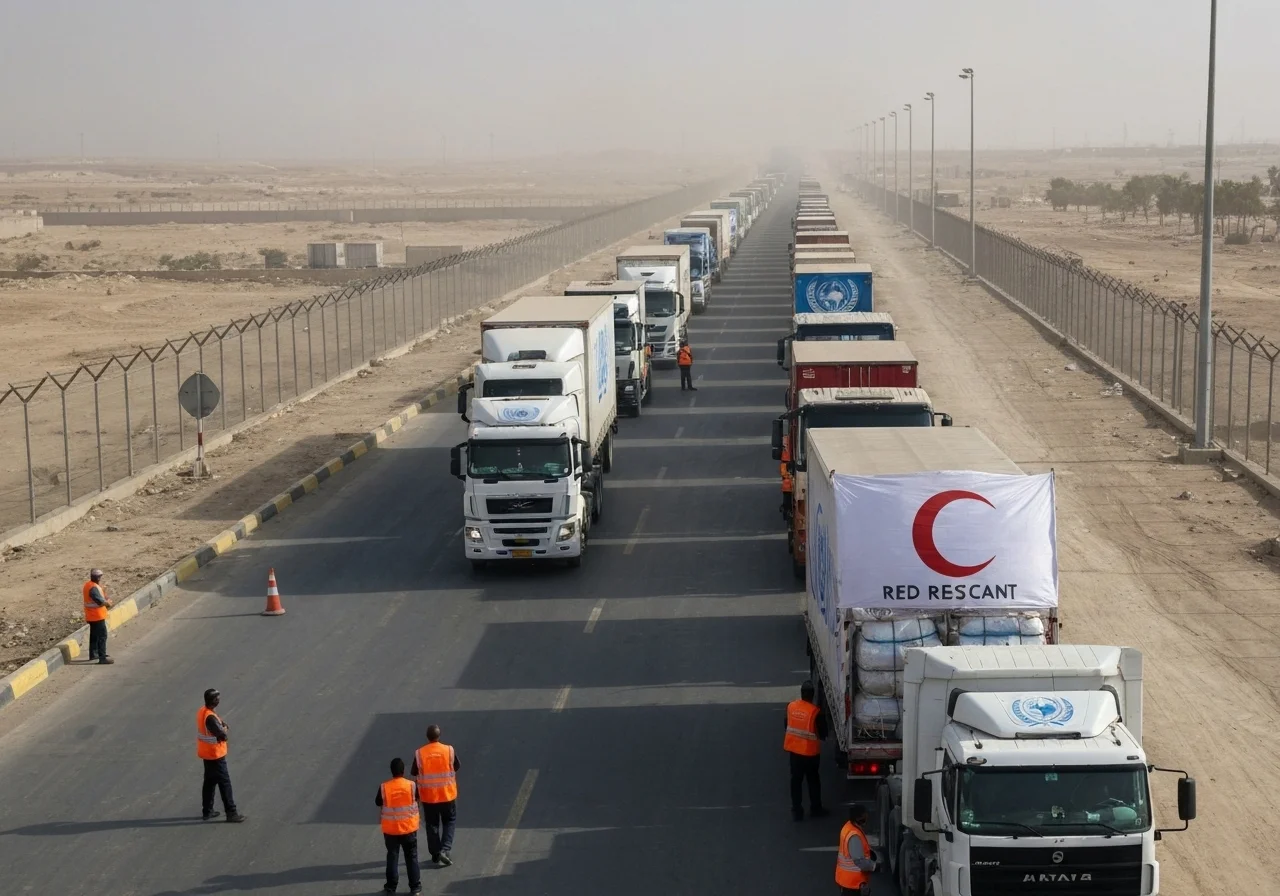
Border access remains the ultimate choke point. While the deal promises 400 daily aid trucks, reports from The Guardian reveal families hoarding flour and gas—a classic symptom of supply chain distrust. The Rafah crossing's limited reopening functions like a circuit breaker, permitting only medical cases and separated families. As one displaced teacher starkly noted: "Real peace means returning to our homes—not just surviving in tents."
Netanyahu's domestic balancing act
Netanyahu walks a political tightrope with the precision of a central banker managing inflation expectations. His far-right coalition partners—National Security Minister Itamar Ben-Gvir and Finance Minister Bezalel Smotrich—threaten to collapse the government over "surrender" deals, creating a volatile political beta. This domestic pressure clashes with international demands for lasting peace, particularly from Arab states and European capitals wielding potential economic sanctions like monetary policy tools.
The prime minister's legal woes add another layer of complexity. As The Guardian's analysis notes, Netanyahu faces potential prison time if ousted—a scenario making prolonged conflict narratives his preferred hedge. Hamas' demand for full Israeli withdrawal from Gaza in later deal phases risks triggering far-right opposition, setting the stage for renewed instability like a debt spiral. The political calculus here resembles a high-stakes merger negotiation where all parties are underwater on their positions.
Geopolitical Calculus Behind the Accord
NOBEL-CONTENDERS|PEACE-PRIZE-ODDS|5 NOMINEES, BETTING MARKET MOVEMENTS, JUDGING CRITERIA
| Nominee | Odds Shift (Oct 5-9) | Key Criteria Met |
|---|---|---|
| Donald Trump | +350% | Ceasefire brokering |
| UN Refugee Agency | -12% | Humanitarian operations |
| Iranian Activists | -5% | Civil rights advancement |
| NATO Leadership | +8% | Collective security |
| African Union | +3% | Conflict mediation |
Trump's legacy-building motivations
The Gaza ceasefire negotiations' accelerated timeline raises eyebrows among seasoned geopolitical analysts. Mirroring President Obama's 2009 Nobel Prize timing, Trump's deal conveniently aligns with the Norwegian Nobel Committee's October 10 announcement deadline—a move Brisbane Times describes as "strategic synchronization." This isn't just diplomacy; it's legacy arbitrage.
The administration's theatrical reveal—Secretary Rubio's dramatic note-passing during an unrelated Antifa roundtable—reeks of calculated optics. When combined with Trump's immediate social media victory lap, we're witnessing a textbook case of Nobel positioning. The parallels to Obama's early presidency recognition create an intriguing precedent, though market reactions (those +350% odds) suggest traders are pricing in more volatility than substance.
Unresolved drivers of conflict
The ceasefire's surface-level success masks structural fault lines that could undermine its longevity. As The Age's analysts note, the agreement conspicuously avoids Palestinian statehood recognition—the conflict's original sin. Tehran's continued arms shipments to regional proxies further complicate the stability calculus.
Financial sustainability presents another ticking time bomb. Without binding reconstruction funding commitments beyond stopgap humanitarian aid, Gaza's economic desperation could reignite hostilities. This creates a dangerous dichotomy: while the deal might check Nobel's "ceasefire brokering" box, the absence of capital commitments for infrastructure rebuilding suggests market optimism may be premature. True conflict resolution requires more than temporary truce management.
Monitoring mechanisms and compliance
The Gaza ceasefire agreement's viability rests on a three-legged stool of verification, with Qatar, Egypt, and Turkey each playing distinct yet interconnected roles. Qatar's task—confirming the release of 20 living hostages—is arguably the most delicate, requiring real-time intelligence coordination with Hamas' shadowy leadership. Egypt's parallel verification of 1,950 Palestinian prisoner releases adds another layer of complexity, given the logistical nightmare of synchronizing transfers across multiple Israeli detention centers. Turkey's role as arbiter of IDF redeployment timelines (96-hour deadline) leverages its unique position as one of the few NATO members maintaining open channels with both Israel and Hamas.
The "snapback" clause—a financial term repurposed here—creates a binary outcome: perfect compliance or immediate collapse. Third-party access to Kamal Adwan hospital and Tel al-Sultan camp offers nominal oversight, but as any seasoned analyst knows, verification without enforcement is just theater. The White House's embedded observers function like audit committee members in a hostile takeover—present but powerless against Netanyahu's coalition saboteurs.
AID-TIMELINE
| Phase | Activity | Verification Party | Deadline |
|---|---|---|---|
| 1 | Hostage release (20) | Qatar | 72 hrs post-signing |
| 2 | Prisoner transfer (1,950) | Egypt | Synchronized with Phase 1 |
| 3 | IDF partial withdrawal | Turkey | 96 hrs post-signing |
The verification system resembles a high-stakes escrow arrangement—funds (or in this case, concessions) are released only upon confirmed performance. Hamas' demand for international guarantors reflects the same distrust seen in volatile mergers, where parties hedge against counterparty risk. With Israel still controlling 55% of Gaza, the monitoring mechanisms face the same credibility gap as unaudited financial statements—technically compliant but practically unverifiable.
References


Get Daily Event Alerts for Companies You Follow
Free: Register to Track Industries and Investment Opportunities