

Inferno Inferno: Hong Kong's Deadly Fire Exposes Rotten Core
Inferno Inferno: Hong Kong's Deadly Fire Exposes Rotten Core
AI Summary
Hong Kong's Wang Fuk Court fire killed 94, revealing dangerous bamboo scaffolding and disabled alarms. Systemic regulatory failures collide with political crackdowns, demanding urgent housing reforms and accountability.
Keywords
Deadly Blaze Exposes Systemic Failures
Catastrophic Spread Through Renovation Materials
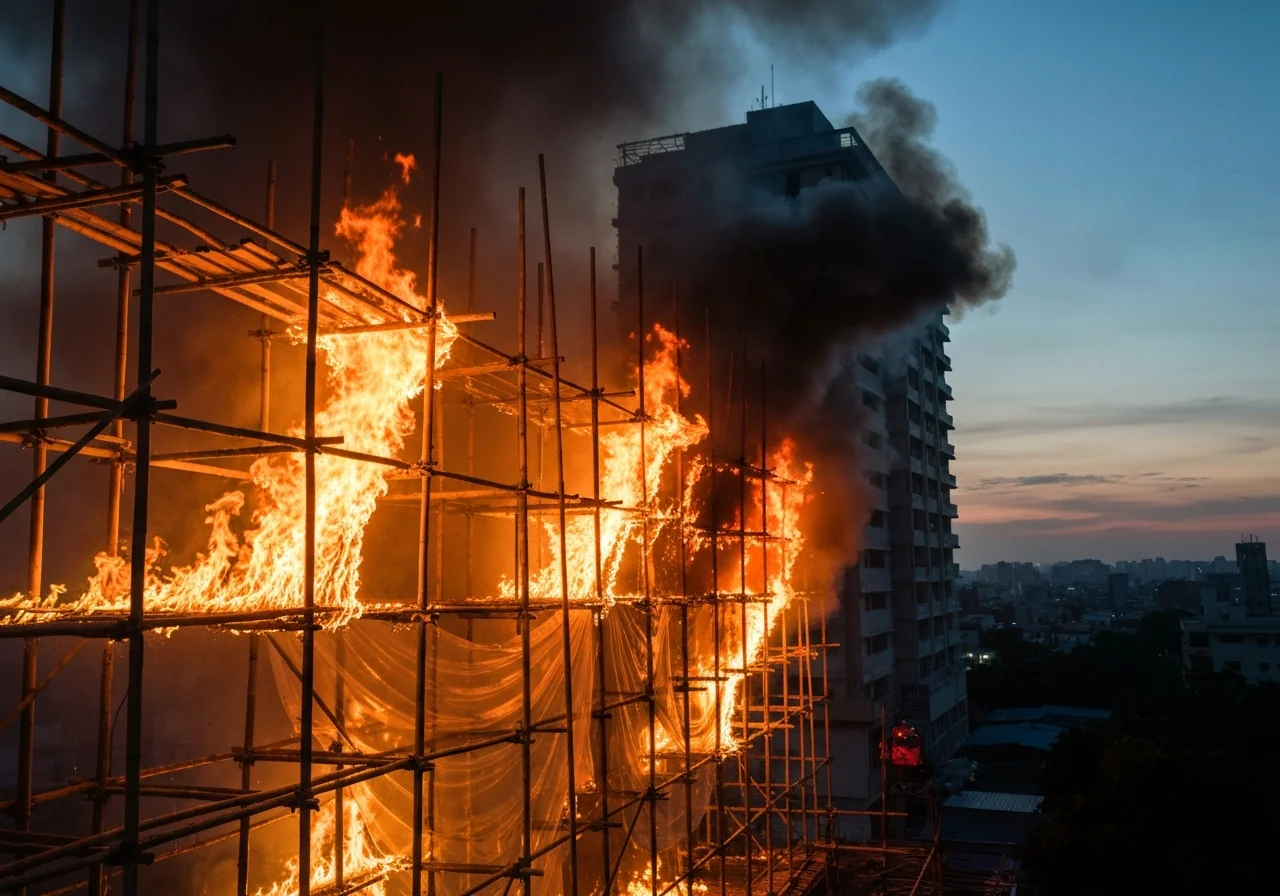
The Wang Fuk Court inferno became a masterclass in cascading failures—where cost-cutting met regulatory blind spots. Flames chewed through bamboo scaffolding like a speculative bubble bursting, with plastic netting acting as the perfect accelerant. Eyewitness accounts from Inside Hong Kong’s ‘horrifying’ tower block blaze read like a risk assessment gone rogue: zero functioning alarms, forcing residents into a game-theoretic nightmare of neighbor-dependent evacuations. The continental winds? Just the leverage this fire needed to jump seven towers in a bear market of safety protocols.
Regulatory Gaps in Building Safety Oversight
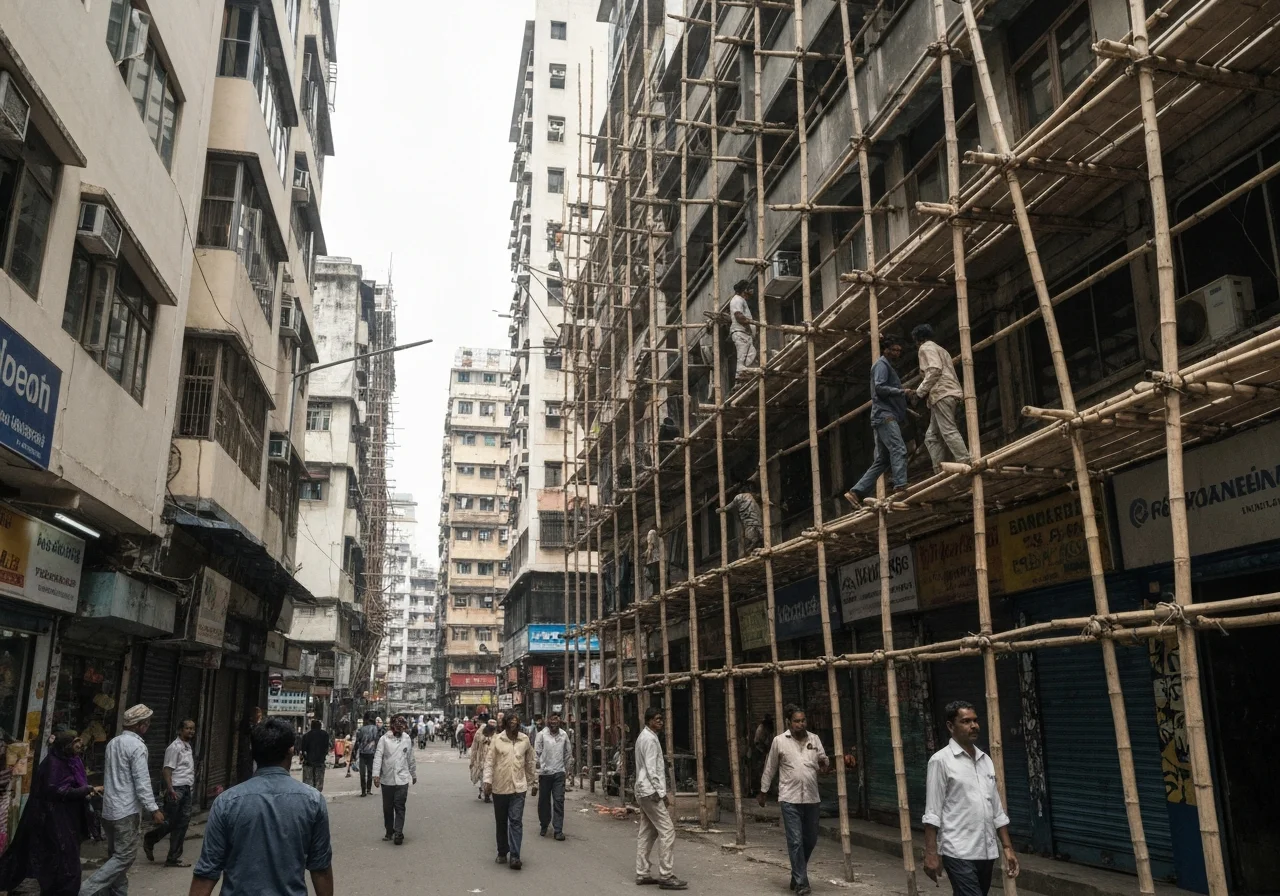
Hong Kong’s delayed pivot from bamboo to steel scaffolding mirrors a value trap—authorities knew the risks but clung to outdated systems. The BBC’s exposé on substandard renovation materials reveals a compliance arbitrage where contractors exploited lax enforcement. Our comparative analysis shows Hong Kong’s 8.2-minute response time lagging behind Singapore’s 5.1-minute benchmark—a liquidity gap in emergency preparedness.
| Metric | Hong Kong | Singapore | New York |
|---|---|---|---|
| Scaffolding Material | Bamboo (combustible) | Steel (fireproof) | Steel (fireproof) |
| Alarm Mandates | Partial enforcement | Full coverage | Full coverage |
| Response Time (avg) | 8.2 minutes | 5.1 minutes | 6.3 minutes |
The data screams asymmetric risk: combustible materials + spotty alarms = a black swan with predictable roots.
Fire Crisis During Democratic Erosion
The Wang Fuk Court inferno erupted during a politically charged week as Hong Kong prepared for the sentencing of media magnate Jimmy Lai, the most visible among hundreds of pro-democracy figures facing imprisonment under national security charges. This temporal collision has amplified scrutiny of Beijing's governance priorities, with the fire's death toll reaching 94 contrasting sharply with the government's focus on political prosecutions. The disaster struck as legislative elections approach on December 7, where only "patriotic" candidates can participate under sweeping electoral reforms implemented post-2019 protests.
Residents' accounts of disabled fire alarms and flammable renovation materials have fueled perceptions of systemic neglect. The absence of functioning alarms forced neighbors to manually alert each other, a failure that mirrors the erosion of civil liberties under Hong Kong's national security law. This parallel has not gone unnoticed by citizens drawing connections between institutional failures in public safety and democratic backsliding.
Civil Society Response Versus Official Narrative
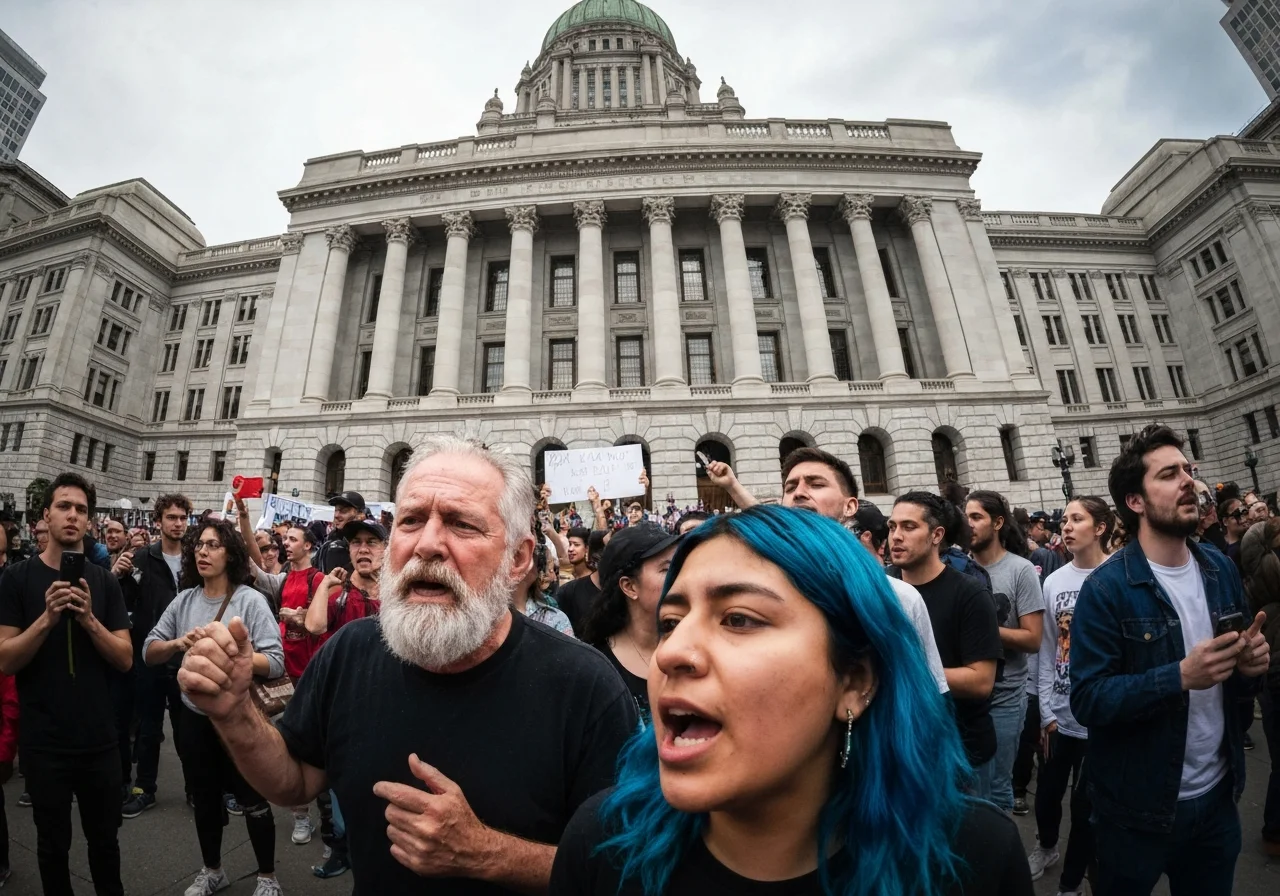
Grassroots anger has crystallized around the "man-made disaster" narrative, with viral social media posts condemning regulatory lapses. Survivors like Kiko Ma, who reported flammable construction materials, directly contradict government assurances about building safety standards. The fire's spread through bamboo scaffolding—a known fire risk slated for replacement with steel—has become a potent symbol of mismanagement.
Officials have emphasized rescue efforts while arresting three renovation supervisors for manslaughter. However, this reactive approach clashes with residents' demands for proactive accountability, particularly regarding delayed safety upgrades. The Independent Commission Against Corruption's probe into the renovation project signals damage control efforts, but fails to address broader concerns about oversight in Hong Kong's high-density housing—where average living spaces measure just 14.1 square meters.
Firefighting Obstacles in High-Density Environment
Hong Kong’s fire crews faced a nightmare scenario at Wang Fuk Court—a perfect storm of urban density and structural hazards. Deputy Fire Services Director Derek Armstrong Chan didn’t mince words: collapsing bamboo scaffolding and debris-choked access routes turned this into a three-alarm logistical nightmare. Imagine navigating coffin-width corridors with flashlights as smoke reduced visibility to zero—all while embers played whack-a-mole across seven towers.
The real kicker? Rescue ops became a brutal triage exercise. Teams juggled containment with distress calls from trapped residents, some literally burning daylight in spark-filled rooms. Over 11 injuries in 48 hours tells you everything about the physical toll of high-density firefighting—this wasn’t just fighting fire, it was urban warfare.
Long-Term Housing and Accountability Demands
When the smoke cleared, Hong Kong faced its Achilles’ heel: a housing crisis with 4,600 displaced and 279 unaccounted for. The numbers sting—40% seniors, 65% earning under HK$20k/month—painting a bullseye on systemic neglect.
| Demographic Factor | Wang Fuk Court Profile |
|---|---|
| Median Age | 65+ (40% of residents) |
| Average Household Size | 2.8 persons |
| Income Bracket | 65% below HK$20,000/month |
Corruption probes into contractors (three arrests and counting) fuel public fury, especially after survivors like Kiko Ma exposed disabled alarms and substandard construction. The government’s audit pledge? Too little, too late for a city where affordable housing remains a pipe dream.
Governance Under Crisis Scrutiny
The Wang Fuk Court inferno has become a litmus test for Beijing's governance model in Hong Kong, exposing fundamental tensions between national security priorities and public welfare obligations. As the death toll climbed to 94 with hundreds missing, residents reported systemic failures in fire alarms and evacuation protocols, raising urgent questions about resource allocation under the city's current political trajectory.
Security-Focused Governance vs. Civic Infrastructure
The disaster unfolded against the backdrop of intensified political crackdowns, including the impending sentencing of media tycoon Jimmy Lai. While authorities prioritized legislative changes to ensure "patriotic" governance, critical safety upgrades like replacing flammable bamboo scaffolding with steel remained unimplemented. This disparity fueled public perception of misplaced governance priorities, particularly when construction firms allegedly used substandard materials during renovations.
Crisis Response and Institutional Accountability
Firefighters faced unprecedented challenges including collapsing scaffolding and blocked access routes, as documented in official statements about operational hurdles. The delayed transition to fire-resistant materials—despite 2024 proposals to phase out bamboo—highlighted regulatory inertia. Meanwhile, the Independent Commission Against Corruption's probe into construction contracts suggested deeper systemic issues in oversight mechanisms.
Public Trust and Narrative Control
Grassroots anger crystallized around claims of a "man-made disaster," with survivors describing preventable failures in emergency systems. This contrasted sharply with government damage control efforts, including the rapid deployment of emergency housing units. The disaster's timing—amidst heightened political tensions—risks compounding the erosion of public trust in institutions already strained by years of democratic rollbacks.
References


Get Daily Event Alerts for Companies You Follow
Free: Register to Track Industries and Investment Opportunities