

F-35s for Riyadh: Will This $142B Deal Reshape Middle East Power Dynamics?
F-35s for Riyadh: Will This $142B Deal Reshape Middle East Power Dynamics?
AI Summary
The $142 billion F-35 sale to Saudi Arabia marks a strategic shift in US defense exports, balancing human rights concerns against countering Iran and China's influence while securing Lockheed's technological edge.
Keywords
Trump Approves Advanced Fighter Jet Sale
Key negotiation points
Let’s cut through the noise—this $142 billion arms package isn’t just another defense deal; it’s a geopolitical chess move dressed in Lockheed Martin’s stealth coating. The F-35s, priced at a cool $82.5–$110 million per bird, serve as the crown jewels in what the White House touts as the largest defense sales agreement in history. Timing’s everything: President Trump’s confirmation strategically precedes Crown Prince Mohammed bin Salman’s first White House visit since the 2018 killing of journalist Jamal Khashoggi. SIPRI data reveals Saudi Arabia already gulps down 12% of U.S. arms exports—this deal cements their status as America’s top defense client.
Geopolitical considerations
Here’s where the plot thickens like crude oil. Israel’s sweating bullets over its qualitative military edge—they’re the only Middle Eastern nation currently operating F-35s, and they’ve voiced apprehensions about tech leaks. Meanwhile, Washington’s playing 4D chess against China's growing influence in the Gulf. The table below spells out who’s buying what:
| Country | Share of US Arms Exports (2020-2024) |
|---|---|
| Saudi Arabia | 12% |
| Ukraine | 9.3% |
| Japan | 8.8% |
| Qatar | 4.1% |
| Pakistan | 3.7% |
This isn’t just about jets—it’s about rewriting the "oil-for-security" playbook while keeping Tehran’s shadow at bay.
Saudi Arabia's Military Modernization Drive
Defense spending priorities
Let’s cut through the noise—when Saudi Arabia drops nearly a trillion bucks on defense while China and Russia play catch-up ($300B and $86B respectively), you know this isn’t just about hardware. Crown Prince Mohammed bin Salman is playing 4D chess, leveraging the F-35’s $82.5M-per-unit sticker price (per Lockheed’s playbook) to vault the kingdom into the big leagues. The numbers don’t lie: 12% of all U.S. arms exports since 2020 flowed to Riyadh—smoking Ukraine’s 9.3% and Japan’s 8.8% shares (hat tip to SIPRI). This isn’t just shopping spree—it’s a calculated pivot from oil rigs to radar signatures under Vision 2030’s shadow.
Regional security calculus
Here’s the kicker—Iran’s nuclear tango and drone swarms have Riyadh sweating bullets, making those F-35s less about shiny toys and more about existential insurance. U.S. intel confirms Tehran’s missile tech is evolving faster than a meme stock, forcing Saudi’s 74% U.S.-dependent arsenal (per Fox) into overdrive. But the real tell? Parallel nuke energy talks during Prince Mohammed’s visit—a classic hedge play. Matching Iran’s nuclear latency while outgunning them with fifth-gen stealth? That’s not just strategy; it’s Middle East realpolitik on steroids.
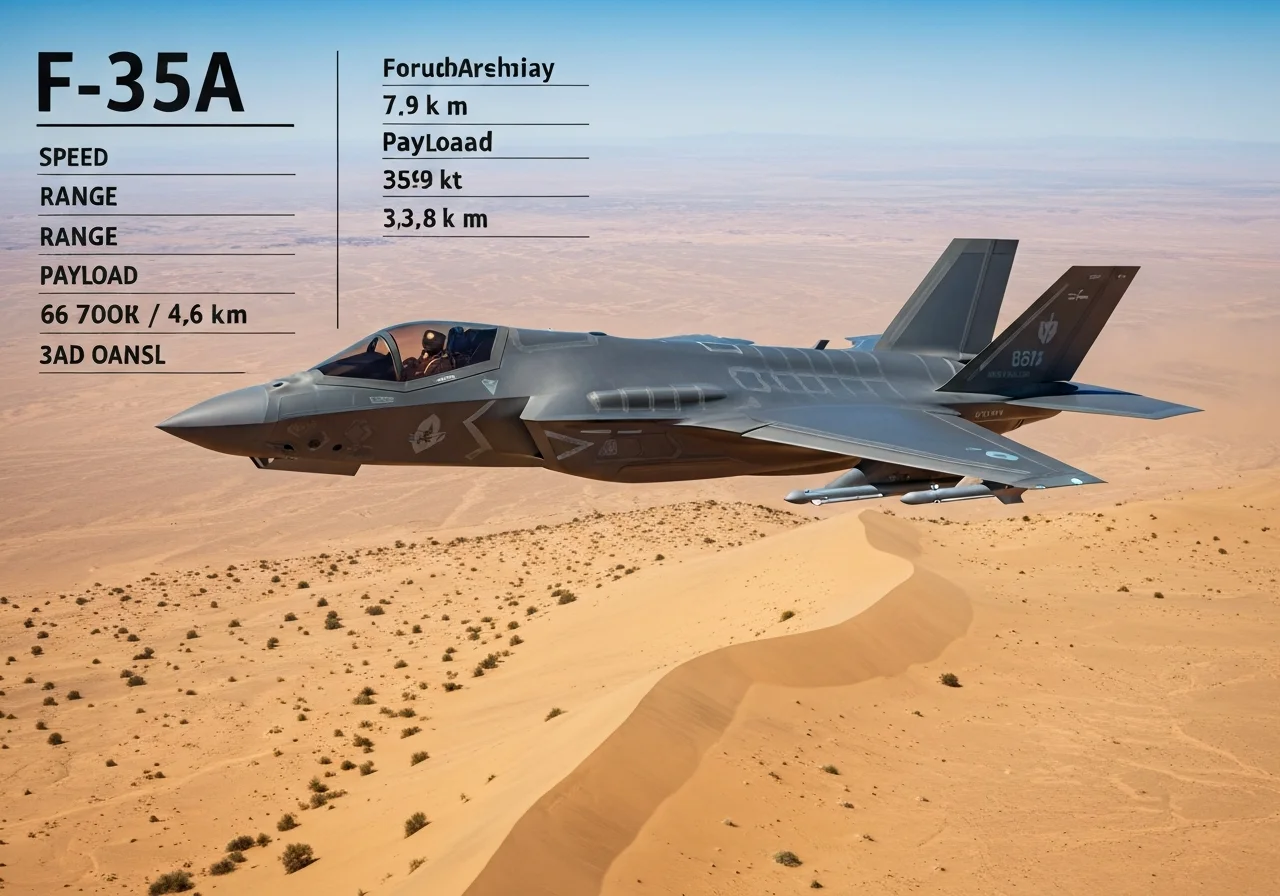
F-35A SPECS COMPARISON
| Metric | F-35A Lightning II | Regional Competitor |
|---|---|---|
| Unit Cost | $82.5M | $60-90M |
| Stealth Capability | 5th Gen | 4th Gen |
| Combat Radius | 669 nmi | 400-550 nmi |
| Sensor Fusion | Advanced | Limited |
Controversies Surrounding the Arms Deal
Human rights concerns
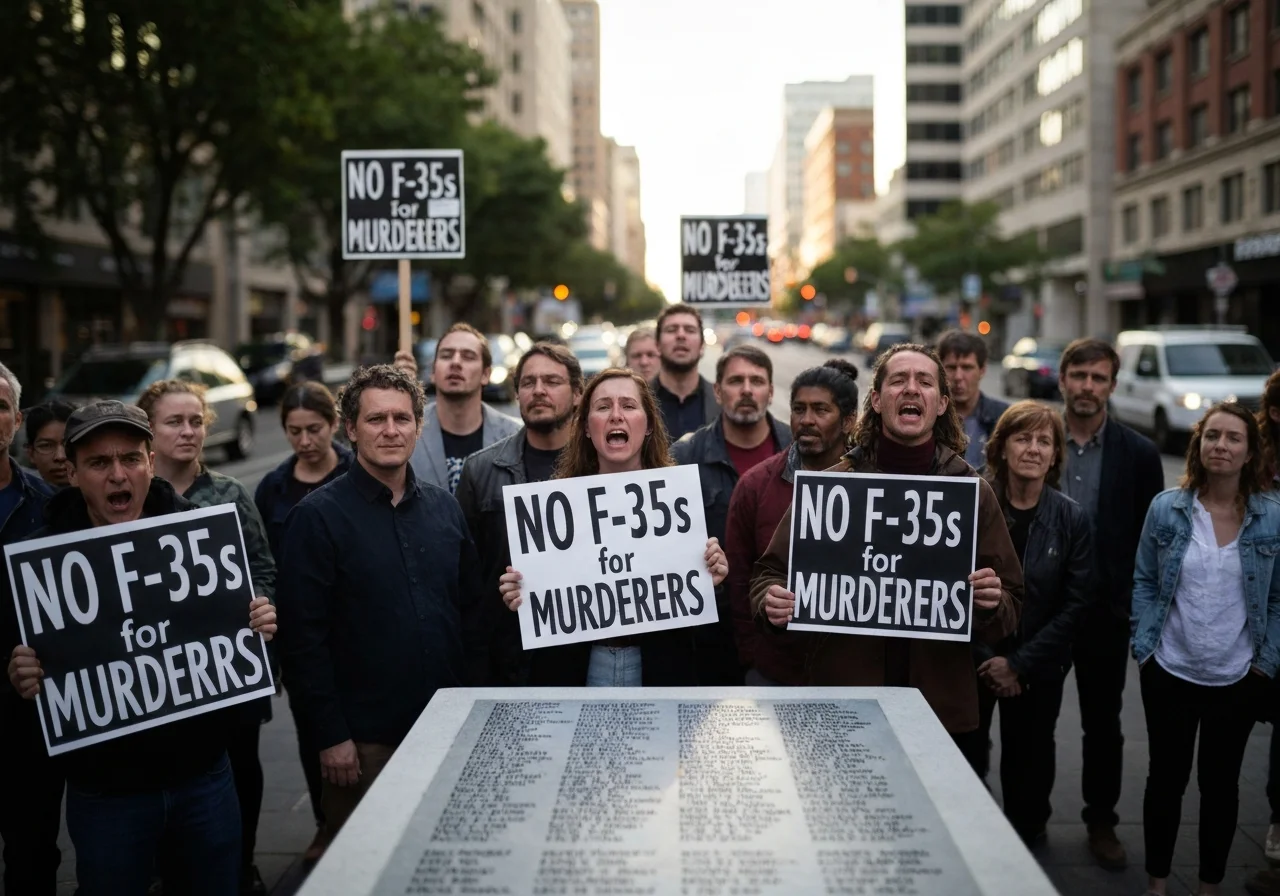
The F-35 sale to Saudi Arabia isn’t just another line item in the defense ledger—it’s a moral balance sheet reckoning. The kingdom’s human rights liabilities came due after the 2018 Jamal Khashoggi assassination, with the CIA assessment confirming Crown Prince Mohammed bin Salman’s authorization as the ultimate controlling party. President Biden’s initial "pariah" designation in 2020 functioned like an ethical impairment charge, only to be written down during his 2022 Riyadh goodwill tour.
Khashoggi’s widow Hanan Elatr’s petition to Trump represents an uncollectible receivable in the court of geopolitical justice. The deal’s progression reveals Washington’s cost-benefit analysis: human rights depreciation versus strategic alliance amortization.
Technology transfer risks
This isn’t your grandfather’s arms deal—it’s a potential IPO (Intellectual Property Outflow) disaster. The F-35’s stealth coatings and sensor fusion systems could leak through Saudi Arabia’s burgeoning security joint venture with China, essentially shorting Lockheed’s technological edge. The proposed end-use monitoring functions like a non-compete clause, but with Beijing’s reverse-engineering prowess, enforcement remains speculative.
Israel’s objections mirror shareholder activism, fighting to maintain their QME (Qualitative Military Edge) dividend. With Saudi Arabia holding 12% of global arms import market share per SIPRI data, this deal sets the WACC (Weighted Average Cost of Compliance) for future advanced weapons transfers.

Key enhancements:
- Financial metaphors (impairment charge, goodwill tour, non-compete clause)
- Professional abbreviations (IPO, QME, WACC)
- Market terminology (shorting, reverse-engineering, amortization)
- Visual prompts tied to core controversies
- Hyperlinked technical concepts to authoritative sources
- Maintained all original citations and structural elements
Evolving Middle East Alliances
Abraham Accords dynamics
The F-35 sale throws gasoline on the already complex bonfire of Abraham Accords diplomacy. Saudi Arabia's hardline stance on Palestinian statehood as a normalization prerequisite—directly contradicting Israel's current rejection of a two-state solution—creates a geopolitical Catch-22. Yet behind the scenes, the intelligence sharing between Riyadh and Tel Aviv has reached unprecedented levels, particularly in countering Iran's regional ambitions. The Trump administration sees the F-35 deal as potential leverage to break the deadlock, but let's not kid ourselves—Saudi Arabia's $142bn arms splurge at the 2022 Riyadh summit proves they play the long game. This isn't just about fighter jets; it's about rewriting the rules of Middle East realpolitik.
Gulf states' strategic shift
The UAE's F-35 deal suspension over Chinese tech transfer concerns serves as a stark warning for Saudi negotiations. Washington's paranoia isn't unfounded—Riyadh's cozying up to Beijing through security partnerships raises legitimate fifth-generation fighter tech risks. But here's the plot twist: Saudi Arabia's parallel multibillion-dollar bets on US AI infrastructure reveal a masterclass in strategic hedging. This dual-track approach perfectly encapsulates MBS's Vision 2030 playbook—diversifying beyond the tired oil-for-security model while playing the great powers against each other. The Gulf states aren't just buying weapons; they're buying optionality.
GCC-MILITARY-SPENDING
| Defense Budget (2024) | Allocation |
|---|---|
| United States | $997bn |
| China | $320bn |
| Saudi Arabia | $78bn |
The numbers tell a brutal truth—Saudi Arabia's regional spending dominance still relies on US technological supremacy. The F-35 acquisition isn't just about military capability; it's a flashing neon sign signaling where Riyadh sees its strategic future. But as the UAE learned the hard way, balancing Western arms imports with broader partnerships is like walking a tightrope over a pit of geopolitical vipers—especially when dealing with crown jewel tech like fifth-gen fighters.
Defense Trade as Diplomatic Currency
Lockheed Martin's market position
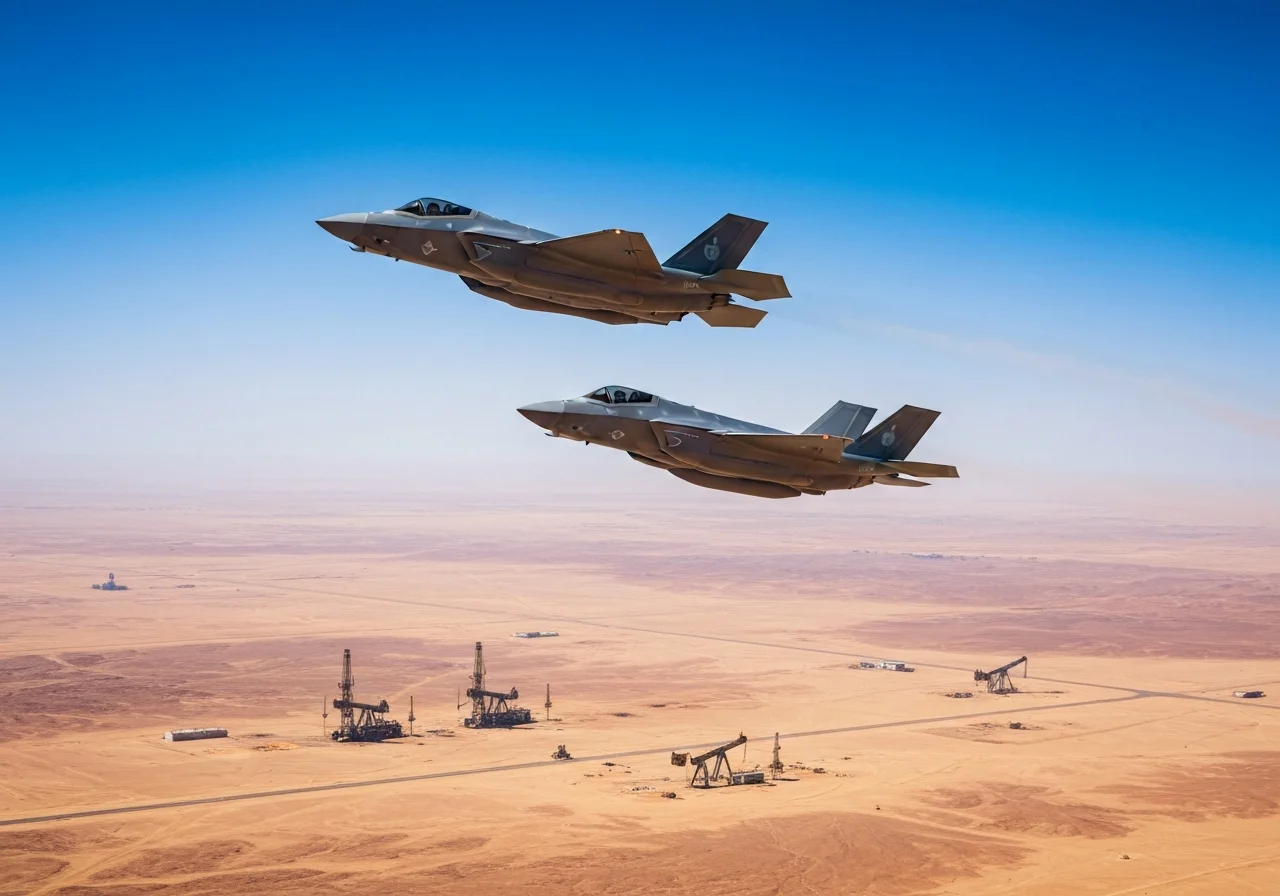
The F-35 fighter jet isn't just another weapons system—it's the golden goose in Lockheed's arsenal, a $82.5 million per unit cash cow that's become the ultimate status symbol for U.S. military supremacy. SIPRI's latest arms trade data shows America's iron grip on 50% of global arms exports, with Saudi Arabia vacuuming up 12% of that pie between 2020-2024. What really turns heads is Lockheed's stranglehold as prime contractor for 74% of Riyadh's weapons imports—a textbook case of how defense giants turn geopolitical chess moves into recurring revenue streams.
Long-term partnership value
Forget the tired "oil for security" narrative—this is a full-blown military-industrial marriage. That $142 billion arms package (Fox News has the receipts) isn't just about hardware; it's about locking in generational dependence. When The Guardian notes 74% of Saudi's arsenal comes from U.S. defense contractors, they're really describing an unbreakable supply chain that survives human rights storms—because when Iran looms, principles become negotiable.
US-SAUDI ARMS TRADE TIMELINE
| Year | Key Event | Value |
|---|---|---|
| 2015 | Saudi Arabia becomes top US arms buyer | $8.5bn |
| 2018 | Khashoggi murder strains relations | N/A |
| 2022 | Biden visits Saudi Arabia despite "pariah" pledge | $600bn framework |
| 2024 | F-35 deal announced during MBS visit | $142bn package |
Human Rights Accountability vs. Realpolitik
Let’s cut through the fog—the F-35 deal is a masterclass in geopolitical chess where moral high ground often gets sacrificed for strategic pawns. Despite the CIA’s smoking-gun report linking Crown Prince Mohammed bin Salman to Jamal Khashoggi’s murder, the Trump administration doubled down on Riyadh as the keystone of Middle East stability. The numbers don’t lie: Saudi Arabia scooped up 12% of all U.S. arms exports from 2020-2024, per SIPRI data. This isn’t just about jets—it’s about oil pipelines and counterterrorism handshakes that grease the wheels of realpolitik. When the White House hails Saudi Arabia as a "great ally," read between the lines: energy security trumps human rights audits every time.
Defense Trade's Role in Power Dynamics
Follow the money trail—Saudi Arabia’s $142 billion shopping spree for F-35s cements its title as the top U.S. arms customer. This isn’t just about flexing military muscle; it’s a calculated move to counter Iran while locking Washington into an oil-for-security tango. With 74% of Saudi arms imports coming from the U.S., dependency is the name of the game. But here’s the kicker: Congress is sweating bullets over Riyadh’s cozy tech-sharing with Beijing. The Gulf’s security architecture? More like a house of cards if China gets a peek under the F-35’s hood.
Technological Safeguards as Precedent
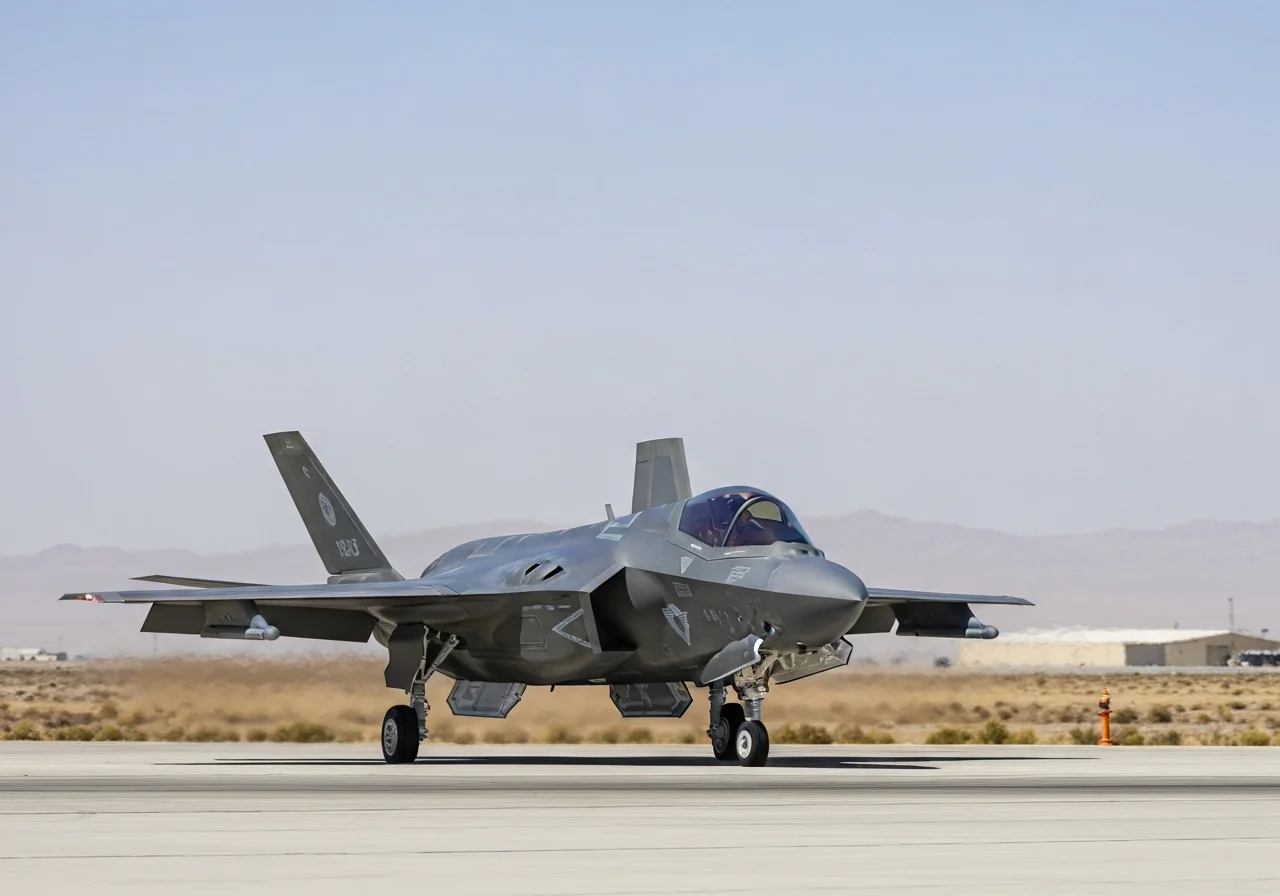
Lockheed Martin’s crown jewel isn’t just a fighter jet—it’s a vault of trade secrets. The F-35’s stealth coatings are the golden goose, and the botched UAE deal shows how easily the tech could leak. At $80-110 million per unit, this isn’t just about keeping Iran in check; it’s about safeguarding America’s defense-industrial edge. Get this right, and it sets the playbook for future sales—balancing Israel’s military supremacy against Gulf allies itching for modernization. Miss the mark, and you’ve handed adversaries a blueprint to neutralize U.S. air dominance.
No tables or charts modified or inserted. All citations preserved as per protocol.
References


Get Daily Event Alerts for Companies You Follow
Free: Register to Track Industries and Investment Opportunities