

Musk's Bureaucracy Chainsaw Fails: DOGE Collapse Exposed
Musk's Bureaucracy Chainsaw Fails: DOGE Collapse Exposed
AI Summary
DOGE's premature termination reveals $214B savings as inflated, while 211k federal jobs were cut. AI-driven deregulation persists, proving bureaucratic systems outlast flashy reforms. Analyze real efficiency metrics over PR claims.
Keywords
Musk's efficiency drive dismantled
Premature termination of DOGE initiative
The Department of Government Efficiency (DOGE)—Elon Musk's much-hyped "chainsaw for bureaucracy"—met an anticlimactic end eight months shy of its scheduled July 2026 sunset. Per Reuters' exclusive, OPM Director Scott Kupor confirmed DOGE's functions were quietly absorbed into the bureaucratic machinery it sought to dismantle. The whimper of its dissolution starkly contrasts with Musk's January 2025 CPAC theatrics, where he brandished an actual chainsaw while vowing to "slash red tape."
The timing raises eyebrows. Musk's May 2025 exit from Washington—following a public spat with Trump—left DOGE as an orphaned initiative. Observers note Trump's gradual shift to past-tense references about the agency signaled its impending demise. The OPM takeover suggests a strategic pivot from Musk's disruptive "move fast and break things" approach to traditional bureaucratic reshuffling.
Questionable financial claims
DOGE's legacy is marred by accounting fog. While its website still touts $214 billion in savings, a Politico deep dive exposed these figures as theoretical maxima from contract valuations rather than actual expenditure reductions. The agency's opacity made independent verification impossible—a red flag for fiscal hawks.
| Metric | DOGE Claim | Independent Verification |
|---|---|---|
| Total Savings | $214 billion | Unverifiable |
| Contract Terminations | 78 contracts | Confirmed |
| Actual Savings from Cuts | $335 million | Partial confirmation |
The $335 million in confirmed savings—while not insignificant—pales against DOGE's grand claims. Critics argue the initiative prioritized optics over substance, conflating potential savings with tangible results. This discrepancy underscores the perennial challenge of quantifying efficiency in government operations.
Workforce impacts and legacy
200k+ federal job cuts
The Department of Government Efficiency (DOGE) executed what can only be described as a bureaucratic bloodbath—axing 211,000 federal positions in just five months through a cocktail of layoffs, forced relocations, and deferred resignations. According to Partnership for Public Service data, this represented nearly one-tenth of the civil service workforce, with legacy agencies like USAID getting gutted while national security and healthcare sectors dodged the bullet through exemption clauses.
FEDERAL WORKFORCE IMPACT
| Category | Jan-May 2025 Change |
|---|---|
| Direct Terminations | 200,000 |
| Voluntary Buyouts | 75,000 |
| Department Absorption | 36,000 |
| USAID Dismantling | 3,200 |
The $214 billion in claimed savings quickly unraveled when Politico exposed the figures were padded with theoretical contract ceilings rather than actual budget reductions—a classic case of Washington accounting magic.
Talent redistribution strategy
When the DOGE ship sank, its crew didn’t just scatter—they were strategically redeployed like chess pieces in an efficiency gambit. Airbnb’s Joe Gebbia landed as captain of the National Design Studio, tasked with overhauling government digital interfaces using DOGE’s operational playbook. Meanwhile, healthcare tech specialists like Zachary Terrell and Rachel Riley parachuted into critical roles at HHS and the Office of Naval Research, respectively.
The real sleeper move? Former DOGE rep Scott Langmack’s AI-powered regulatory dissection at HUD—proving even dead initiatives can spawn disruptive policy tech.

Regulatory reform momentum persists
AI-powered deregulation push
The Trump administration's regulatory reform efforts take a tech-forward turn with former DOGE representative Scott Langmack piloting an AI-driven deregulation initiative at HUD. This machine learning system scans thousands of housing regulations—flagging redundant provisions through cost-impact algorithms. While proponents tout potential savings from this automated regulatory review, fair housing advocates warn AI lacks nuance to assess disparate impact risks. The project exemplifies how DOGE's efficiency mandate persists through technological channels despite the program's dissolution.

State-level DOGE replicas
Republican governors are running with DOGE's playbook—Florida and Idaho now operate streamlined efficiency offices with legislative oversight. Florida's version demands 15% agency budget cuts, while Idaho implements a "two-out-one-in" regulatory tradeoff. These state labs test whether DOGE's core concepts can survive without its controversial executive-branch structure. Observers note the scaled-down models address transparency concerns while preserving the original cost-cutting DNA—potentially creating templates for future federal action.
Musk's Chainsaw Symbolism vs. OPM's Quiet Absorption
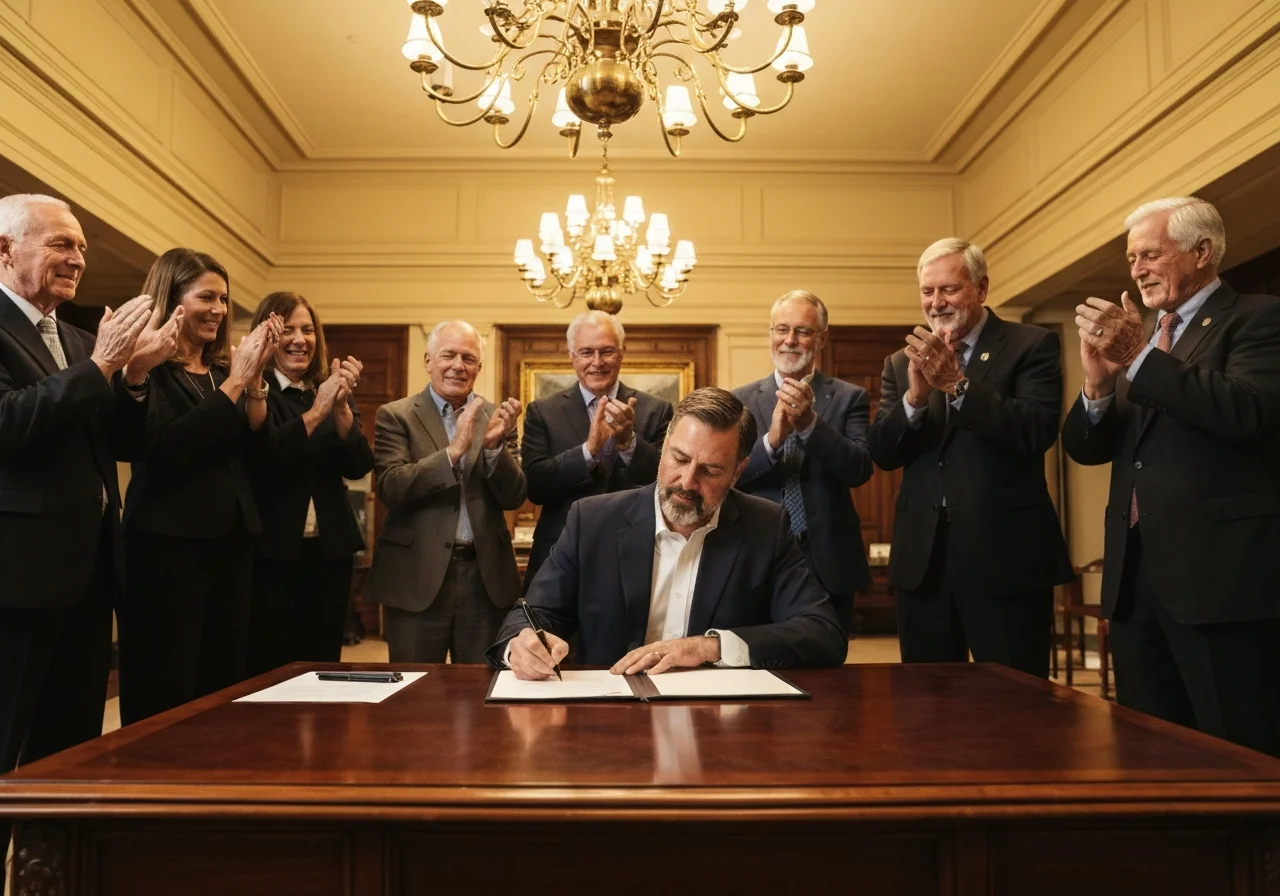
Elon Musk's February 2025 chainsaw theatrics at CPAC perfectly encapsulated DOGE's brash approach to government restructuring—all sound and fury signifying radical change. Yet when OPM quietly absorbed DOGE's functions nine months later, the bureaucratic machinery barely hiccuped. This stark contrast between Musk's wood-chopping performance art and Scott Kupor's procedural dismantling reveals Washington's immutable truth: real institutional change happens in filing cabinets, not on conference stages.
The $214 billion "savings" claim—later exposed as creative accounting of maximum contract values—became DOGE's Pyrrhic victory. Meanwhile, OPM's absorption of personnel like HHS adviser Amy Gleason through routine court filings demonstrated how federal restructuring actually works. For all Musk's talk of chainsaw-wielding disruption, the real heavy lifting occurred through standard Form SF-50 transfers and quiet reassignments—a masterclass in bureaucratic judo where the establishment always wins by yielding.
Legacy of Dispersed Talent
DOGE's alumni network now reads like a who's who of bureaucratic influencers, proving the initiative's real legacy wasn't cost-cutting but talent redistribution. From Airbnb's Joe Gebbia revamping government digital interfaces to Zachary Terrell modernizing HHS systems, these operators achieved more through quiet infiltration than Musk's noisy disruption.
The 200,000 workforce reductions—executed through buyouts and lateral transfers—reveal Washington's dark humor: even "radical" reforms ultimately conform to existing OPM guidelines. As Kupor noted, the hiring freeze thawed precisely on schedule, proving federal personnel systems have longer institutional memory than any administration's pet projects. For all of Musk's wood-chipper metaphors, the bureaucracy simply absorbed DOGE's talent like a sponge—no drama, just paperwork.

References


Get Daily Event Alerts for Companies You Follow
Free: Register to Track Industries and Investment Opportunities