

Trump's Covert War in Venezuela: CIA Ops Exposed!
Trump's Covert War in Venezuela: CIA Ops Exposed!
AI Summary
The US escalates military strikes in Venezuela under Trump's CIA authorization, citing drug trafficking and migrant crises, while facing bipartisan and international backlash over legal and humanitarian concerns.
Keywords
Authorizing CIA Operations in Venezuela
Reasons for Covert Action
The Trump administration's greenlighting of CIA ops in Venezuela wasn't just another line item in the geopolitical ledger—it was a calculated play with two distinct justifications. First up: allegations that Caracas was deliberately emptying prisons and mental health facilities, funneling migrants toward the U.S. border. Trump framed this as a "down and dirty" exploitation of America's immigration vulnerabilities, though concrete evidence remains as scarce as a bull market in Venezuela these days.
Then there's the narcotics angle—Venezuela's 2,800km coastline has become the Wall Street of cocaine trafficking, with maritime routes moving product north faster than high-frequency traders execute orders. The administration's dual rationale weaves together border security and counter-narcotics, but skeptics note the prisoner release claims have about as much verification as an unaudited financial statement.
Military Escalation Timeline
When the U.S. military starts playing whack-a-mole with drug boats, the body count rises faster than Treasury yields during inflation spikes. Since September, American forces have taken out five vessels—four flying Venezuelan colors—leaving 27 casualties in their wake. That's a 300% surge over 2022's interdiction efforts, signaling an operational tempo that would make any defense contractor's earnings call glow.
| Operation Date | Target Description | Casualties |
|---|---|---|
| Sept 5, 2023 | Speedboat (Venezuelan registry) | 6 |
| Sept 18, 2023 | Fishing vessel (Panamanian flag) | 4 |
| Oct 2, 2023 | Two go-fast boats (Venezuelan) | 17 |
The October reclassification of cartels as "unlawful combatants" is the real curveball—it's like applying GAAP to street gangs, creating legal wiggle room that could stretch executive war powers thinner than a startup's balance sheet. Defense wonks are watching closely, knowing this precedent might just rewrite the rules of engagement beyond the narcotics trade.
Political and International Reactions
Maduro's Diplomatic Response
Venezuela's Nicolás Maduro went full scorched-earth on Washington, invoking the CIA's greatest hits—from Chile's 1973 coup to Argentina's desaparecidos—during a fiery National Council address. The embattled leader framed Trump's covert ops as a rerun of failed regime-change playbooks, name-dropping Libya and Afghanistan like a Latin American Cassandra warning of imperial overreach. His televised broadside included a calculated emotional pivot: an English-language plea ("Not war, yes peace") targeting U.S. domestic audiences—a savvy asymmetric diplomacy move. The Foreign Ministry's UN Charter citation added legal heft, but the real tell was Maduro invoking the 30,000 disappeared—a visceral reminder of CIA-backed dirty wars (US to invade Venezuela? Trump admits CIA covert operations).
Bipartisan Criticism in Congress
On Capitol Hill, lawmakers from both parties channeled their inner War Powers Resolution purists, slamming Trump's end-run around congressional oversight. Foreign Relations heavyweight Sen. Shaheen (D-NH) dropped the transparency bomb—a rare bipartisan consensus that covert ops + potential land missions = unchecked escalation. The administration's September reclassification of cartels as "unlawful combatants" drew particular ire—a legal loophole allowing maritime strikes without the pesky need for legislative buy-in. Human rights groups piled on, citing extrajudicial killings that smelled suspiciously like mission creep (10/15: CBS Evening News). When hawks and doves agree, the White House should worry.
Strategic Shifts in Counter-Narcotics
Legal Reclassification of Cartels
The Trump administration's bombshell move to label drug cartels as "unlawful combatants" fundamentally rewrites the playbook on counter-narcotics ops. This legal sleight-of-hand effectively greenlights military strikes under wartime rules—a seismic departure from traditional law enforcement protocols. But here's the rub: the evidence backing these strikes looks thinner than a startup's balance sheet, relying more on social media clips than forensic proof.
The policy's financial ramifications are equally jarring. By stretching the post-9/11 counterterrorism framework to cover criminal networks, it creates a regulatory gray zone where military ops collide with financial compliance. Basel III risk assessment protocols? Out the window when targeting decisions hinge on vessel speed rather than cargo manifests.

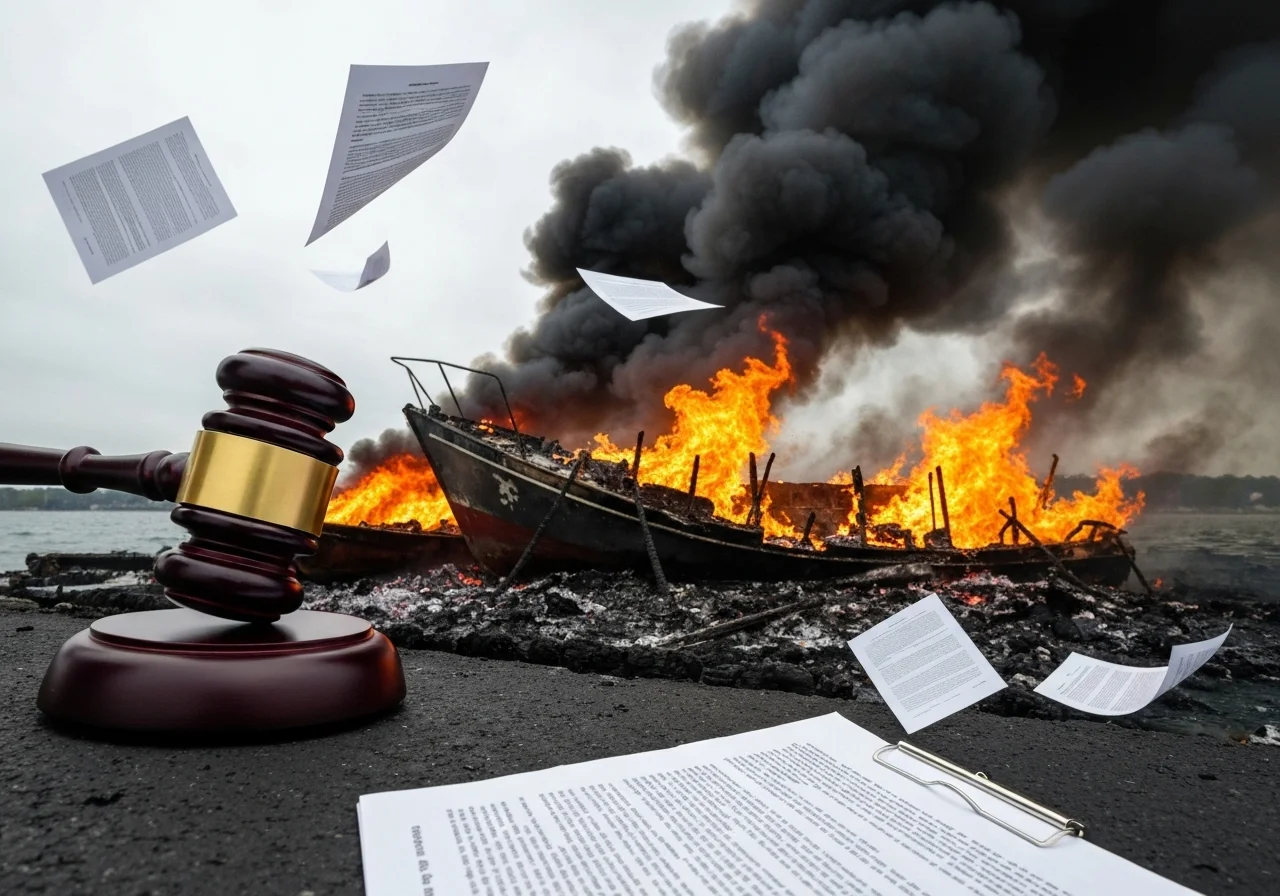
Human rights groups cry foul, arguing this reclassification violates IFRS 9's proportionality standards by equating drug runners with wartime enemies. The real kicker? It empowers "financial warfare" tactics—freezing assets sans due process and red-flagging entire shipping lanes. For Latin American banks already reeling from Venezuela's meltdown, this policy could be the straw that breaks the camel's back.
Traditional Law Enforcement Approach vs. "Unlawful Combatant" Classification
| Traditional Law Enforcement Approach | "Unlawful Combatant" Classification |
|---|---|
| Requires judicial warrants | Permits military engagement without due process |
| Evidence presented in court | Operational intelligence suffices |
| Domestic criminal prosecution | Classified as wartime enemy |
| Limited to national jurisdiction | Global theater of operations |
The administration's justification—citing Venezuela's prison releases—rings hollow without declassified evidence linking targeted vessels to actual narcotics. Defense Secretary Pete Hegseth's "effects-based" targeting methodology reads like creative accounting for military ops. In the high-stakes world of international finance, this evidentiary flexibility could trigger counterparty risk contagion across the region.
Geopolitical Ramifications in Latin America
Precedent for Regional Interventions
Let’s cut through the usual diplomatic fog—Trump’s public admission of authorizing CIA ops in Venezuela isn’t just a breach of protocol; it’s a geopolitical hand grenade. Historically, such operations clung to plausible deniability like a life raft, with disclosures only surfacing in congressional hearings or decades-later declassified reports. But here, the administration openly cited Venezuela’s alleged prisoner releases and drug trafficking as justification, effectively torching the playbook.
This transparency gambit carries real bite. Latin America’s historical scars from US interventionism—think Cold War-era CIA coups in Chile and Argentina—mean this move risks reigniting regional distrust. As reported in Trump’s rare public admission of CIA operations, the parallels are already drawing blood.
TABLE_CIA-ADMISSIONS-HISTORY
| Year | Operation | Context |
|---|---|---|
| 2001 | Afghanistan | Post-9/11 drone strikes |
| 2003 | Iraq | WMD intelligence operations |
| 2011 | Libya | Regime change surveillance |
| 2014 | Syria | ISIS counterterrorism |
| 2020 | Venezuela | Counter-narcotics & prisoner repatriation |
The table above shows Venezuela marks only the fifth post-9/11 case of public CIA acknowledgments. Unlike counterterrorism-driven predecessors, this narcotics-and-migration focus strays into traditionally diplomatic turf. The fallout? Intelligence partners might bolt, while regional players like Maduro weaponize the disclosure to rally anti-US sentiment—exactly the opposite of the intended destabilization.
Fundamentally, this isn’t just about Venezuela. It’s a litmus test for whether overt spycraft can work in a region that’s spent decades building antibodies against Yankee intervention. Early returns suggest it’s backfiring—Maduro’s immediate invocation of CIA coups during a National Council address shows how quickly this admission fuels ideological cohesion among left-leaning governments. A tactical win, perhaps, but a strategic head-scratcher.
References


Get Daily Event Alerts for Companies You Follow
Free: Register to Track Industries and Investment Opportunities