

Trade War Escalation: How Will China's Hanwha Sanctions Reshape Global Shipping?
Trade War Escalation: How Will China's Hanwha Sanctions Reshape Global Shipping?
AI Summary
China's sanctions on Hanwha Ocean's US subsidiaries triggered 5.8% stock drops, exposing vulnerabilities in maritime supply chains. Beijing's port fee exemptions give Chinese shipbuilders 23% cost advantages, forcing companies to choose between US and China alliances. Diversify supply chains amid rising trade fragmentation.
Keywords
Trade Tensions Escalate Through Maritime Sector
Beijing Targets Hanwha's U.S. Subsidiaries
The gloves are off—China just dropped a financial bombshell on Hanwha Ocean’s U.S. operations. Beijing’s Commerce Ministry slapped sweeping sanctions on five American subsidiaries of the South Korean shipbuilding giant, including Hanwha Shipping LLC and Hanwha Philly Shipyard Inc. (full list here). The move, effective October 14, 2025, severs all commercial ties between Chinese firms and Hanwha’s stateside units, citing alleged threats to China’s "sovereignty and security interests."
Market reaction? Brutal. Hanwha’s Seoul-listed shares nosedived 5.8% intraday, with its Philly Shipyard expansion—a $5 billion linchpin of U.S.-South Korea naval revival—now in jeopardy (investment details).
HANWHA-SUBSIDIARY-SANCTIONS
| Subsidiary | Primary Function | Stock Impact |
|---|---|---|
| Hanwha Shipping LLC | Commercial vessel ops | -5.3% |
| Hanwha Philly Shipyard | Naval construction | -6.1% |
| HS USA Holdings Corp | Financial operations | -4.9% |
Reciprocal Port Fees Take Effect
China’s playing chess while others play checkers. Alongside the Hanwha sanctions, synchronized port fee hikes kicked in—but with a twist. Beijing exempted domestically-built vessels, handing its state-owned shipbuilders a 23% cost edge (fee structure).
This carve-out amplifies the rift between Chinese and U.S.-allied maritime operators, further distorting trade flows in a market where China already commands 60% of global shipbuilding (context). The dual moves signal Beijing’s shift from rare earths to maritime supply chains as its next economic weapon.
Financial Markets React to Geopolitical Shockwaves
U.S. Index Futures Plunge Premarket
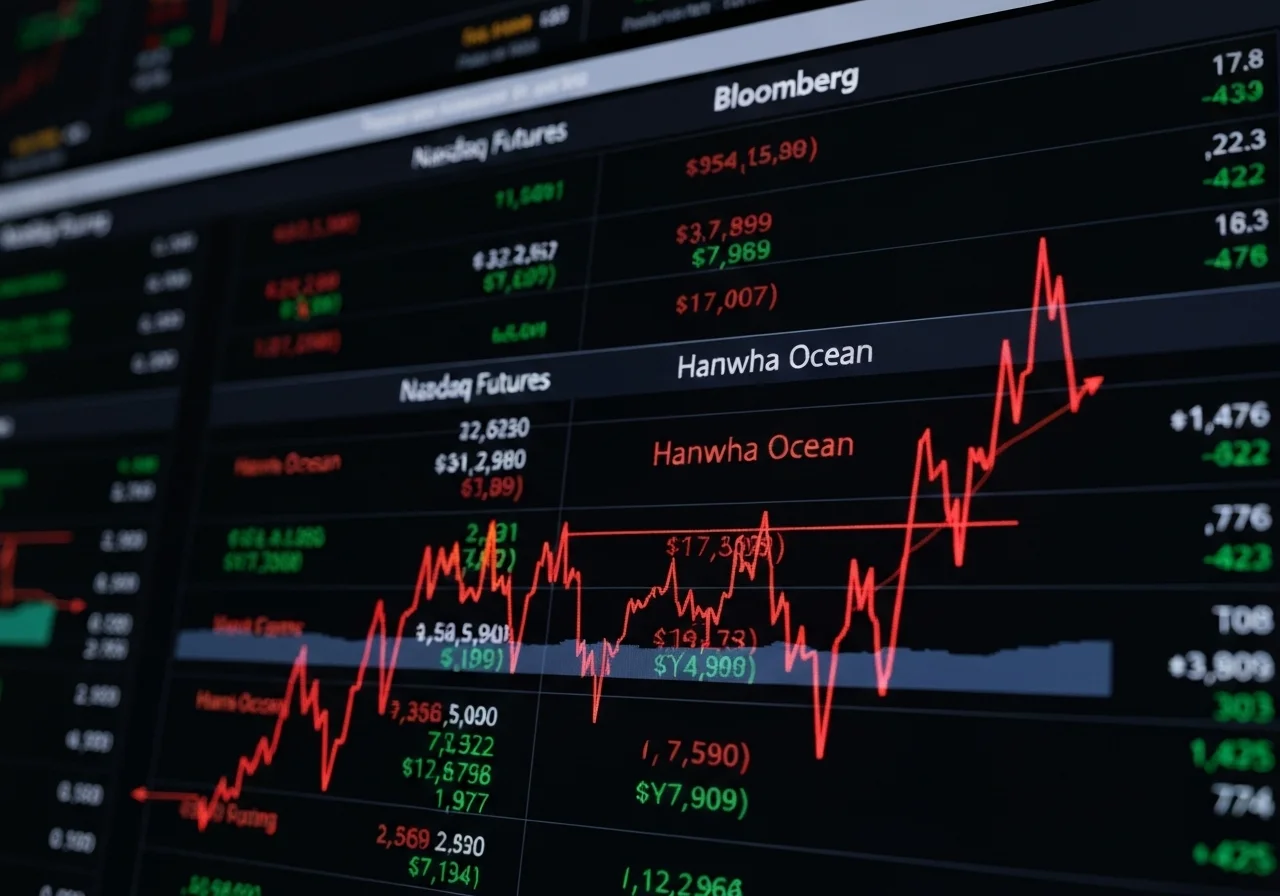
The premarket carnage tells the real story—Nasdaq futures cratered 1.3% while the S&P 500 bled 1%, a classic risk-off move as China’s sanctions against Hanwha’s U.S. subsidiaries sent shockwaves through tech-heavy indices. Supply chain jitters resurfaced with a vengeance, particularly for semiconductor and logistics plays exposed to maritime bottlenecks.
What’s fascinating is how China’s Commerce Ministry framed these measures as counterstrikes against "U.S. investigative activities," effectively weaponizing shipbuilding supply chains. Even JPMorgan’s earnings beat couldn’t stem the tide, its shares dipping 0.7% as geopolitical angst trumped fundamentals. The takeaway? Markets are pricing in a new era where trade policy moves markets faster than earnings reports.
Asian Markets Show Divergent Performance
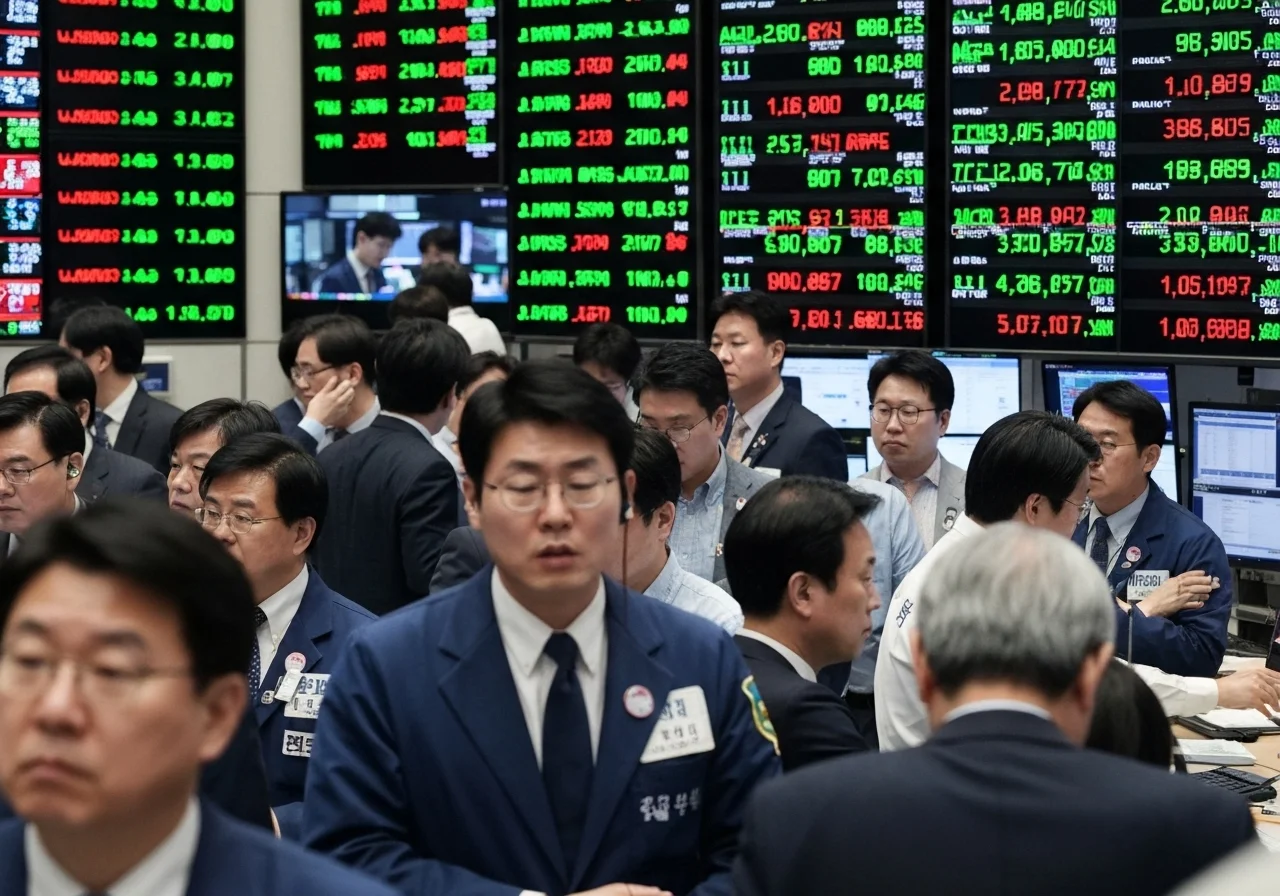
Asia’s reaction was a masterclass in market fragmentation—Seoul’s Kospi dropped 0.6% as Hanwha Ocean got hammered (-5.8%), while Australia’s ASX 200 gained 0.2% on commodity tailwinds. The divergence underscores China’s surgical precision: by exempting domestic ships from new port fees while penalizing U.S.-aligned players like HD Hyundai (-4.4%), Beijing’s creating a bifurcated maritime economy.
As SCMP’s analysis notes, this isn’t just about Hanwha—it’s a stress test for global shipping alliances. With China controlling 60% of global shipbuilding, these sanctions reveal how easily Beijing can turn industrial policy into market volatility. Japan’s Nikkei learned that the hard way, plunging 2.6% amid coalition chaos.
| Company | Price Change | Market Impact |
|---|---|---|
| Hanwha Ocean | -5.8% | Kospi -0.6% |
| HD Hyundai Heavy | -4.4% | Sector-wide |
Strategic Implications for Global Trade
U.S.-South Korea Alliance Faces Pressure
The $5 billion bet by Hanwha Ocean on Philadelphia's historic shipyard has become the latest geopolitical powder keg, exposing raw nerves in U.S.-South Korea industrial ties. As detailed in China's sanctions announcement, Beijing's retaliatory measures against Hanwha's naval maintenance contracts reveal how commercial ventures now double as strategic chess pieces. The subsequent 5.8% share price plunge underscores markets' hypersensitivity to supply chain weaponization—a trend that's rewriting the rules of allied defense procurement.
Maritime analysts note the sanctions surgically target Hanwha's U.S. Navy repair contracts, directly challenging Washington's push to reshore critical shipbuilding capabilities. This economic jujitsu—using China's own supply chain dominance as leverage—creates ripple effects far beyond Philadelphia's docks, potentially forcing allied nations into costly dual supply chain systems.
Corporate Earnings Provide Limited Buffer
Wall Street's earnings season delivered a masterclass in bifurcated markets, where operational strength collides with geopolitical anxiety. JPMorgan's record trading revenue couldn't prevent a 0.7% dip, while Wells Fargo's 2.8% rally on net interest income growth proved defensive sectors still offer safe harbor.
The subsequent tech-led Nasdaq futures plunge of 1.3% reveals investor calculus: trade war risks now outweigh even robust earnings surprises. As Fortune's analysis notes, Domino's Pizza's 5.2% same-store sales growth exemplifies consumer sector resilience—but such bright spots barely dent the broader risk-off sentiment gripping equity markets. This divergence suggests traders are pricing in prolonged turbulence, with earnings season providing mere speed bumps against geopolitical gravity.
China Weaponizes Supply Chains Beyond Rare Earths
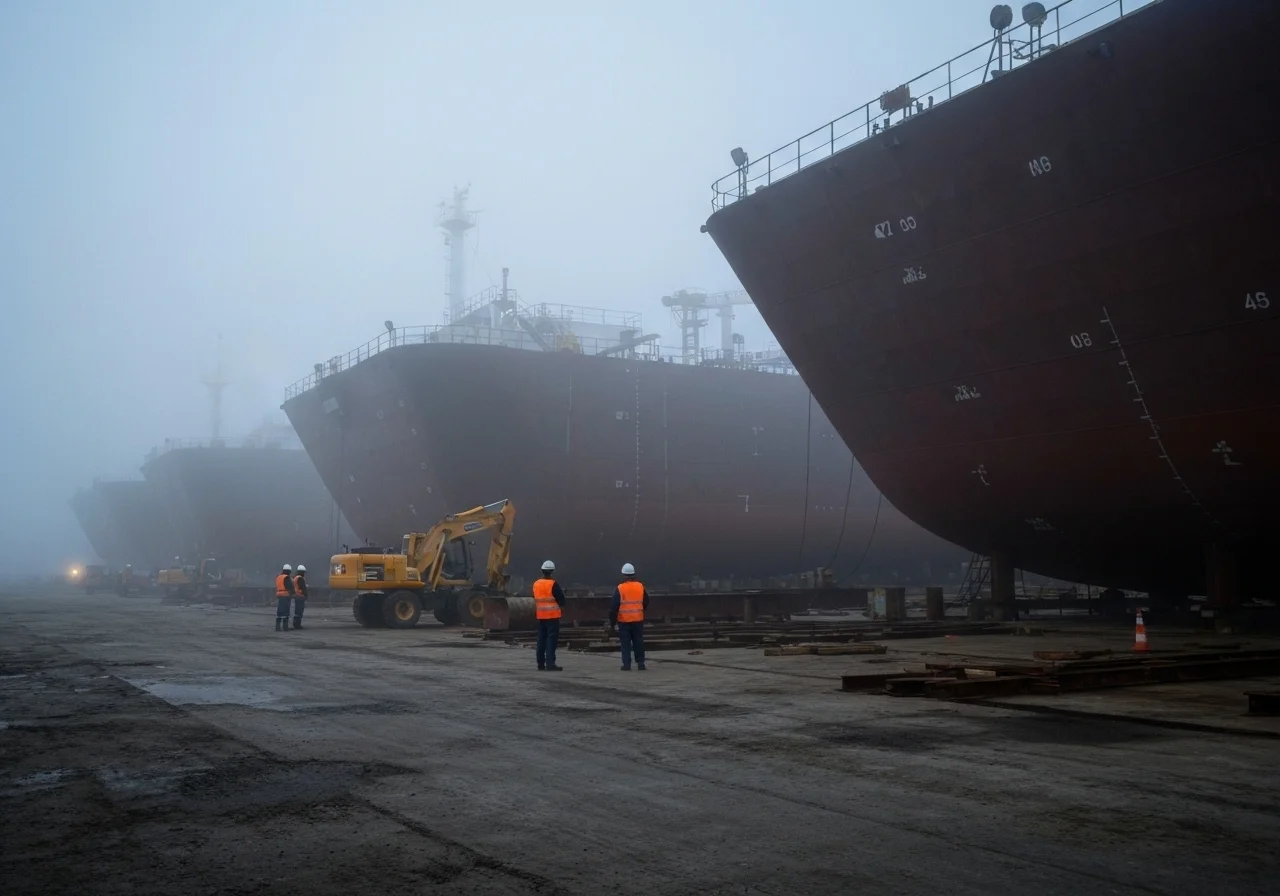
Beijing's latest salvo in the economic cold war hits where it hurts—maritime infrastructure. By blacklisting five Hanwha Ocean subsidiaries, including their Philly Shipyard cash cow, China's Commerce Ministry isn't just flexing muscle—it's rewriting the rules of supply chain warfare. The $5 billion Pennsylvania expansion, meant to counter China's 60% shipbuilding stranglehold, now faces existential threats.
Reddal's Kun Cao nails it: this "weaponization of shipbuilding" creates a lose-lose scenario. Chinese vessels get port fee passes while U.S.-aligned ships cough up $1.37/ton penalties—a masterclass in asymmetric tradecraft.
Secondary Sanctions Risk Fragmenting Global Shipping Alliances
The dominoes start falling when Beijing bars even Chinese firms from dealing with Hanwha's Shandong module plant—the linchpin feeding South Korea's shipyards. This isn't just tit-for-tat; it's a blueprint for Balkanizing supply chains. HD Hyundai's scramble for U.S. acquisitions while dodging Chinese blowback shows how fast the ground shifts.
Shipping execs now face Sophie's Choice: pick Team America or Team China. The dueling port fees aren't just line items—they're tripwires for global logistics. As The Hindu reports, this extraterritorial playbook mirrors U.S. tactics but targets commercial arteries instead of geopolitical ones.
Market Volatility Likely to Persist Through Q4 Earnings Season
Wall Street's algo traders got the memo—Nasdaq futures tanked 1.3% while Hanwha stock bled 5.8%. The kicker? Solid earnings from JPMorgan and Wells Fargo got drowned out by supply chain panic.
Asia's split personality says it all: Kospi sinks 0.6% as Australia's commodity-heavy ASX 200 rides the rerouting wave. And keep an eye on Brent crude—that $1.37/barrel drop hints at coming storms for trans-Pacific tanker routes. Buckle up—Q4's going to be a white-knuckle ride.
References


Get Daily Event Alerts for Companies You Follow
Free: Register to Track Industries and Investment Opportunities