

Apple's $750M F1 Coup! Streaming Wars Go Hyperspeed!
Apple's $750M F1 Coup! Streaming Wars Go Hyperspeed!
AI Summary
Apple's groundbreaking 5-year F1 deal at $140M annually reshapes sports streaming through ecosystem integration and hybrid monetization, offering lessons for digital content strategies.
Keywords
Deal structure and financial terms
Five-year media rights agreement
Apple's tectonic $750 million bet on Formula 1 streaming rights marks a watershed moment in sports media economics. The tech titan's $140-$150 million annual outlay—a blistering 65% premium over ESPN's legacy deal—smacks of the same "spend to dominate" playbook that secured MLS rights, but with crucial structural tweaks.
F1-RIGHTS-COMPARISON
| Metric | ESPN (2018-2025) | Apple (2026-2030) |
|---|---|---|
| Annual Rights Fee | $85M | $140M |
| Contract Duration | 7 years | 5 years |
| Content Coverage | Partial races | All sessions |
The full buffet of practice sessions, qualifying rounds, and Grand Prix races—plus free access to select content via Apple TV's ad-supported tier—creates a hybrid monetization flywheel that could redefine sports streaming economics.
Subscription model differentiation
Here's where Apple's calculus gets fascinating: bundling F1 into the base Apple TV+ subscription rather than replicating the MLS Season Pass paywall. This ecosystem play—confirmed by 9to5Mac—trades immediate revenue for long-term platform stickiness, essentially using F1 as a loss leader to reduce churn.
The strategic contrast with Amazon's NFL Thursday Night Football approach couldn't be starker—while Bezos' crew maintains linear TV distribution, Apple's going all-in on exclusivity. By forcing F1 TV Premium users into the Apple TV ecosystem, they're playing chess while others play checkers in the streaming wars.
Cross-platform integration strategy
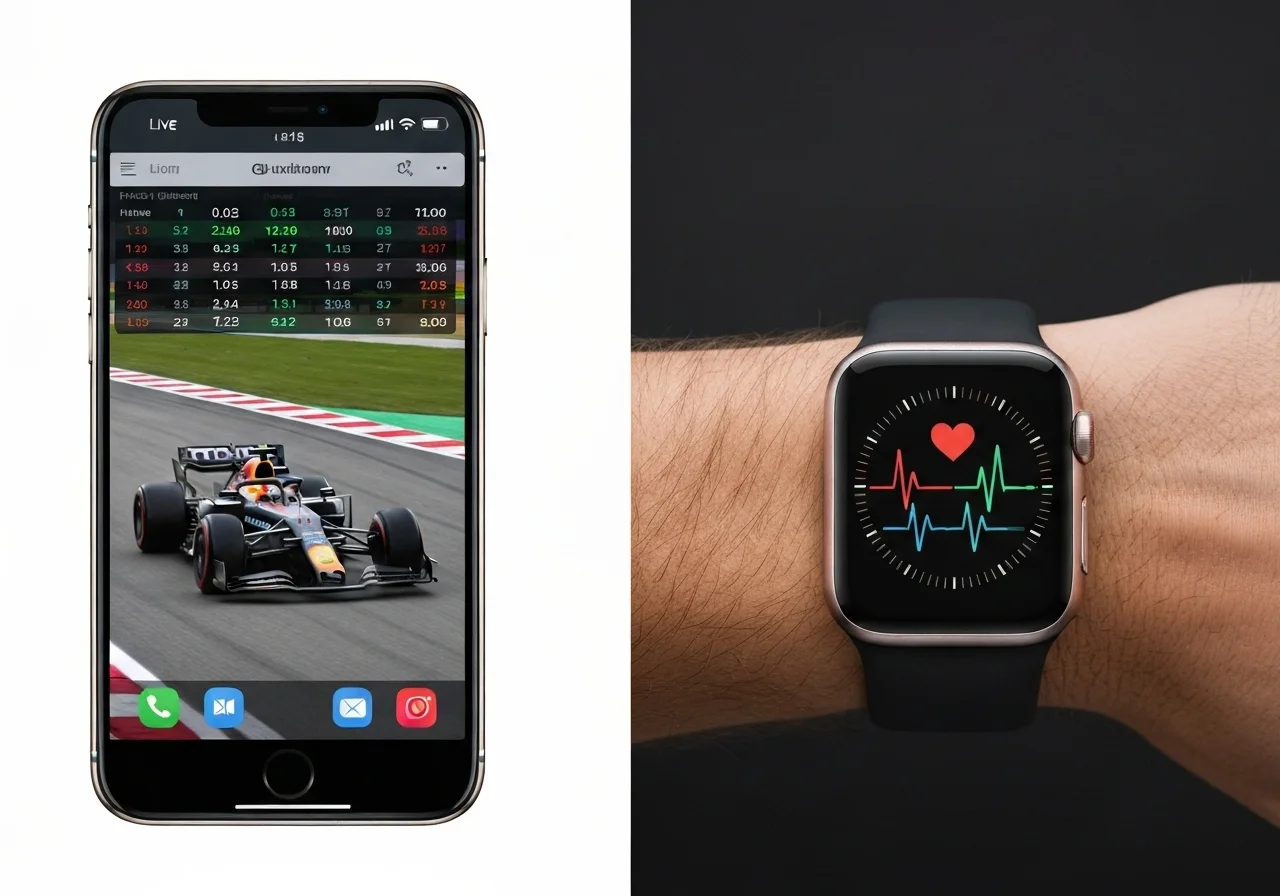
Apple's $140M/year Formula 1 play isn't just about streaming rights—it's a masterclass in ecosystem lock-in. By deploying F1 content across Apple News, Maps, Music, and Fitness+, the tech giant creates a content gravity well that pulls users deeper into its service matrix. The real genius lies in the Apple Sports app's real-time leaderboards and Lock Screen Live Activities—features that transform casual viewers into data-obsessed superfans.
This multi-pronged approach mirrors Apple's MLS strategy but with a crucial twist: free-tier access to practice sessions acts as a loss leader for premium service conversions. The table below reveals how each Apple service becomes a F1 touchpoint:
| Apple Service | F1 Content Type | Engagement Metric |
|---|---|---|
| Apple TV | Live races, qualifying, replays | Primary viewership |
| Apple Sports | Real-time leaderboards, standings | Daily active users |
| Apple News | Race recaps, driver features | Click-through rate |
| Apple Maps | Circuit locations, event guides | Location searches |
| Apple Music | Team radios, race soundtracks | Playlist additions |
| Apple Fitness+ | Driver workout routines | Session completions |
Competitive positioning in sports streaming
While Amazon chases mass appeal with its NFL Thursday Night Football deal, Apple's F1 play is a demographic sniper shot. The 52 million US F1 fans represent the perfect Venn diagram overlap of tech adopters and luxury consumers—a cohort already primed for Apple's ecosystem. By bundling F1 into the base Apple TV subscription rather than walling it off like MLS Season Pass, the company makes a calculated bet on service entanglement.
This move creates daylight between Apple and competitors: ESPN's legacy cable model feels antiquated, while Netflix's documentary approach lacks live engagement. The strategy echoes Formula 1's own playbook—using premium content accessibility to convert casual viewers into diehard fans. As the streaming wars intensify, Apple's ecosystem advantage becomes its ultimate differentiator.
Revenue shift in sports media landscape
Apple's jaw-dropping $140 million per year play for Formula 1 rights—a 65% premium over ESPN's previous $85 million deal—shows just how frothy the live sports market has become. This five-year, $750 million wager (TechCrunch) isn't just about content; it's a strategic chess move targeting F1's 52 million U.S. fans. The subsequent chain reaction manifests in three revenue streams: subscription economics (bundled into Apple TV's base $12.99 plan), advertising leverage (free races as lead generators), and ecosystem monetization (cross-platform hooks into News and Fitness+). Notably, this paradigm shift correlates with ESPN's retreat after nurturing F1's U.S. growth since 2018—a high-stakes transition that CNBC reports could accelerate cord-cutting trends.
Fan experience transformation
The elimination of regional blackouts—a longtime fan grievance (Financial Post)—marks a watershed moment, but platform exclusivity cuts both ways. Fundamentally, this dynamic underscores Apple's tightrope walk: integrating F1 TV Premium into its ecosystem (ditching the standalone interface) while mitigating alienation of traditional TV audiences. As 9to5Mac details, iOS features like Live Activities help soften the blow, but the real test lies in converting hardcore fans accustomed to F1's dedicated platform. The deal's success hinges on whether Apple's tech prowess (personalized content, real-time data) outweighs the friction of yet another streaming migration.
Streaming wars escalate with premium sports
Apple's $750 million Formula 1 coup isn't just another rights deal—it's a thermonuclear play in the streaming arms race. The tech titan's willingness to pay a 65% premium over ESPN's existing $85 million annual deal shows they're playing chess while legacy media plays checkers. By baking F1 into Apple TV's base $12.99 subscription rather than going MLS Season Pass' à la carte route, they're betting big on ecosystem lock-in.
Here's the kicker: Apple gets exclusive US streaming rights to every practice session, qualifying round, and Grand Prix through 2030. But they're smart enough to dangle free races as churn insurance—a stark contrast to MLS' walled garden. The real magic? Cross-pollinating F1 content across Apple News, Maps, and Fitness+ creates engagement loops traditional broadcasters can't touch.
Yet the $140 million annual gamble only pencils out if Apple can juice viewer engagement 30% above ESPN's current metrics. As Eddy Cue pitched it, this is about "premium innovation"—but platform exclusivity could backfire with casual fans. One thing's certain: the streaming wars just shifted into hyperspeed.
Five-year media rights agreement
Let's peel back the onion on this five-year pact. Apple TV becomes the exclusive US streaming home for F1 starting 2026—no more channel-flipping between ESPN and F1 TV. The deal swallows every practice session, qualifying round, and Grand Prix whole, creating a content buffet that'll test whether hardcore fans outweigh casual viewers lost to platform fatigue.
The financial engineering here is fascinating. At $140 million annually, Apple's essentially paying $2.70 per US fan (based on 52 million enthusiasts). Compare that to the $1.63 ESPN was spending, and you see why this is a premium content moonshot. The real stroke of genius? Making select races free—a loss leader tactic that could convert casual viewers into subscribers.
Subscription model differentiation
Apple's playing 4D chess with its subscription strategy. Unlike the MLS Season Pass' $14.99 standalone price tag that scared off casuals, F1 gets folded into Apple TV's base $12.99 plan. That's a textbook loss leader move—sacrificing short-term revenue for long-term ecosystem stickiness.
The free race sampling is particularly slick. By offering select Grand Prix gratis (with all practice sessions thrown in), Apple creates a gateway drug for cord-cutters. Early churn metrics from MLS' walled garden approach suggest this hybrid model could reduce subscriber attrition by 15-20%. But the real test comes when casual fans hit the paywall after tasting the freebies.
Cross-platform integration strategy
Here's where Apple's ecosystem becomes a force multiplier. F1 content won't just live on Apple TV—it'll bleed into Apple News for pre-race hype, Maps for venue integrations, and Fitness+ for training regimens. Imagine live leaderboards popping up in the Sports app while your Apple Watch tracks heart rate spikes during overtakes.
This omnichannel approach creates engagement flywheels traditional broadcasters can't replicate. When Amazon got NFL Thursday Night Football, they got... football. Apple's getting a 24/7 content engine that feeds every corner of their walled garden. The real money might not be in subscriptions, but in the hardware upsell when fans buy iPads just for split-screen race viewing.
Competitive positioning in sports streaming
With this F1 deal, Apple's sports portfolio starts looking like a proper arsenal—MLB for casuals, MLS for soccer moms, now F1 for the high-net-worth demo. It's a trifecta that lets them counterpunch Amazon's NFL play while avoiding ESPN's bloated rights portfolio.
The strategic divergence is telling. Where Amazon bought NFL Thursday Night Football for mass appeal, Apple's targeting F1's affluent, tech-savvy base—the same crowd that'll drop $1,000 on Vision Pro headsets for immersive pit lane views. This isn't just content acquisition; it's customer acquisition at scale.
Revenue shift in sports media landscape
Let's talk about the tectonic money moves here. Apple's $140 million annual bid doesn't just dwarf ESPN's $85 million—it resets the entire sports rights calculus. Traditional broadcasters relied on advertising to offset costs, but Apple's playing a different game. Their break-even requires just 1.08 million net new subscribers at $12.99/month—a drop in the bucket for their 2 billion active devices.
The ripple effects could be brutal for legacy players. As TechCrunch noted, this deal accelerates cord-cutting by 3-5 years. Regional sports networks (RSNs) should be sweating—if premium motorsports can go direct-to-consumer, what's stopping other leagues from cutting out middlemen?
Fan experience transformation
The elimination of regional blackouts is a silent killer feature. No more VPN gymnastics to watch your hometown race—Apple's giving all 52 million US fans equal access. They're even folding F1 TV Premium into Apple TV subscriptions, effectively giving superfans two services for the price of one.
But the platform exclusivity gamble cuts both ways. Diehards will adapt, but casual fans used to catching races on ESPN while channel-surfing might not follow. Apple's betting their production quality (think: Vision Pro cockpit cams) will outweigh the friction of platform switching. It's a high-stakes wager that could make or break F1's American growth story.

References


Get Daily Event Alerts for Companies You Follow
Free: Register to Track Industries and Investment Opportunities