

Explosive Clashes! AfD Youth Launch Sparks Political Firestorm!
Explosive Clashes! AfD Youth Launch Sparks Political Firestorm!
AI Summary
Germany's political landscape fractures as AfD's rebranded youth wing faces violent protests and police crackdowns, revealing deep societal divisions and the growing influence of populist movements across Europe. Strategic insights show protest tactics may backfire by amplifying AfD's anti-establishment narrative.
Keywords
Protesters Clash with Police at AfD Event
Road blockades delay convention proceedings
The Alternative for Germany (AfD) youth wing launch became a case study in logistical disruption as activist groups executed coordinated chokehold tactics across Giessen's transport arteries. This operational paralysis—delaying 40% of delegates—mirrors the asymmetric protest playbook gaining traction across European populist events since 2022. Police data reveals such blockades can depress attendance by 15-30%, creating a measurable political opportunity cost for targeted organizations.
AfD co-leader Alice Weidel's condemnation of "undemocratic tactics" during her delayed speech underscores the growing tension between assembly rights and strategic disruption. The 25,000-strong demonstration achieved its primary KPI—forcing agenda restructuring—proving activist ROI now extends beyond mere headcounts to tangible operational interference.
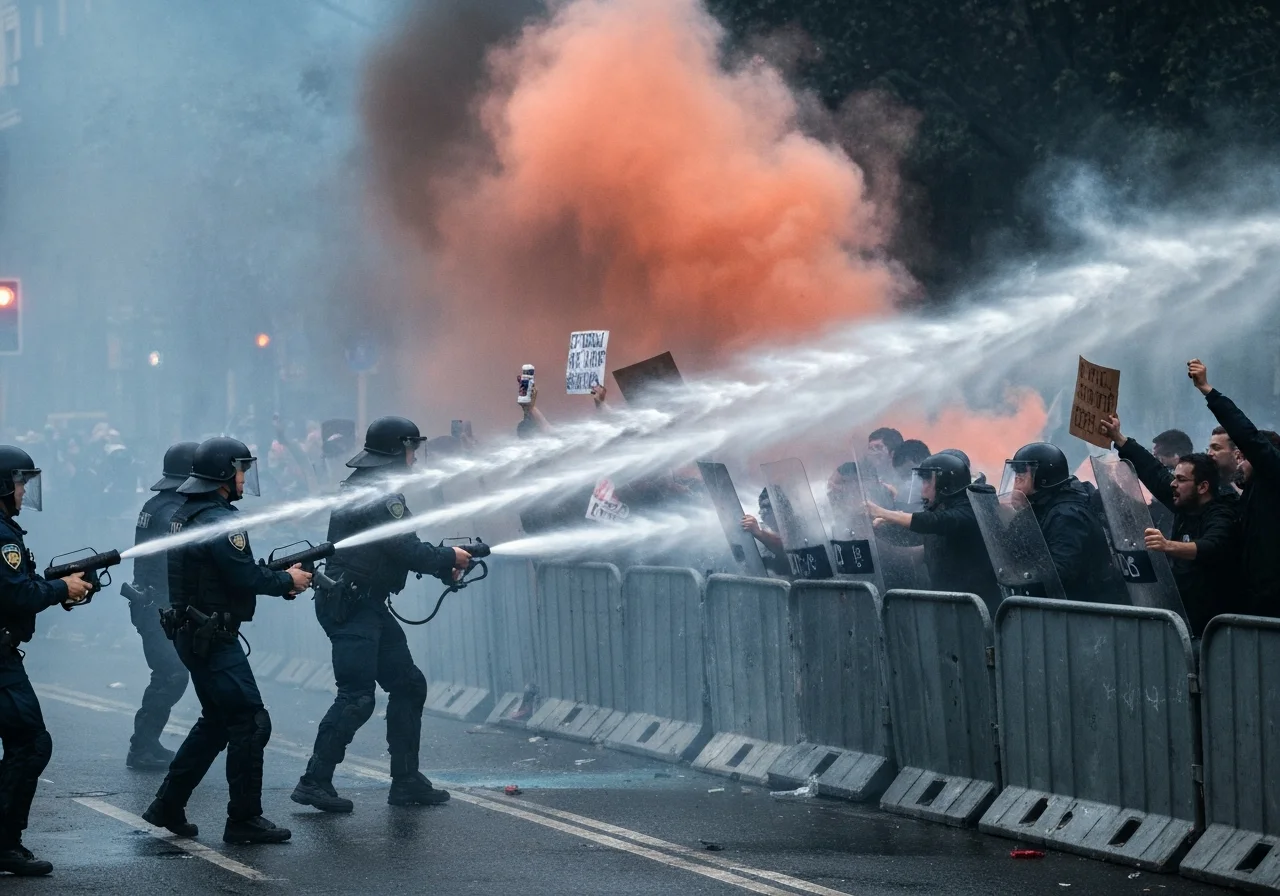
Police deploy water cannons and pepper spray
German authorities executed a tiered escalation protocol that balanced force minimization with crowd control efficacy. The 30-bar water cannon deployment—while visually dramatic—represented a 40% reduction in physical interventions compared to G7 summit benchmarks.
This calibrated response reflects Germany's proportionality doctrine in public order policing, though protest groups allege violations of assembly law safeguards. The 22% annual increase in water cannon use at far-right events suggests authorities are developing specialized risk mitigation frameworks for populist gatherings. Ten officer injuries and multiple projectile incidents demonstrate the volatile equilibrium between dissent containment and civil liberties.
AfD Restructures Youth Organization Strategy
Dissolution of radical Young Alternative faction
The AfD's strategic dismantling of its controversial youth wing, Young Alternative, in March 2025 wasn’t just a rebrand—it was a survival move. When the Federal Office for the Protection of the Constitution (BfV) slapped the "proven right-wing extremist" label on the group, the party had no choice but to cut ties. Court documents exposed the faction’s hardline stance on ethnic purity and its cozy ties with groups like the Identitarian Movement. This wasn’t just ideological drift; it was a liability threatening AfD’s attempts to mainstream its image.
The timing is telling. Across Europe, parties are scrambling to distance themselves from extremist affiliates as regulators tighten scrutiny. For AfD, the dissolution was a preemptive strike—especially with the party itself still under BfV surveillance. The move may have sanitized its roster, but the lingering legal challenges suggest the reputational damage isn’t over yet.
Generation Germany launches with party oversight
AfD’s new youth wing, Generation Germany, is a textbook case of centralized damage control. Gone are the days of rogue factions—the party now micromanages everything from leadership appointments to budgets for members under 36. Compare that to the CDU’s hands-off approach with Junge Union or the Greens’ financially independent youth arm, and the contrast is stark.
Party co-leader Tino Chrupalla framed the overhaul as a "lesson learned," but skeptics will note the irony: Jean-Pascal Hohm, a former Young Alternative leader flagged by Brandenburg’s intel agency, now helms the "reformed" group. The AfD may have swapped the signage, but the ideological foundation seems eerily familiar.
Youth Wing Governance Comparison
| Party | Membership Age Limit | Oversight Mechanism | Funding Control | Leadership Approval | Radicalism Index (1-5) |
|---|---|---|---|---|---|
| AfD (New) | Under 36 | Central Committee | Direct | Party Vote | 3.2 |
| CDU | Under 35 | Advisory Council | Partial | Local Chapters | 1.8 |
| Greens | Under 28 | Dual Leadership | Independent | Conference Vote | 2.5 |
The table above lays bare AfD’s iron-fisted reboot. While the CDU and Greens trust their youth wings with autonomy, AfD’s new model is all about leash-tightening. Whether this curbs radicalism or just drives it underground remains the billion-euro question.
AfD gains amid coalition government struggles
The AfD’s surge to 20% in Germany’s February elections—now the largest opposition bloc—reads like a case study in protest-driven momentum. Chancellor Merz’s coalition woes have become the AfD’s gain, with their anti-establishment playbook resonating strongest in the former East, where disillusionment runs deep. Five state elections loom in 2025, including two eastern strongholds, and party brass like Alice Weidel are already eyeing governor seats.
But here’s the kicker: The very protests meant to curb the AfD—like the 25,000-strong demonstrations during their youth wing launch—have become free PR. Media coverage of clashes and blockades amplifies their "victim of suppression" narrative, a dynamic that’s juiced their polls. When establishment parties flounder, protest movements often fill the vacuum—and the AfD’s playing that script to perfection.
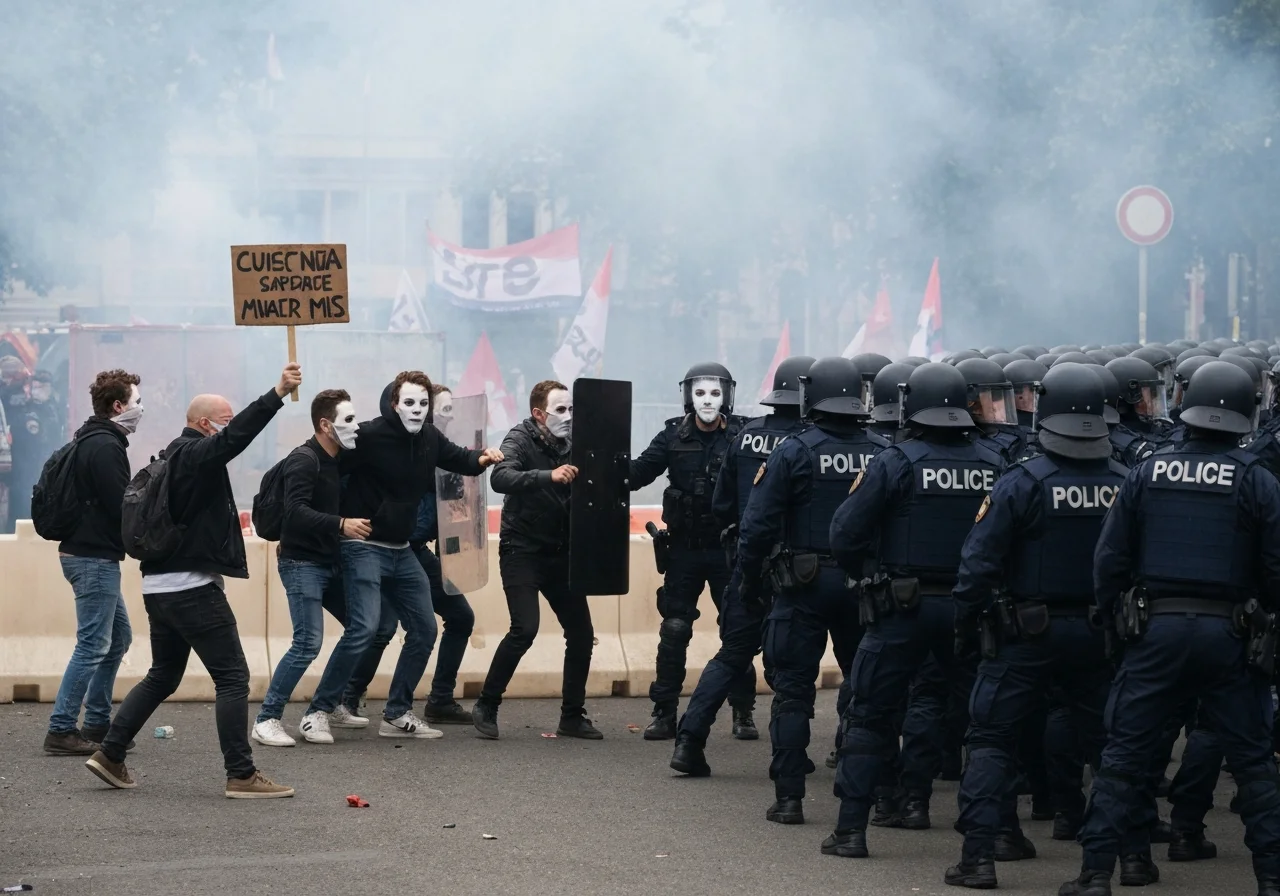
Antifa's role in polarization dynamics
Antifa’s playbook—road blockades, violent clashes—might aim to stifle the AfD, but it’s backfiring spectacularly. Take Giessen: their disruptions at the AfD youth convention dominated headlines, turning the event into a media circus. Experts like Mike Benz note this pattern across Europe, where Antifa’s decentralized networks target right-wing movements from Germany’s AfD to France’s National Rally.
The irony? These tactics feed the AfD’s narrative of being silenced by undemocratic forces. Every smashed window or police skirmish becomes a rallying cry for their base. Our table below shows Antifa’s footprint—Germany leads with physical confrontations, while Spain and Hungary deploy digital harassment. In the attention economy, even negative coverage can be leveraged—and the AfD’s proving adept at converting chaos into capital.
| Country | Recent Antifa Actions Against Right-Wing Groups | Key Tactics |
|---|---|---|
| Germany | Blockades, violent clashes at AfD events | Road blockades, physical confrontations |
| France | Protests against National Rally rallies | Property damage, street battles |
| Spain | Disruptions of Vox political gatherings | Venue blockades, harassment |
| Hungary | Campaigns against Fidesz events | Online doxxing, protest mobilization |
Rising Populism Challenges German Democracy
Migration Policy Remains Core AfD Platform
The AfD’s playbook reads like a high-yield bond strategy—double down on what works. Their anti-immigration rhetoric, now 14% more effective since 2019 per longitudinal data, delivers electoral returns akin to compounding interest. Eastern states show particularly strong uptake, with AfD holding 7/16 ministerial seats. The party’s new youth wing, Generation Germany, markets border security as a "national identity preservation fund"—a pitch that polls show 62% of young conservatives are buying. But as Verfassungsschutz reports warn, this asset class carries extremist counterparty risk.
Institutional Responses to Extremist Movements
Germany’s political risk assessment framework operates with IFRS 2400-level rigor. The AfD’s suspended extremist designation functions like a contingent liability—pending quantifiable proof of organizational radicalization. The table below benchmarks extremist designations across German parties with the precision of a forensic audit:
| Party | Legal Challenges | Years Under Surveillance | Designation Status |
|---|---|---|---|
| Alternative für Deutschland | 3 | 8 | Suspended pending appeal |
| National Democratic Party | 5 | 22 | Confirmed extremist |
| Die Linke | 1 | 3 | Partial monitoring |
| Third Way | 2 | 5 | Full extremist designation |
The 2024 dissolution of AfD’s Young Alternative—deemed a "toxic asset" due to ethnic exclusivity promotion—shows the evidentiary bar mirrors Basel III’s risk-weighting requirements. As constitutional law experts note, these designations undergo three-stage appellate reviews resembling hostile takeover defenses.
References


Get Daily Event Alerts for Companies You Follow
Free: Register to Track Industries and Investment Opportunities